

Placental Biomarkers May Reveal Long-Term Heart Risk After Preeclampsia – Preeclampsia Foundation
Preeclampsia Foundation shared a post on LinkedIn:
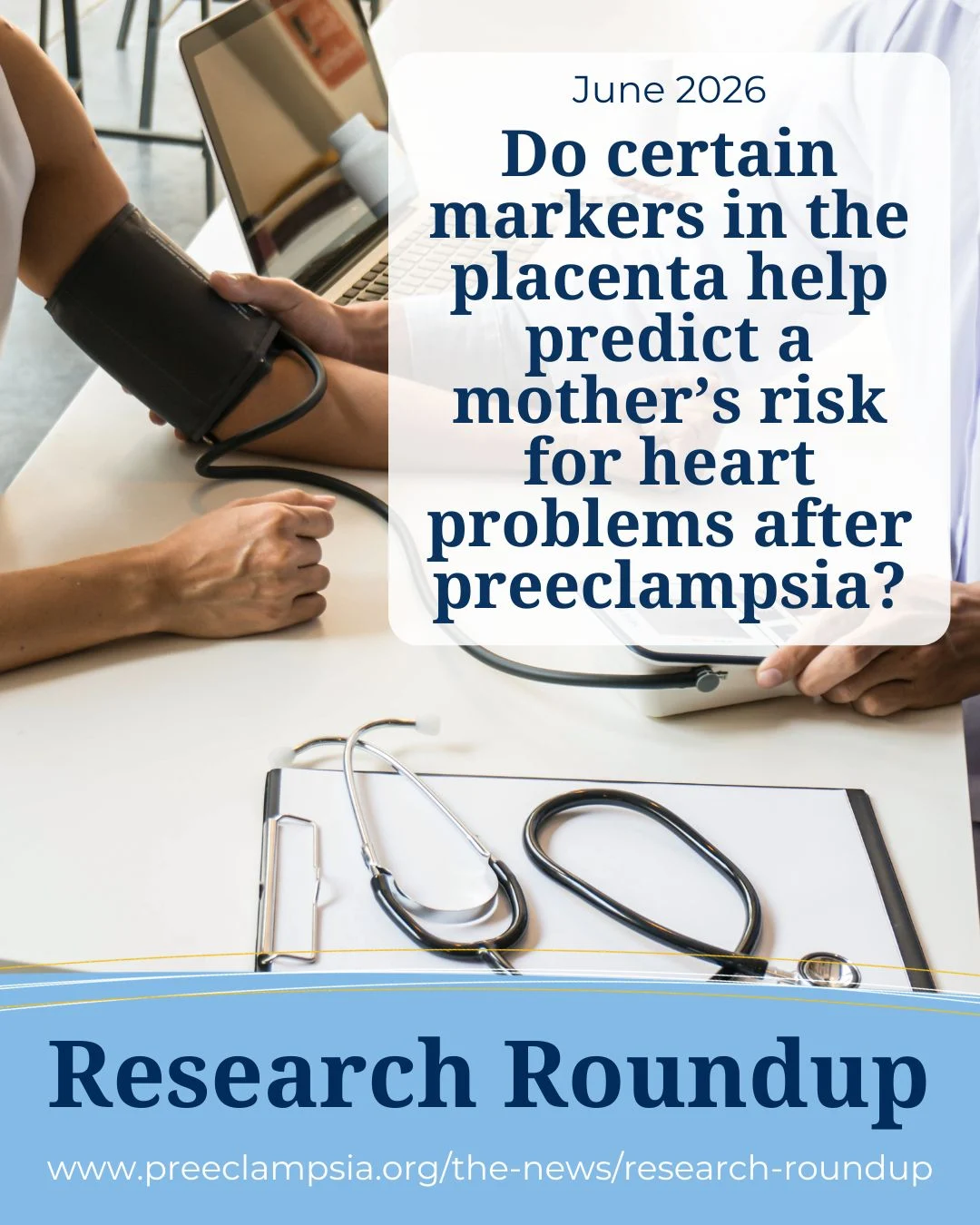
“Researchers wanted to know if certain markers in the placenta, like FLT-1, ENG, and CD68, could help predict a mother’s risk for heart problems six months after having preeclampsia.
Determining the Risk Elevation after Maternity (DREAM) cohort study from inpatient services at The Ottawa General Hospital (Ottawa, ON, Canada) used measurements of placenta damage, the presence of specific proteins, and clinical factors to develop a model that could predict an individual’s lifetime CVD risk soon after delivery.
While clinical factors such as total cholesterol, fasting glucose, systolic and diastolic blood pressure, the use of antihypertensive drugs, and smoking status are useful for calculating lifetime risk of CVD in general, for preeclampsia patients more individualized risk calculations soon after delivery could improve long term cardiovascular health.
Evidence of lesions in placental tissue as well as the presence of specific proteins at the time of delivery can offer clues about the subtype of preeclampsia experienced during each pregnancy. Lesions characteristic of Chronic inflammation along with CD68 proteins are associated with the inflammatory subtype and lower cholesterol levels at 6 months postpartum. The presence of Maternal vascular malperfusion (MVM) type lesions along with protein markers FLT-1 and ENG are indicative of the hypoxic subtype of preeclampsia and predict elevated systolic blood pressure and cholesterol — both factors of high lifetime CVD risk.
This pilot study shows that evaluating placental damage, biomarker presence, and other clinical data can enhance prediction of CVD risk after preeclampsia. These exploratory findings highlight the potential of more individualized CVD risk stratification following a hypertensive pregnancy.
TAKE HOME MESSAGE: More research is needed in the US and Canada to help determine if testing the placenta after birth can help doctors figure out which women would benefit most from specialized cardiovascular follow-up after preeclampsia to help prevent CVD. If you had preeclampsia, it is important to follow up with your primary care provider beyond pregnancy.
Citation: Erika Mery, Julia Hajjar, Shrreya Sudade, Goutham Vasam, Samantha Benton, Laura Gaudet, Dina El Demellawy, David Grynspan, Shannon Bainbridge, Placental anti-angiogenic and inflammatory markers and postpartum cardiovascular risk following preeclampsia, Placenta, Volume 176, 2026,Pages 43-52, ISSN 0143-4004.”
Title: Placental anti-angiogenic and inflammatory markers and postpartum cardiovascular risk following preeclampsia
Authors: Erika Elizabeth Mery, Julia Hajjar, Shrreya Sudade, Goutham Vasam, Samantha Benton, Laura Gaudet, Dina El Demellawy, David Grynspan, Shannon Bainbridge
Read the full article.

Stay updated on all scientific advances in the field of fertility with Fertility News.
-
Sep 13, 2026, 15:11Sachintha Alwis: From Impaired Sperm Motility to Microrobotics
-
Sep 13, 2026, 15:08Laurence Orbuch: Before Endometriosis Surgery, Ask…
-
Sep 13, 2026, 15:05Ademola Ayodele: IUI, IVF or Egg Freezing – Which One Is Right for You?
-
Sep 13, 2026, 14:59Fiona Pathiraja-Møller: Tennis Players No Longer Have to Choose Between Career and Family
-
Sep 13, 2026, 14:571-Day Virtual Experience for People Impacted by PMOS – PCOS Awareness Association
-
Sep 13, 2026, 14:53Ozor Victor: Behind Every Embryo Is a Story of Science, Precision, and Hope
-
Sep 13, 2026, 14:50Diana Kayal: What They Don’t Tell You About IVF
-
Sep 13, 2026, 14:44Vikram Sinai Talaulikar: A Heartfelt Thank You to All Who Donated and Supported “Menopause and Cancer”
-
Sep 13, 2026, 14:41Nicole McPherson: Changing IVF Practices Is Hard – Integration Needs to Be Easy