
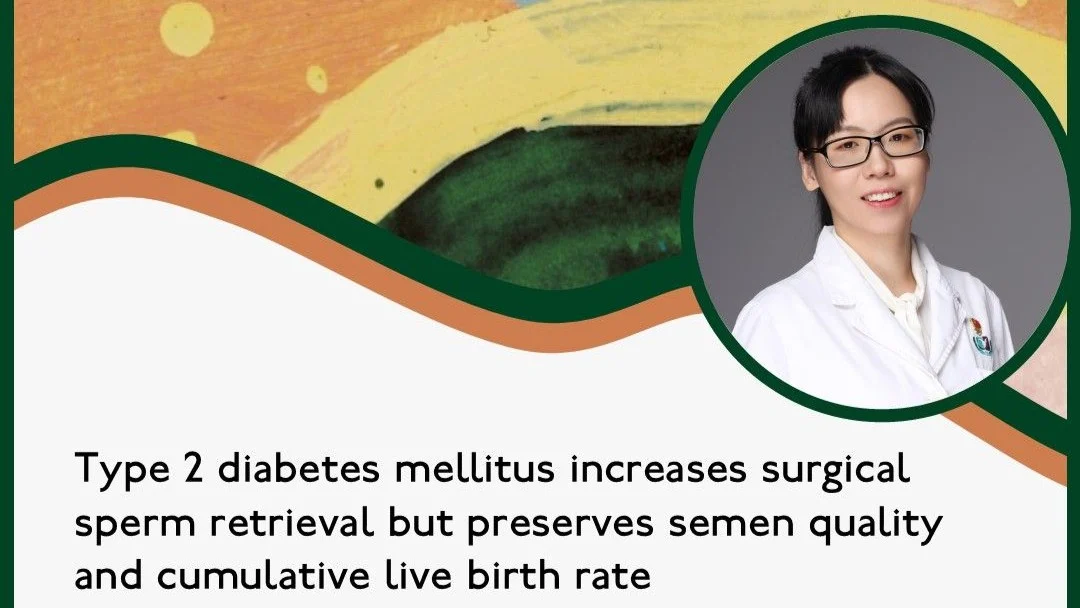
Type 2 DM Preserves Semen Quality and Cumulative Live Birth Rate – RBMO
Reproductive BioMedicine Online (RBMO) shared a post on LinkedIn:
“The results of this new study into male type 2 diabetes mellitus show that while it is significantly associated with surgical sperm retrieval, it does not adversely affect conventional semen quality or cumulative live birth rates in modern ART.
Moreover, the authors show that among men with T2DM, varying levels of glycemic control show no significant influence on ART outcomes.
These findings offer critical reassurance for couples with suboptimal glucose management, affirming that metabolic dysregulation in men does not preclude comparable ART success.
The full paper is available now as a pre-proof to RBMO subscribers from our in-press articles section now.”
Title: Type 2 diabetes mellitus increases surgical sperm retrieval but preserves semen quality and cumulative live birth rate
Authors: Hanyan Liu, Feixue Han, Xiaomin Li, Tianwen Peng, Zhicong Chen, Man Wu, Jiajing Lin, Hongfei Ke, Zhiying Huang, Zhijie Li, Geng An
Stay updated on all scientific advances in the field of fertility with Fertility News.
-
Oct 8, 2026, 17:18Khalil Faaed: Vitrification Prevents Ice, but Does It Prevent Oocyte Damage?
-
Oct 8, 2026, 17:16Ritu Anand: Better Conversations Ultimately Lead to Better Care in Fertility
-
Oct 8, 2026, 17:14Mark Trolice: Excited to Speak at Women’s HealthX
-
Oct 8, 2026, 17:12Delighted to Welcome Dr. Róisín Mortimer – Waterstone Clinic-IVF and Fertility
-
Oct 8, 2026, 17:09Deirdre Zander-Fox: Pleased to Be an Invited Speaker at ESHRE Precision ART
-
Oct 8, 2026, 17:06Roohi Jeelani: Is Modern Life Actually Making It Harder to Get Pregnant?
-
Oct 8, 2026, 17:04Robert Borowczyk: We Judge the Newest IVF Consultation Group Too Quickly…
-
Oct 8, 2026, 17:01Carlos Guerrero: Great Couple of Days Visiting the Team at New Leaders in Fertility and Endocrinology
-
Oct 8, 2026, 17:00Sarah Banks: Improving Patient Experience Isn’t Always About Making Huge Changes…