
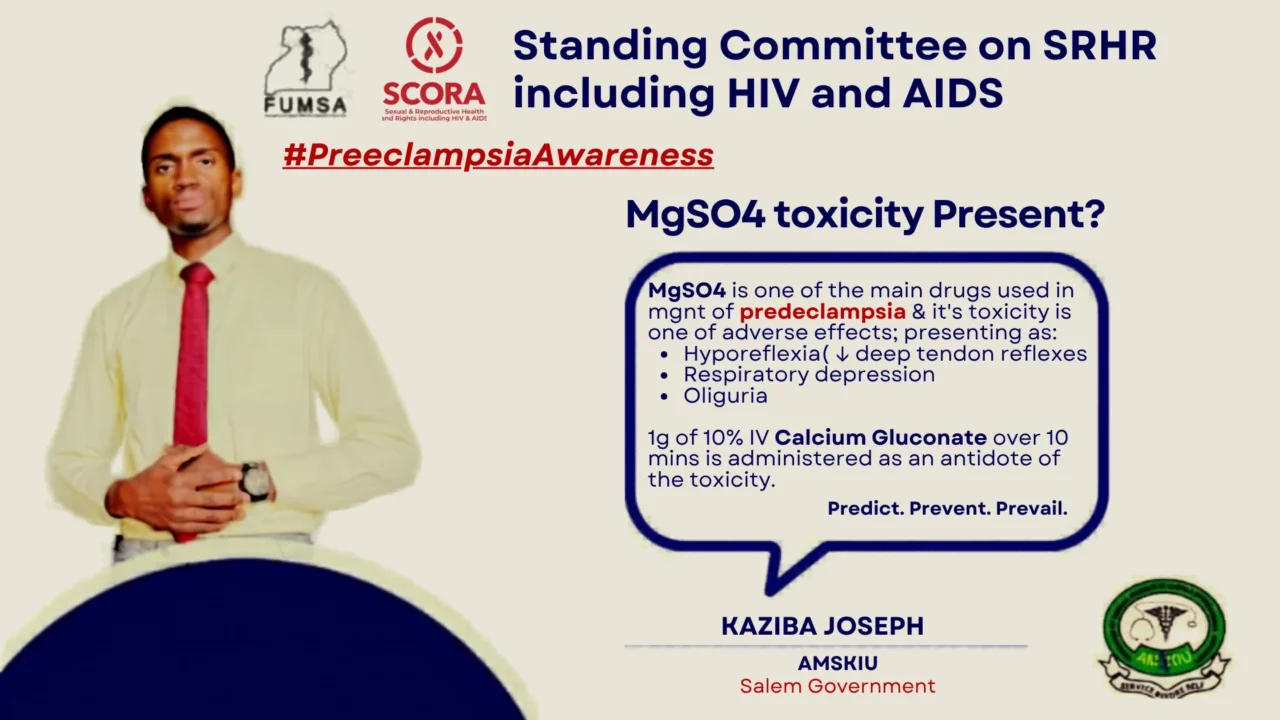
Kaziba Joseph: Overview of Preeclampsia in Pregnancy and Postpartum Care
Kaziba Joseph, Student at University at Kampala International University, shared a post on LinkedIn:
“Preeclampsia is a serious blood pressure condition that can develop during pregnancy, typically occurring after 20 weeks of gestation. It can also occur in the postpartum period (after delivery).
If left unmanaged, it can lead to severe complications for both the mother and the baby, including eclampsia (seizures) or organ damage.
Common Symptoms
While some women may have no symptoms at first, the most frequent signs include:
- High Blood Pressure: Readings of 140/90 { mmHg} or higher.
- Proteinuria: Excess protein in the urine (signs of kidney stress).
- Vision Changes: Blurred vision, seeing spots, or light sensitivity.
- Severe Headaches: Often described as a dull or throbbing pain that doesn’t go away with standard treatment.
- Swelling (Edema): Specifically sudden swelling in the face and hands.
- Pain: Often felt in the upper abdomen, usually under the ribs on the right side.
Causes and Risk Factors
- The exact cause is often linked to the health of the placenta.
- Factors that may increase risk include:
- Chronic hypertension (high blood pressure before pregnancy).
- First-time pregnancy.
- Age (under 20 or over 35).
- History of preeclampsia in previous pregnancies.
- Carrying multiples (twins or triplets).
- Conditions like diabetes, lupus, or kidney disease.
Management and Treatment
The most effective ‘cure’ for preeclampsia is the delivery of the baby and placenta.
However, doctors may manage it based on the severity and the stage of pregnancy.”
Stay updated on all scientific advances in the field of fertility with Fertility News.
-
Oct 24, 2026, 18:02PGT-A and EMMI: 2 Complementary Views of the Same Embryo – Noor Sciences
-
Oct 24, 2026, 17:59Mark Amols: Took the Next Step and Built TacoBoutFertility.com
-
Oct 24, 2026, 17:43Michael Rimmer: Extracellular Vesicles in Reproductive Physiology and Pathology
-
Oct 24, 2026, 17:34Looking Forward to ASRM 2026 – NYU Langone Fertility Center
-
Oct 24, 2026, 17:28Donating Sperm Could Help Someone Achieve Their Dream of Becoming a Parent – Complete Fertility
-
Oct 24, 2026, 17:26Arshhita A.: 3PN Oocytes – Why Does Fertilization Go Wrong?
-
Oct 24, 2026, 17:22Tareq Abadl: Sperm Morphology – A Practical Laboratory Guide
-
Oct 24, 2026, 17:12Rana Mondal: Can We Replace Daily Fertility Injections with a Simple Daily Pill?
-
Oct 24, 2026, 17:03Evaluating Hysteroscopic Subendometrial Human Umbilical Cord Blood Platelet-Rich Plasma Injection – RBMO