

Placental Biomarkers May Reveal Long-Term Heart Risk After Preeclampsia – Preeclampsia Foundation
Preeclampsia Foundation shared a post on LinkedIn:
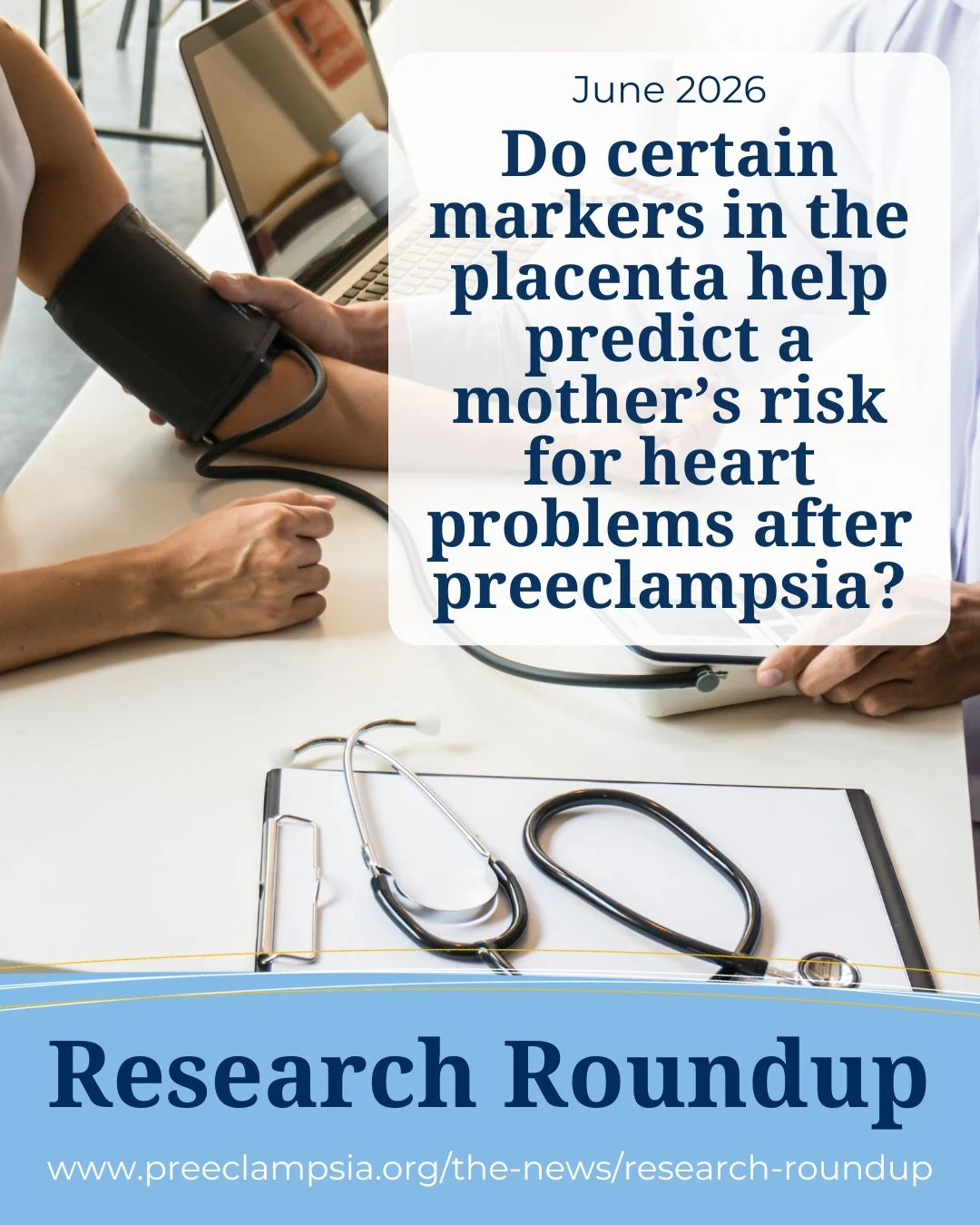
“Researchers wanted to know if certain markers in the placenta, like FLT-1, ENG, and CD68, could help predict a mother’s risk for heart problems six months after having preeclampsia.
Determining the Risk Elevation after Maternity (DREAM) cohort study from inpatient services at The Ottawa General Hospital (Ottawa, ON, Canada) used measurements of placenta damage, the presence of specific proteins, and clinical factors to develop a model that could predict an individual’s lifetime CVD risk soon after delivery.
While clinical factors such as total cholesterol, fasting glucose, systolic and diastolic blood pressure, the use of antihypertensive drugs, and smoking status are useful for calculating lifetime risk of CVD in general, for preeclampsia patients more individualized risk calculations soon after delivery could improve long term cardiovascular health.
Evidence of lesions in placental tissue as well as the presence of specific proteins at the time of delivery can offer clues about the subtype of preeclampsia experienced during each pregnancy. Lesions characteristic of Chronic inflammation along with CD68 proteins are associated with the inflammatory subtype and lower cholesterol levels at 6 months postpartum. The presence of Maternal vascular malperfusion (MVM) type lesions along with protein markers FLT-1 and ENG are indicative of the hypoxic subtype of preeclampsia and predict elevated systolic blood pressure and cholesterol — both factors of high lifetime CVD risk.
This pilot study shows that evaluating placental damage, biomarker presence, and other clinical data can enhance prediction of CVD risk after preeclampsia. These exploratory findings highlight the potential of more individualized CVD risk stratification following a hypertensive pregnancy.
TAKE HOME MESSAGE: More research is needed in the US and Canada to help determine if testing the placenta after birth can help doctors figure out which women would benefit most from specialized cardiovascular follow-up after preeclampsia to help prevent CVD. If you had preeclampsia, it is important to follow up with your primary care provider beyond pregnancy.
Citation: Erika Mery, Julia Hajjar, Shrreya Sudade, Goutham Vasam, Samantha Benton, Laura Gaudet, Dina El Demellawy, David Grynspan, Shannon Bainbridge, Placental anti-angiogenic and inflammatory markers and postpartum cardiovascular risk following preeclampsia, Placenta, Volume 176, 2026,Pages 43-52, ISSN 0143-4004.”
Title: Placental anti-angiogenic and inflammatory markers and postpartum cardiovascular risk following preeclampsia
Authors: Erika Elizabeth Mery, Julia Hajjar, Shrreya Sudade, Goutham Vasam, Samantha Benton, Laura Gaudet, Dina El Demellawy, David Grynspan, Shannon Bainbridge
Read the full article.

Stay updated on all scientific advances in the field of fertility with Fertility News.
-
Oct 29, 2026, 15:10From the President’s Gala to Booth 905 at ASRM 2026 – First Fertility
-
Oct 29, 2026, 15:04Proud to Spotlight Dr. Jannie Michielsen and the Expertise She Brings to Every Day – Sims IVF
-
Oct 29, 2026, 14:59Jodi Neuhauser: We Need a Graveyard of Women’s Health Companies (In a Positive Way)
-
Oct 29, 2026, 14:56Resa Nabor: An Inspiring Story of Strength, Courage, and Never Giving Up
-
Oct 29, 2026, 14:54Robert Borowczyk: What Happens After a Failed IVF Cycle?
-
Oct 28, 2026, 15:55Katy Encalade: What Are the Biggest Myths About Egg Donation?
-
Oct 28, 2026, 15:53Diana Kayal: A Free Webinar on Trauma, Infertility and the Patient Journey
-
Oct 28, 2026, 15:49Rebecca Watson O’Connor: Applications for the 2027 PRIMED Cohort Are Open
-
Oct 28, 2026, 15:45Martin Varsavsky: Gameto Has Been Acquired by Ferring for 1.38 Billion Dollars