

Swarup K. Chakrabarti: The Gut-Ovary Connection – A New Frontier in Fertility
Swarup K. Chakrabarti, Founder and Director of Biotech Consulting Services, shared on LinkedIn:
“The Gut-Ovary Connection: A New Frontier in Fertility
The Fertility Story Is Bigger Than the Ovary
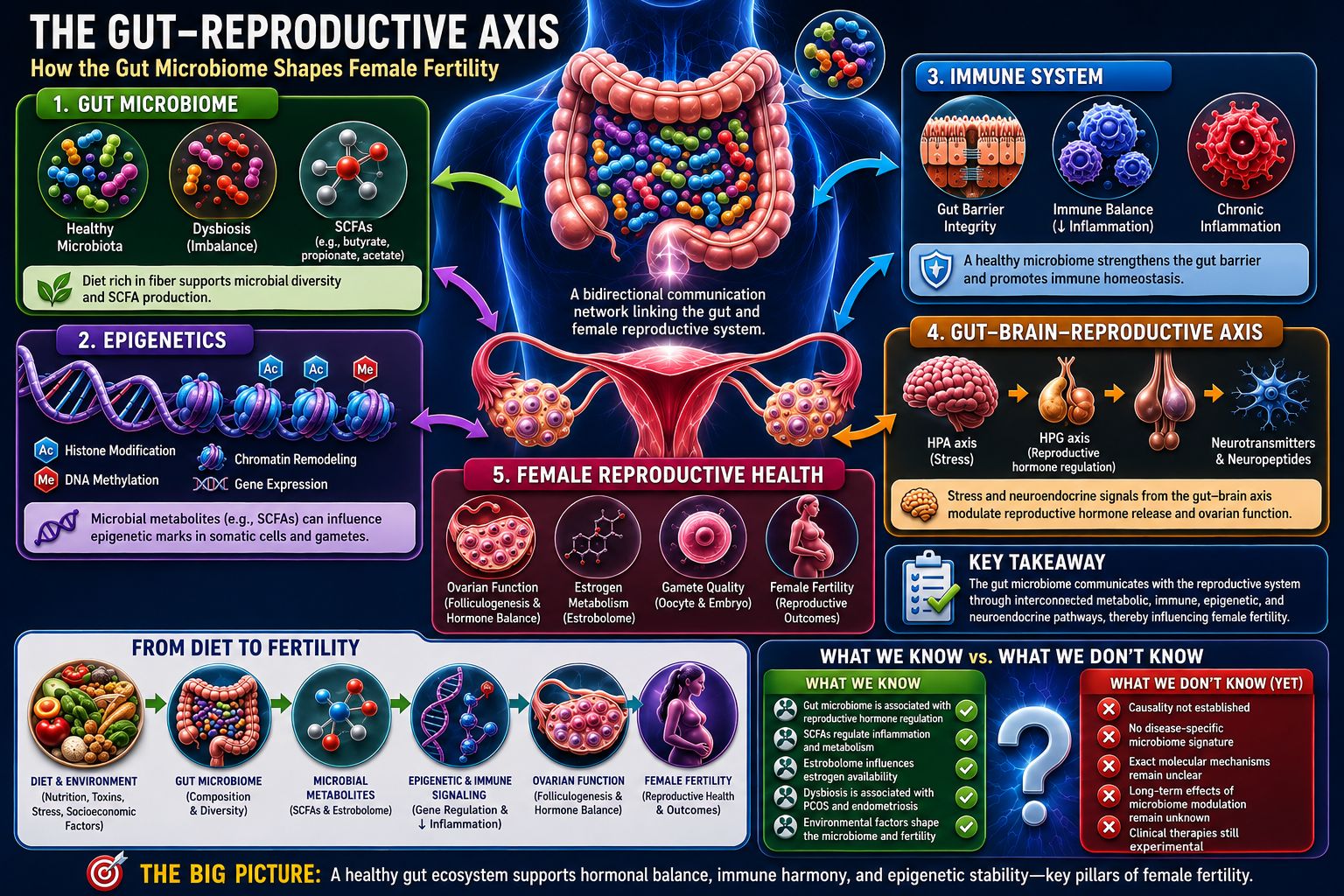
Over time, our understanding of female fertility has expanded beyond the ovaries, uterus, and hormonal signals that regulate reproduction. Emerging research suggests that reproductive health is influenced by a broader biological network involving the gut microbiome, metabolism, immune signaling, environmental exposures, and chronic stress.
This concept, known as the gut-reproductive axis, highlights that trillions of microbes residing in our intestine are not passive passengers but active contributors to systemic biology.
The Hidden Conversation Between Microbes and Hormones
Gut microbes produce bioactive molecules, including short-chain fatty acids (SCFAs), bile acid metabolites, and inflammatory mediators, that can influence immune function, metabolism, and hormonal pathways. One intriguing area involves the estrobolome – microbial genes that can modify estrogen metabolism by influencing estrogen reactivation and elimination.
Alterations in the gut microbiome have been associated with conditions such as polycystic ovary syndrome (PCOS), endometriosis, and infertility. But an important question remains: Can restoring the gut microbiome through fecal microbiota transplantation (FMT), probiotics, or prebiotics restore ovarian function or improve fertility outcomes?
At present, the answer is unknown. Most evidence remains observational in humans, and many mechanistic insights come from animal studies. These findings suggest possible pathways but do not prove that microbiome changes directly cause infertility.
Can Microbiome Science Transform Fertility Care?
The significance of the gut–reproductive axis may therefore be less about immediate treatments and more about expanding how we understand reproductive health. Fertility does not exist in isolation; it reflects continuous communication among organs, immune systems, metabolism, environment, and lived experience.
Future large-scale, longitudinal human studies integrating microbiome profiles with hormonal, genetic, metabolic, and environmental data will be needed to determine whether microbiome-based interventions have a true clinical role. For now, evidence supports a broader approach to health: a diverse, minimally processed diet, reduced exposure to harmful environmental chemicals where possible, and attention to metabolic and psychological well-being.
The belief that fertility resides only in the ovaries was not wrong – but it was incomplete. Behind every fertility journey is a person, and understanding this complex biological conversation may help medicine move toward more personalized and compassionate care.
Based on the article: ‘The Gut-Reproductive Axis and Female Fertility: An Overview (2026)”
Title: The Gut-Reproductive Axis and Female Fertility: An Overview
Author: Swarup K. Chakrabarti
You can read the Full Article in the Journal of Women’s Health Care and Gynecology.
Stay informed with the latest updates in fertility and reproductive medicine on Fertility News.
-
Sep 21, 2026, 17:49Anna David: Can You Predict Pregnancy Outcome at Diagnosis of Early-Onset FGR?
-
Sep 21, 2026, 17:44Caspian Ostadian: Oocyte Abnormalities and Blastocyst Formation
-
Sep 21, 2026, 17:40Eric Lameignere: What If Part of the Sperm DNA Damage We Observe is Actually Created in the IVF Laboratory Itself?
-
Sep 21, 2026, 17:29Angelo Tocci: Paying More Without Improving Assisted Reproduction Outcomes
-
Sep 21, 2026, 17:22Santiago Munne: The Latest Bpisode of The Baby Blueprint, About the Worldwide Decline in Birth Rates
-
Sep 21, 2026, 17:12Zeinab Kazemianpour: 1 Embryo, 2 Different Biopsy Strategies
-
Sep 21, 2026, 17:10Diksha Kanekar: A Day in the Life of an Embryologist
-
Sep 21, 2026, 17:06Elias Tsakos: IVF Does Not Increase the Risk of Breast Cancer
-
Sep 21, 2026, 17:03Fertility Awareness Starts with Knowledge – Laboratory of Reproductive Biology, Rigshospitalet