

Amos Grünebaum։ The Big Concern Is Making Sure Doctors Use AI Without Putting Patients at Risk
Amos Grünebaum, Professor of Obstetrics and Gynecology at Donald and Barbara Zucker School of Medicine, shared a post on LinkedIn about a paper he co-authored with colleagues published in the American Journal of Obstetrics and Gynecology։
“We’re already seeing AI play a role in obstetric and gynecologic care.
The big concern now is not about whether doctors will use it, but about making sure they can use it without putting patients at risk.
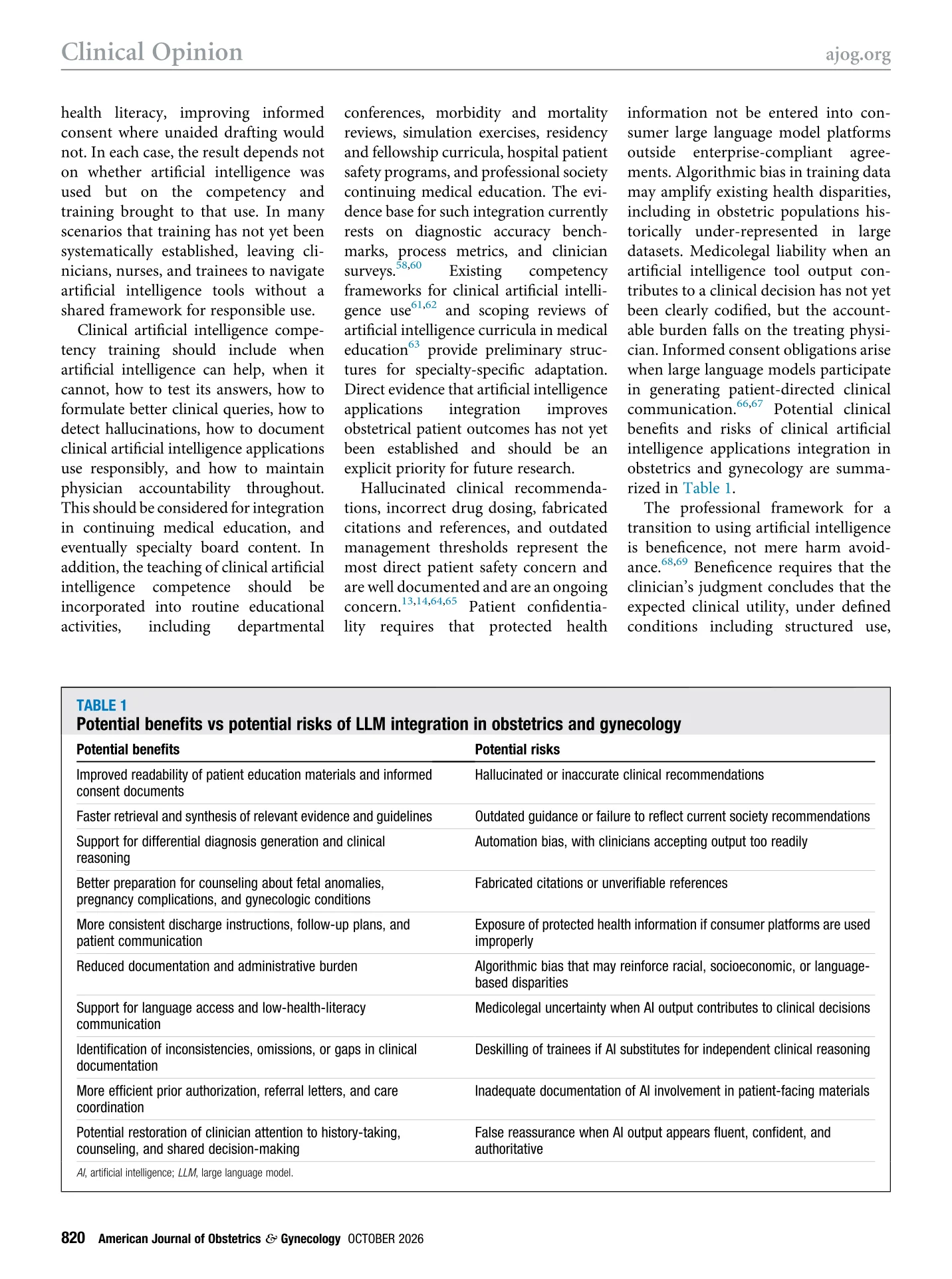
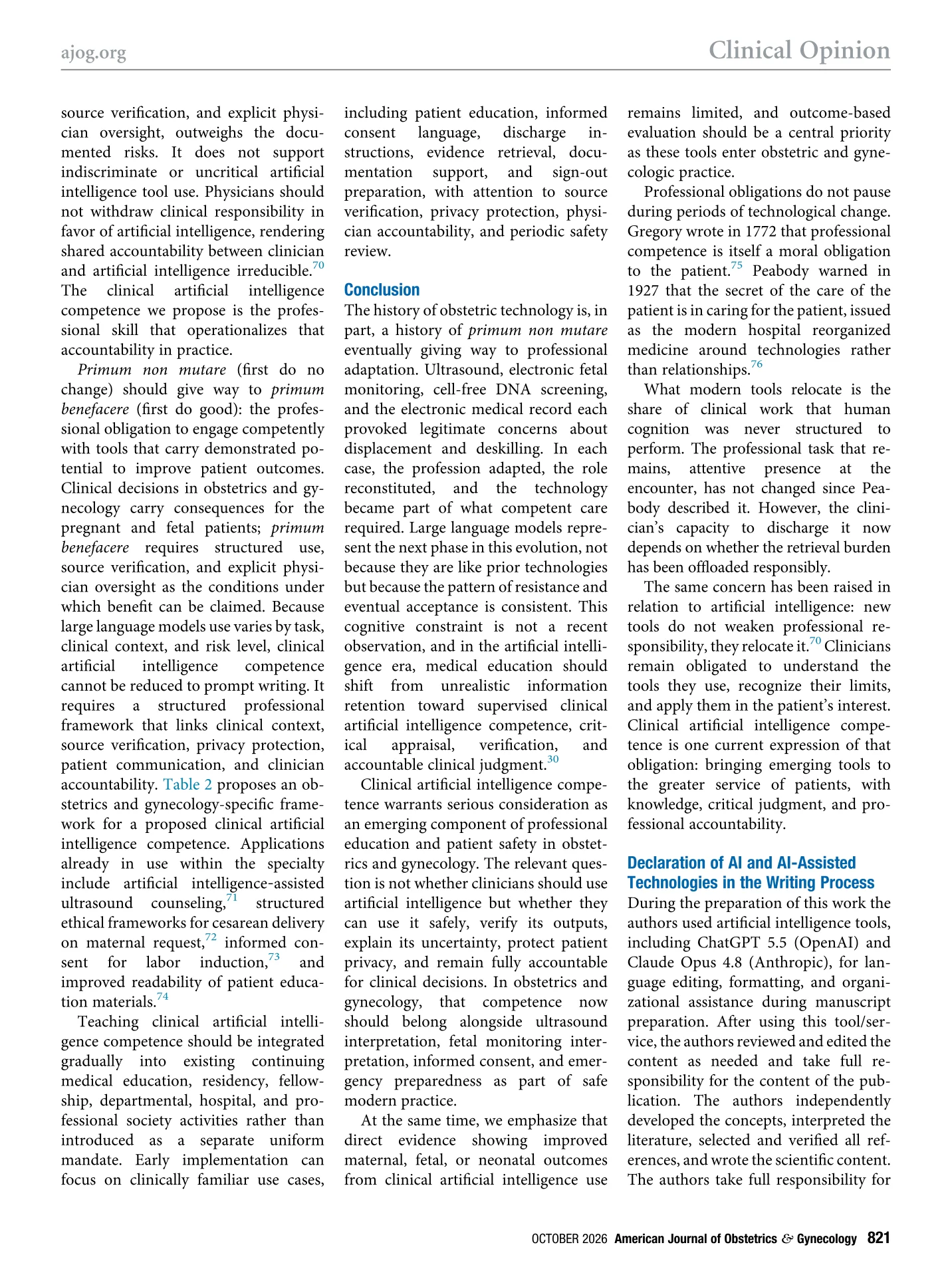
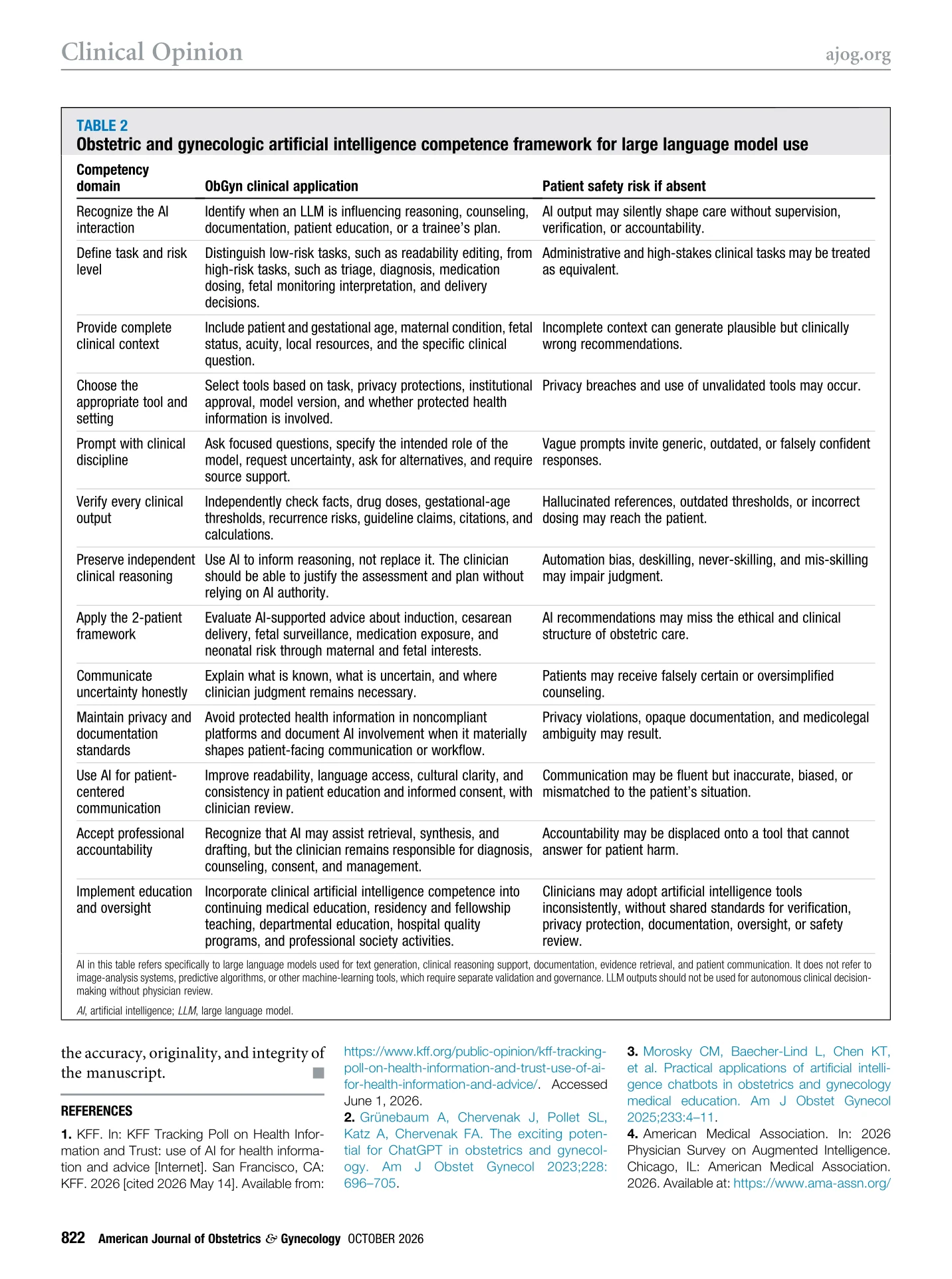
We’ve just published a new Clinical Opinion in the American Journal of Obstetrics and Gynecology, where Joachim Dudenhausen, Frank Chervenak, and I suggest that ‘clinical artificial intelligence competence’ is becoming a crucial part of being a medical professional and ensuring patient safety.
This competence is much more than prompt writing. It requires clinicians to:
- match the AI tool to the task and its clinical risk
- provide complete clinical context
- verify every fact, dose, threshold, calculation, guideline, and citation
- recognize hallucinations, bias, outdated guidance, and false confidence
- protect patient privacy
- communicate uncertainty honestly
- preserve independent clinical judgment
- remain fully accountable for diagnosis, counseling, consent, and management
AI can improve evidence retrieval, documentation, patient education, informed consent, and clinical preparation.
It can also fabricate citations, reinforce bias, breach confidentiality, and weaken reasoning when used uncritically.
In obstetrics, errors may affect both pregnant and fetal patients. AI must therefore assist clinical judgment, never replace it.
Clinical AI competence should become part of residency, fellowship, continuing education, departmental teaching, and patient-safety programs. The technology is advancing rapidly. Our professional standards must advance with it.”
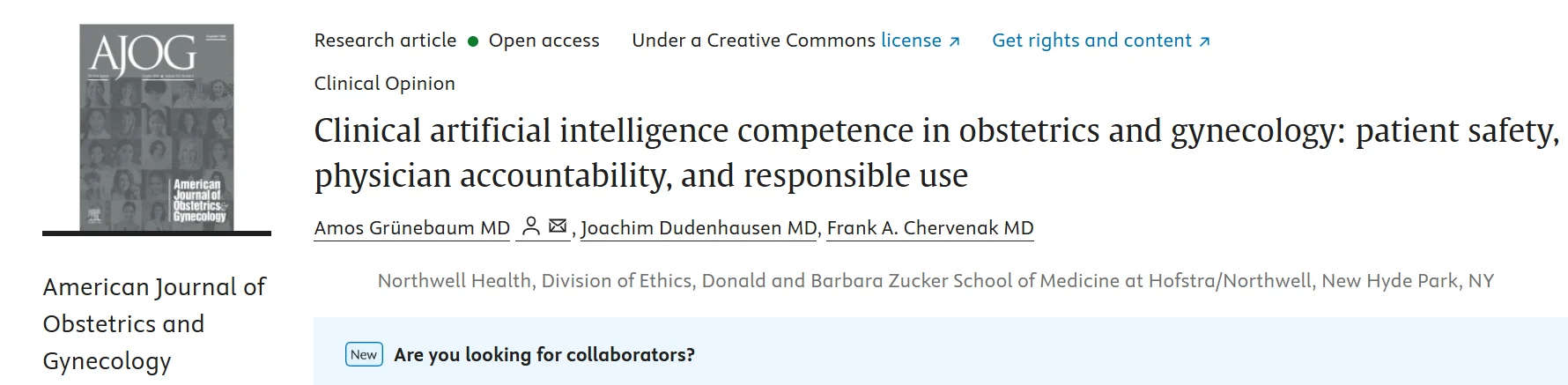
Title: Clinical artificial intelligence competence in obstetrics and gynecology: patient safety, physician accountability, and responsible use.
Authors: Amos Grünebaum, Joachim Dudenhausen, Frank A. Chervenak.
You can read the Full Article in the American Journal of Obstetrics and Gynecology.
Other articles featuring Amos Grünebaum on Fertility News.
-
Sep 21, 2026, 12:59Nagi Rostom։ Privileged to Contribute to Expanding Access to Specialist Fertility Care for Patients in Salisbury
-
Sep 21, 2026, 12:54Commonly Asked Questions about Patient Engagement Forum – HFEA
-
Sep 21, 2026, 12:48Unlocking the Mysteries of Androgen Excess – Fertility Plus
-
Sep 21, 2026, 12:45Anil Gudi: Uterine Transplantation – How Difficult Medical Innovation Should Happen
-
Sep 21, 2026, 12:32New IJGO and FIGO Guideline for the Prevention, Diagnosis and Treatment of Infertility
-
Sep 21, 2026, 12:05Kevin Pho։ Why PCOS Is Now PMOS
-
Sep 20, 2026, 15:47Christina Walker: Why Must Male Fertility Be Part of the Conversation?
-
Sep 20, 2026, 15:43A Wonderful Day of Learning and Socializing at the ARCS Symposium
-
Sep 20, 2026, 15:40Sean Lauber: Is a Day 3 or Day 5 Embryo Transfer Better?