
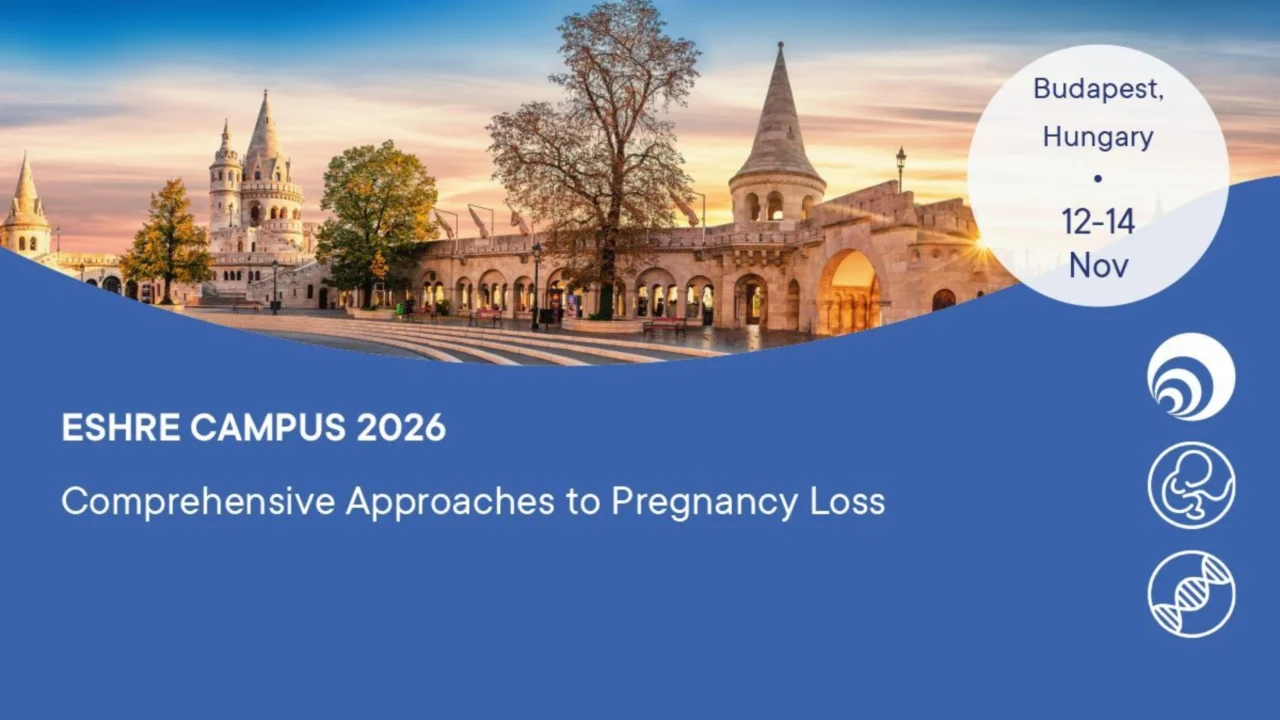
Comprehensive Approaches to Pregnancy Loss – ESHRE SIG Reproductive Genetics
ESHRE SIG Reproductive Genetics shared on LinkedIn:
“Some of the most difficult recurrent pregnancy loss consultations are not those with an obvious diagnosis, but those in which the results are inconclusive, conflicting, or difficult to interpret.
- What should we investigate next?
- Which findings are genuinely clinically relevant?
- How do we counsel patients when the evidence is uncertain?
- And when should we stop testing?
These are exactly the kinds of questions we want to discuss at Comprehensive approaches to pregnancy loss, our ESHRE Campus workshop in Budapest this November, organised by the ESHRE SIG Reproductive Genetics and ESHRE SIG Implantation and Early Pregnancy.
The programme has been designed around complex cases, evolving evidence and practical decision-making with contributions from clinicians, embryologists, geneticists and researchers working across the field.
- Budapest
- 12–14 November 2026
Early registration ends in less than 2 weeks. Secure the early rate by 12 October.”
Other articles featuring ESHRE SIG Reproductive Genetics on Fertility News.
-
Sep 24, 2026, 17:02Grateful to Have Walked Alongside So Many Long Island Patients This Year – Spring Fertility
-
Sep 24, 2026, 16:59Robert Heaton: Funded PhD Opportunity – Improving Implantation at the First Embryo Transfer
-
Sep 24, 2026, 16:56Yannick Hurni: What Does a “Normal Uterus” Actually Look Like?
-
Sep 24, 2026, 16:50The New Editors-in-Chief for the Journal of Assisted Reproduction and Genetics
-
Sep 24, 2026, 16:47Khalil Faaed: ICSI Doesn’t Just Deliver the Sperm, It Must Trigger a Molecular Signal
-
Sep 24, 2026, 16:43Devyanshi Dixit: What Does Your DNA Really Tell You About Fertility?
-
Sep 24, 2026, 16:39Valuable Complementary Information on Follicular Sensitivity During Ovarian Stimulation – RBMO
-
Sep 24, 2026, 16:35Aris Kaltsas: What GLP-1 Receptor Agonists and Tirzepatide Do to Male Reproduction
-
Sep 24, 2026, 16:32Aparna Sridhar: New Expanding Contraceptive Options Guideline by WHO