
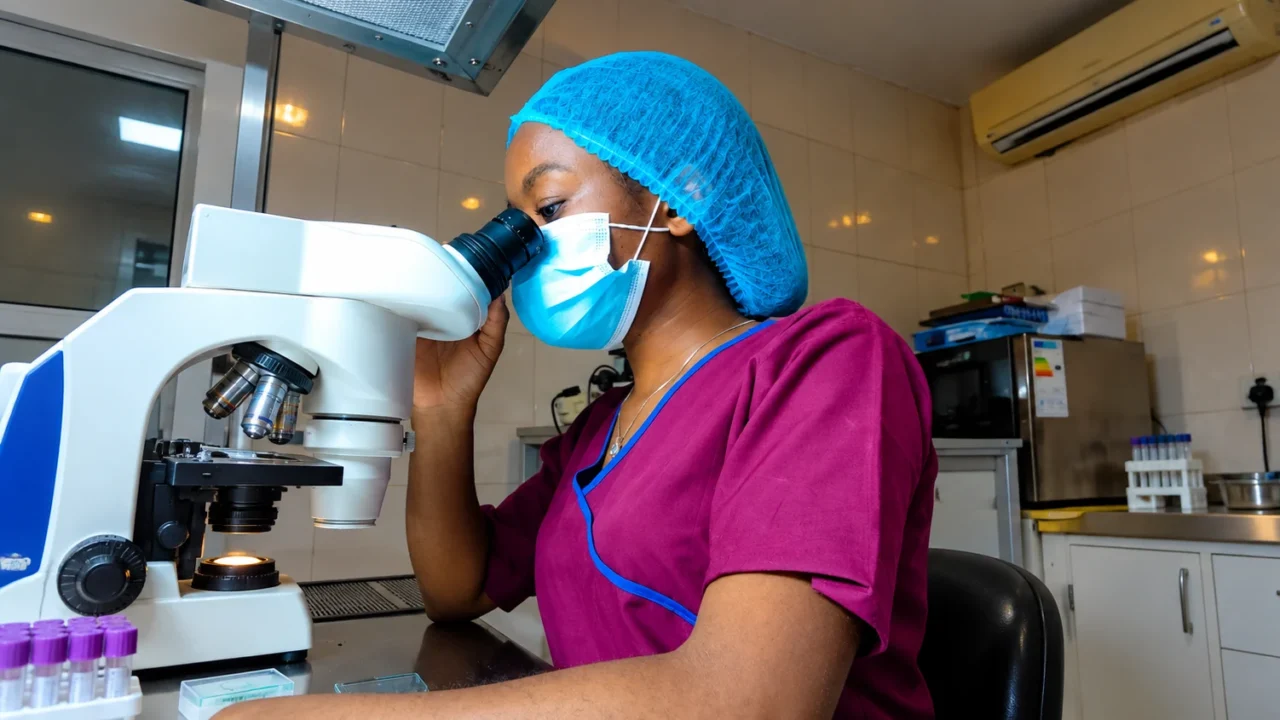
Precious Chukwuemeka: A Glimpse Behind the Embryology Laboratory Doors
Precious Chukwuemeka, Trainee Embryologist at Harmony Clinic and Fertility Center, shared on LinkedIn:
” ‘So… did the eggs fertilize?’
If you’ve ever gone through IVF, you may have asked this question the morning after egg retrieval.
And honestly, I understand why.
After the injections, monitoring, trigger shot, egg retrieval and everything that comes with an IVF cycle, it can feel like the next step should simply be:
‘Tell me if it worked.’
But inside the embryology laboratory, the answer is not that simple.
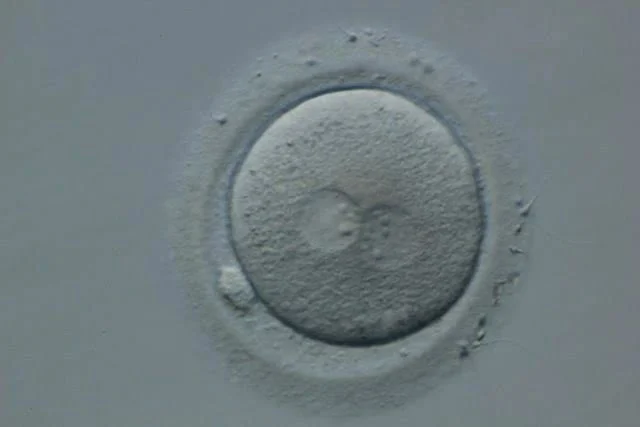
The morning after insemination or ICSI, we embryologists perform what is called a ‘fertilization check.’
And we’re not simply counting how many eggs ‘look fertilized.’
We’re looking for specific signs that fertilization has occurred normally.
One of the most important things we look for is the presence of two pronuclei (2PN).
One pronucleus represents the maternal genetic contribution.
The other represents the paternal genetic contribution.
Seeing these two pronuclei is an important indication of normal fertilization.
And then there’s the second part of the story:
What happens next?
Because fertilization isn’t the finish line.
It’s the beginning of embryo development.
And for the following days, the embryo still needs to continue dividing and developing appropriately.
Some embryos progress beautifully.
Some develop more slowly.
Some stop developing altogether.
And this is one of the realities of IVF that can be difficult to explain.
Having eggs retrieved does not automatically mean having embryos available for transfer.
There are several stages between:
- Egg retrieval
- Fertilization
- Embryo development
- Blastocyst development/cryopreservation or
- Embryo transfer
Every stage tells us something different.
After my embryology training, I began to appreciate how much information can come from looking at something that is invisible to the naked eye.
A few cells under a microscope can tell us that a remarkable biological process is ongoing.
And yet, even with all the technology and knowledge we have today, we still cannot predict every outcome with total assurance.
That’s probably one of the most humbling things about embryology.
- We observe.
- We assess.
- We support.
- We optimize.
But biology still has its own story to tell.
So, if you’ve ever wondered what embryologists are actually looking for the morning after fertilization, I hope this gives you a little glimpse behind the laboratory doors.”
Other articles featuring Precious Chukwuemeka on Fertility News.
-
Sep 27, 2026, 15:51Saadat Hassan: Reproductive Ageing Is Not Just about Chromosomes…
-
Sep 27, 2026, 15:35Lilian Yee: A Little “Bun” in the IVF Lab
-
Sep 27, 2026, 15:27Understanding the Clinical Implications of Ovulation Induction – Fertility Plus
-
Sep 27, 2026, 15:19Bhumika: Does the Culture Environment Change the Outcome?
-
Sep 27, 2026, 15:13Ingemārs Sokolovskis: Thoughts after Day 2 at the AIFertility World Conference
-
Sep 27, 2026, 15:04Huzaifa Gulzar: Right Equipment, Right Protection, Safer Laboratory
-
Sep 27, 2026, 14:55Yasmin Sajjad: A Wonderful Day at the Fertility Preservation and Modern IVF Scientific Seminar
-
Sep 27, 2026, 14:32From Ovarian Stimulation to Embryo Transfer: Rethinking OHSS Prevention in Modern IVF
-
Sep 27, 2026, 13:39David Qiuping Peng: There Is Maybe a Blastocyst Maturation-Competence Theory