
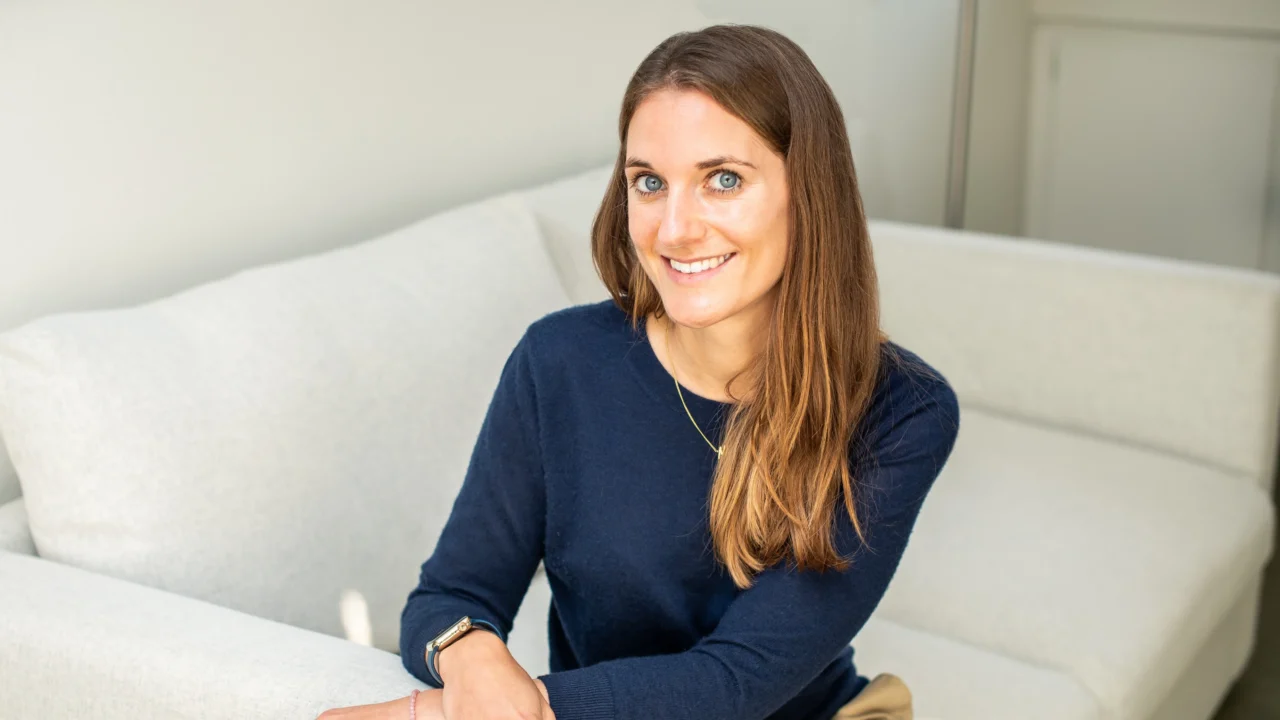
Susanne Mitschke: Having a Baby at 38 Does Not Add Years to Your Life
Susanne Mitschke, CEO and Co-Founder of Citruslabs, shared on LinkedIn:
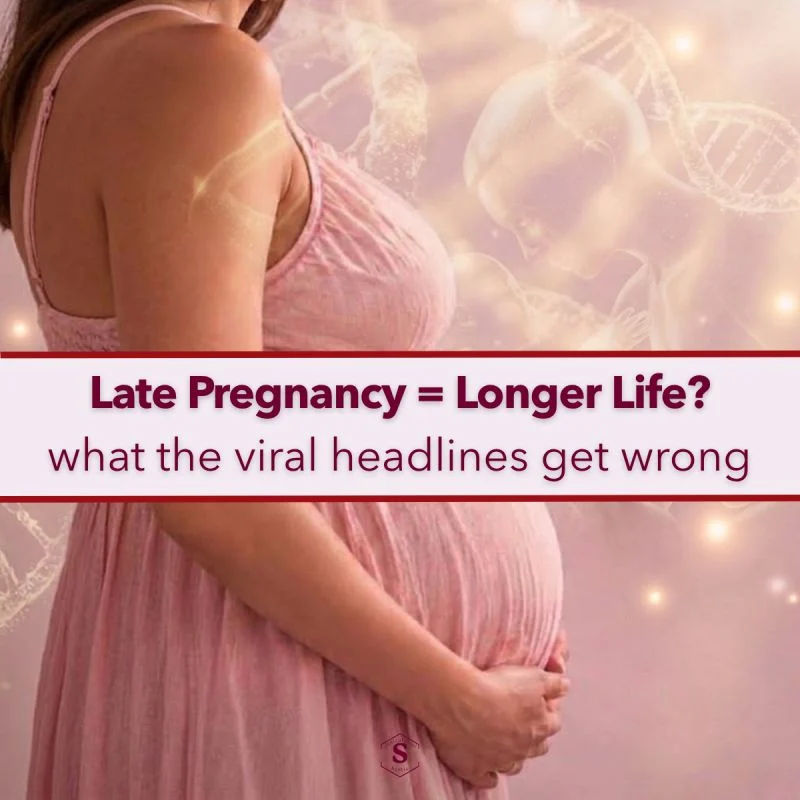
“Women who have their last baby after 33 are twice as likely to live to 95.
This finding comes from the Long Life Family Study, and it has been making the rounds again this month as proof that late motherhood is good for you.
The study is fine. The conclusion people are drawing from it is somewhat backward, though.
Having a baby at 38 does not add years to your life. Being able to conceive naturally at 38, however, says a lot about your body.
Entering…. my latest obsession: Ovarian aging! (IMO, the KEY to longevity).
Ovarian aging tracks the rest of the body’s aging fairly closely, so a woman whose ovaries are still working well in her late 30s is, on average, a woman whose cells are aging more slowly across the board.
The pregnancy is the result of slower aging, not the reason for it. And late fertility is a symptom of aging well.
The headlines have that backward.
Two other things are sitting inside that correlation. Women who have children later are more educated, earn more, and have better access to healthcare, and each of those predicts a longer life on its own.
And there is also a genetic layer: women with a later last birth have longer telomeres, and several of the gene variants that delay ovarian aging are the same ones that protect against cardiovascular disease and cognitive decline.
Good genes give you both the late baby and the long life.
Now the bummer: The IVF version of this doesn’t work. Egg freezing and assisted reproduction can get you pregnant at 40, and even in your late 40s! However, they cannot give you the biology of a woman who got pregnant at 40 on her own.
You end up with the same pregnancy, but not the same body that the longevity data was describing.
There is one thing I do like about this conversation.
Most of us grew up hearing that fertility drops off a cliff after 35, and that the clock was a countdown to a body that stops working. A pregnancy after 35 is even called a ‘geriatric pregnancy.’
But the longevity data shows something different. Fertility declines at a different pace for every woman, and that pace reflects how her body is aging overall. It is information about you, not a verdict on you.
But I’ve watched this go from a study to a headline to family-planning advice in about eighteen months. Pregnancy after 35 still carries higher rates of gestational diabetes, preeclampsia, and chromosomal abnormalities. Nothing in the longevity data changes that, because, again, the longevity was never caused by the pregnancy (it’s the other way round).
So, if you get pregnant naturally at 39, that’s good news about your body (and your rate of aging).
But please don’t wait to have kids because you read somewhere that it makes you live longer.
It doesn’t.
And if living longer is the goal, your sleep, your heart, your blood sugar, and how you handle stress matter far more than how old you were when you had your kids.”
Wendie Pasterick Aston, Owner at Wendie Aston Wellness Fertility and Hypnotherapy, shared this post, adding:
“It takes a minimum of 3 months to improve egg and sperm. What if you spend 6 months optimizing fertility with me? Or a year? Reverse age yourself!”
Stay informed with the latest updates in fertility and reproductive medicine on Fertility News.
-
Oct 3, 2026, 18:27Non-Invasive Prenatal Testing: Science, Counselling, Global Access and Equity – IJGO
-
Oct 3, 2026, 18:19Erica Marsh: Congratulations to the 4 Doctors Who Were Named 2026 Top Docs by Hour Detroit Magazine
-
Oct 3, 2026, 18:16Shizuko Takahashi: What about the “Biological Clock” in Men?
-
Oct 3, 2026, 18:11Devyanshi Dixit: Call for Speakers for GFWH 2026
-
Oct 3, 2026, 18:06Shaun Greenaway: The More We Understand Male Fertility, the Better Decisions We Can Make
-
Oct 3, 2026, 17:55Reproductive BioMedicine Online’s Latest Issue, 53.4, Is Out
-
Oct 3, 2026, 17:50Ananya Anand Kumar: Excited to Share that My Cryopreservation Abstract Was Accepted for Fertility 2027
-
Oct 3, 2026, 17:48Pregnancy of the Future: Predicting, Preventing, and Treating the Great Obstetric Syndromes – SMFM
-
Oct 3, 2026, 17:46PMOS Was Never Just About the Ovaries… – PCOS Awareness Association