
When ICSI Becomes Routine: Is Conventional IVF Being Overlooked in Non-Male-Factor Infertility?
“Intracytoplasmic sperm injection (ICSI) transformed assisted reproduction by providing an effective fertilization strategy for severe male-factor infertility and previous fertilization failure. Since its introduction in 1992, its use has expanded beyond these original indications to unexplained infertility, low oocyte yield, diminished ovarian reserve, advanced maternal age, and preimplantation genetic testing (PGT), including cycles without severe male-factor infertility (ASRM Practice Committee, 2026).
This expansion raises an important clinical question: when conventional in vitro fertilization (cIVF) remains biologically feasible, does routine ICSI improve outcomes that matter most to patients?
The distinction is important because fertilization is an intermediate laboratory outcome, whereas live birth represents a patient-important treatment outcome. A change in fertilization rate or total fertilization failure (TFF) does not necessarily translate into a higher probability of live birth.
Does ICSI improve live birth when severe male-factor infertility is absent?
The most recent randomized evidence does not demonstrate a live-birth advantage for ICSI over cIVF in couples without severe male-factor infertility.
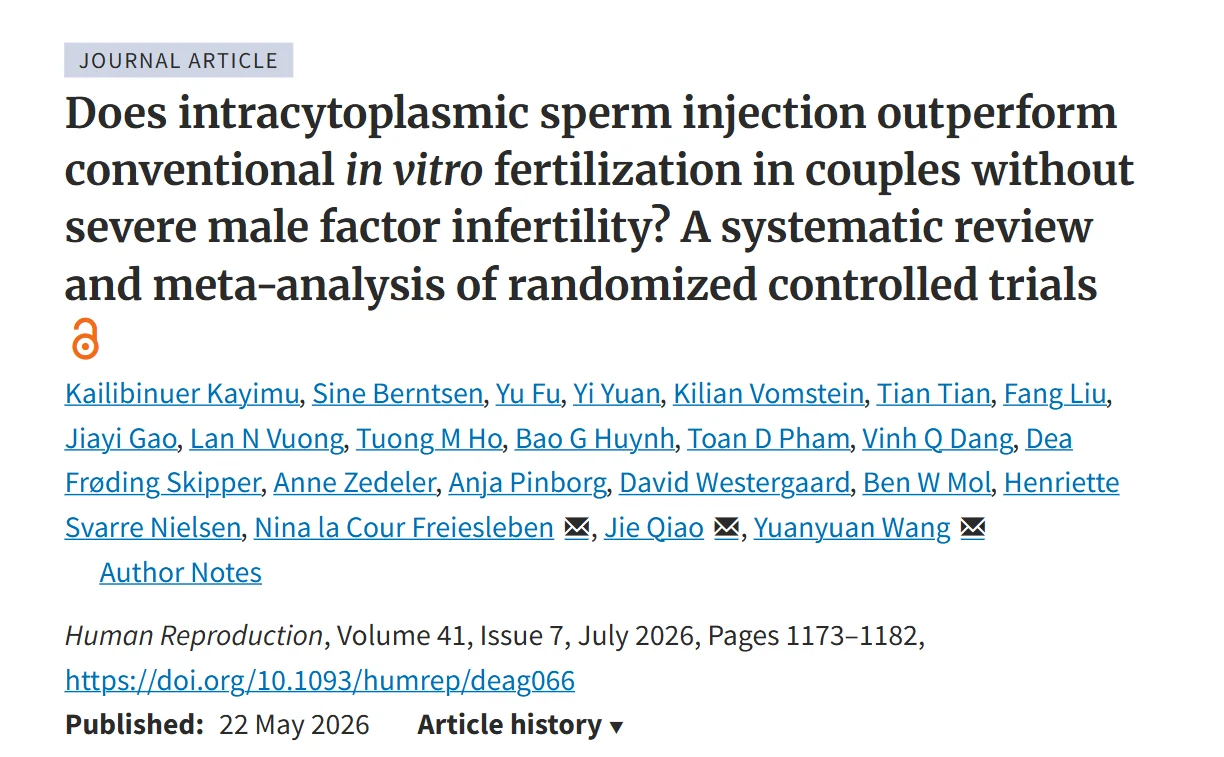
A 2026 systematic review and meta-analysis of six randomized controlled trials found no benefit of ICSI over cIVF for live birth or cumulative live birth. For live birth, four trials involving 1,438 couples reported rates of 32.8% with ICSI and 34.5% with cIVF, with a pooled risk ratio (RR) of 0.96 (95% CI 0.85–1.09). For cumulative live birth, three trials involving 1,911 couples reported rates of 43.2% and 47.4%, respectively, with a pooled RR of 0.92 (95% CI 0.84–1.01). The evidence for both outcomes was rated as high quality (Kayimu et al., 2026).
In the 2021 randomized controlled trial by Dang et al., 1,064 couples with normal total sperm count and motility were assigned to ICSI or cIVF. Live birth after the first embryo transfer occurred in 35% of couples assigned to ICSI and 31% assigned to cIVF. The difference was not statistically significant (RR 1.11, 95% CI 0.93–1.32; P=0.27) (Dang et al., 2021).
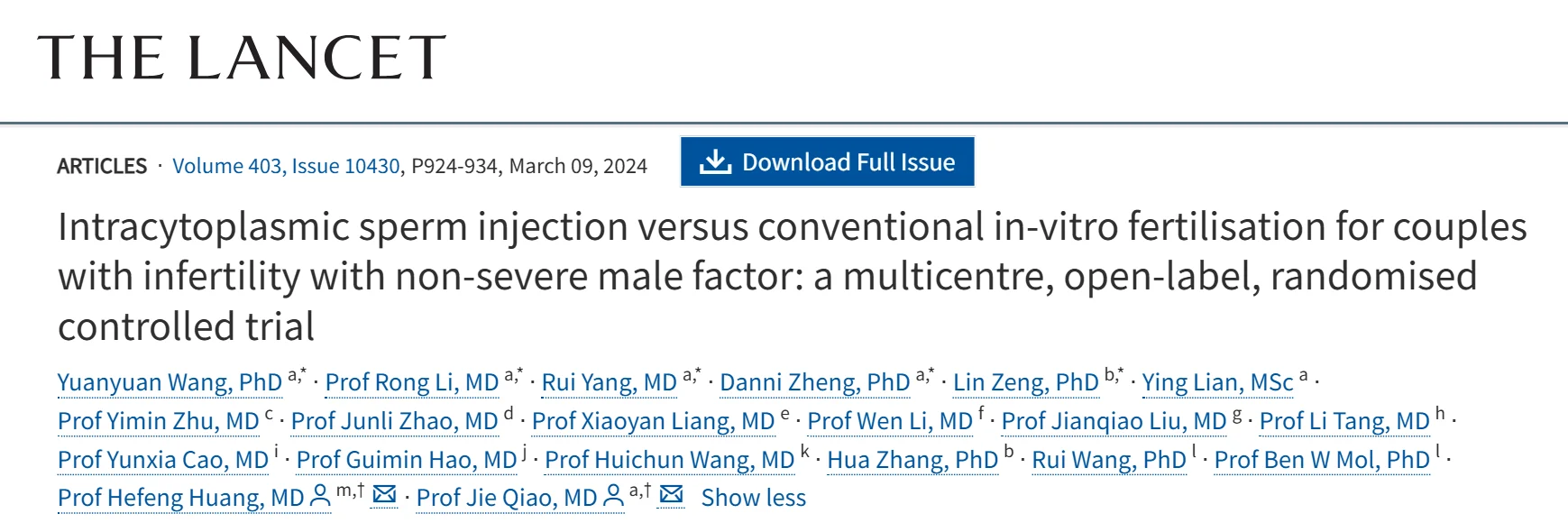
The 2024 multicentre Lancet trial randomized 2,387 couples with non-severe male-factor infertility. Live birth after the first embryo transfer occurred in 33.8% after ICSI and 36.6% after cIVF (adjusted RR 0.92, 95% CI 0.83–1.03; P=0.16) (Wang et al., 2024).
The 2025 INVICSI randomized clinical trial included 824 women undergoing their first IVF cycle without severe male-factor infertility. Cumulative live birth was 43.2% after ICSI and 47.3% after cIVF (RR 0.91, 95% CI 0.79–1.06) (Berntsen et al., 2025).
If ICSI addresses fertilization failure, why does this not necessarily improve live birth?
Total fertilization failure is an important laboratory outcome. When no oocyte fertilizes, no embryo becomes available for transfer. Preventing TFF therefore remains a relevant consideration when selecting an insemination strategy.
However, reducing TFF is not equivalent to increasing live birth.
In the 2021 Dang trial, fertilization failure occurred in 5% of couples assigned to ICSI and 6% assigned to cIVF, without a statistically significant difference (RR 0.85, 95% CI 0.53–1.38; P=0.60) (Dang et al., 2021). The INVICSI trial similarly reported TFF in 4.8% of the ICSI group and 3.7% of the cIVF group, with no statistically significant difference (Berntsen et al., 2025).
What do the 2026 ASRM and ESHRE recommendations say?
The 2026 American Society for Reproductive Medicine (ASRM) Committee Opinion specifically evaluated ICSI for non-male-factor indications. ASRM states that, in the absence of male-factor infertility or previous fertilization failure, routine ICSI for all oocytes does not improve live birth rates. The Committee Opinion does not recommend routine ICSI for unexplained infertility, low oocyte yield, diminished ovarian reserve, advanced maternal age, or PGT-A in the absence of male-factor infertility (ASRM Practice Committee, 2026).
The same document distinguishes these situations from selected indications with a specific rationale, including previous poor or failed fertilization with conventional insemination, selected PGT-M cycles and fertilization of previously cryopreserved oocytes.
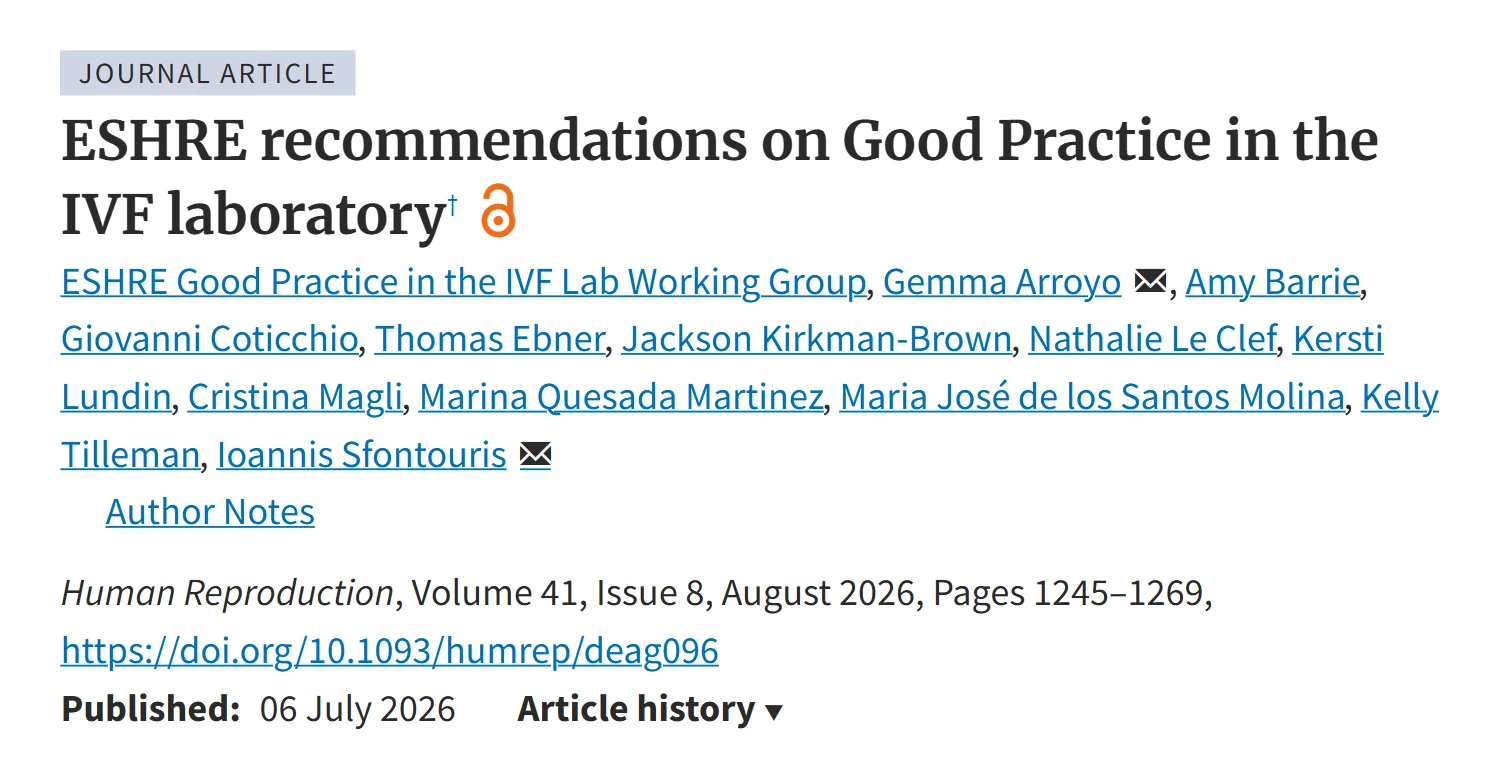
The 2026 ESHRE recommendations on Good Practice in the IVF Laboratory similarly state that there is no evidence for an advantage of ICSI over cIVF in non-male-factor infertility with respect to pregnancy outcomes, live birth rates or cumulative live birth rates (ESHRE Working Group on Good Practice in the IVF Laboratory, 2026).
Does previous fertilization failure, low oocyte number, or PGT change the indication?
Previous fertilization performance is an important factor separating routine ICSI from indication-based ICSI. When conventional insemination has previously resulted in unexpectedly low fertilization or complete fertilization failure, the previous laboratory outcome provides information that influences the insemination strategy in a subsequent cycle.
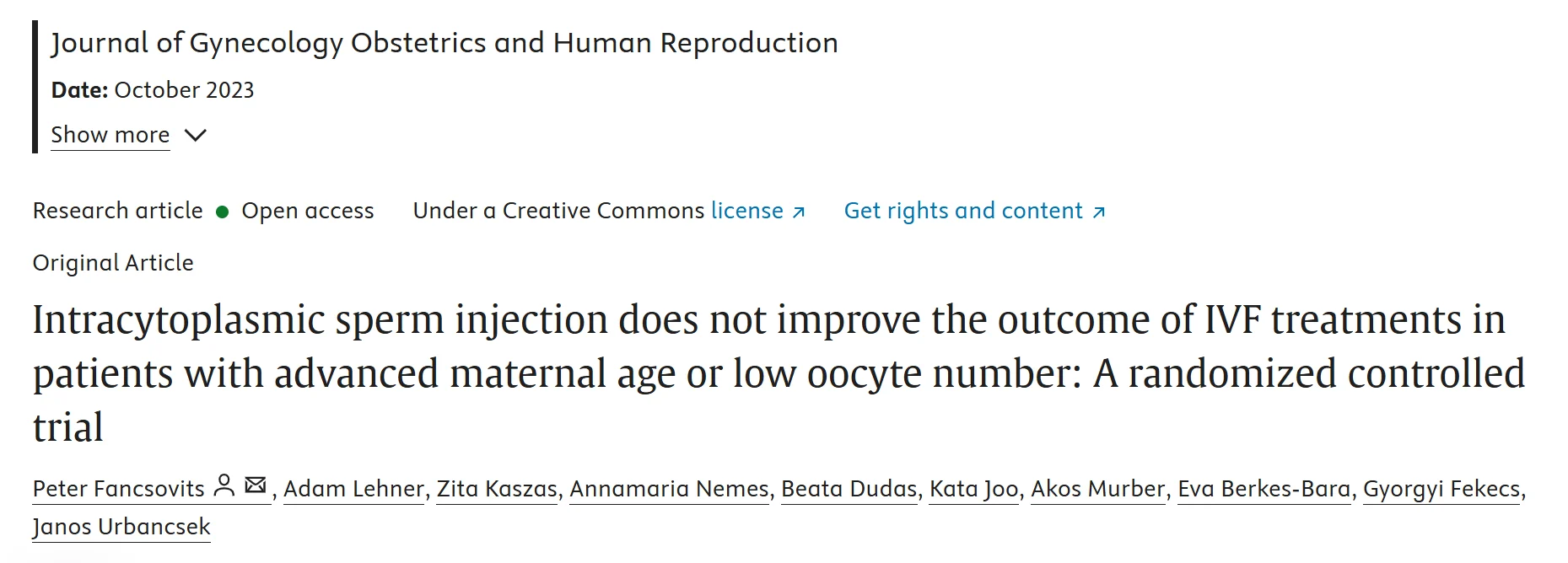
Low oocyte number and advanced maternal age do not automatically establish the same indication. A randomized controlled trial involving 336 cycles found a higher fertilization rate with cIVF than ICSI (61.7% versus 53.4%; P=0.001), while live birth rates were 11.4% and 12.0%, respectively, without a statistically significant difference (Fancsovits et al., 2023).
PGT requires a more specific distinction. In patients without male-factor infertility, ASRM reports no demonstrated benefit of ICSI over cIVF for PGT-A in terms of embryo numbers, euploidy rates or live birth. PGT-M involves a different laboratory consideration because extraneous sperm or cumulus-cell DNA creates a contamination concern during molecular testing. ASRM therefore identifies ICSI as appropriate in selected PGT-M cycles to reduce this source of contamination.
The presence of PGT alone, therefore, does not establish a universal indication for ICSI.”
Written by Saadat Hassan
Senior Clinical Embryologist/IVF and Embryology
BSc (Hons) Medical Laboratory Technology
King Edward Medical University, Lahore, Pakistan
References
Title: Intracytoplasmic sperm injection for nonmale factor indications: a Committee opinion
Authors: Practice Committee of the American Society for Reproductive Medicine, Practice Committee of the Society for Assisted Reproductive Technology
You can read the Full Article in Fertility and Sterility.
Title: IVF versus ICSI in patients without severe male factor infertility: a randomized clinical trial
Authors: Sine Berntsen, Anne Zedeler, Bugge Nøhr, Morten Rønn Petersen, Marie Louise Grøndahl, Lars Franch Andersen, Kristine Løssl, Ellen Løkkegaard, Anne Lis Englund, Anette Vestergaard Gabrielsen, Lisbeth Prætorius, Ida Behrendt-Møller, Lea Langhoff Thuesen, Kilian Vomstein, Mette Petri Lauritsen, Aleksandra Ivanoska Trajcevski, Dea Frøding Skipper, David Westergaard, Anja Pinborg, Henriette Svarre Nielsen and Nina la Cour Freiesleben
You can read the Full Article in Nature Medicine.
Title: Intracytoplasmic sperm injection versus conventional in-vitro fertilisation in couples with infertility in whom the male partner has normal total sperm count and motility: an open-label, randomised controlled trial
Authors: Vinh Q Dang, Lan N Vuong, Tam M Luu, Toan D Pham, Tuong M Ho, Anh N Ha, Binh T Truong, Anh K Phan, Dung P Nguyen, Thanh N Pham, Quan T Pham, Rui Wang, Robert J Norman, Ben W Mol
You can read the Full Article in The Lancet.
Title: ESHRE recommendations on Good Practice in the IVF laboratory
Authors: ESHRE Good Practice in the IVF Lab Working Group, Gemma Arroyo, Amy Barrie, Giovanni Coticchio, Thomas Ebner, Jackson Kirkman-Brown, Nathalie Le Clef, Kersti Lundin, Cristina Magli, Marina Quesada Martinez, Maria José de los Santos Molina, Kelly Tilleman, Ioannis Sfontouris
You can read the Full Article in Human Reproduction.
Title: Intracytoplasmic sperm injection does not improve the outcome of IVF treatments in patients with advanced maternal age or low oocyte number: A randomized controlled trial
Authors: Peter Fancsovits, Adam Lehner, Zita Kaszas, Annamaria Nemes, Beata Dudas, Kata Joo, Akos Murber, Eva Berkes-Bara, Gyorgyi Fekecs, Janos Urbancsek
You can read the Full Article in the Journal of Gynecology Obstetrics and Human Reproduction.
Title: Does intracytoplasmic sperm injection outperform conventional in vitro fertilization in couples without severe male factor infertility? A systematic review and meta-analysis of randomized controlled trials
Authors: Kailibinuer Kayimu, Sine Berntsen, Yu Fu, Yi Yuan, Kilian Vomstein, Tian Tian, Fang Liu, Jiayi Gao, Lan N Vuong, Tuong M Ho, Bao G Huynh, Toan D Pham, Vinh Q Dang, Dea Frøding Skipper, Anne Zedeler, Anja Pinborg, David Westergaard, Ben W Mol, Henriette Svarre Nielsen, Nina la Cour Freiesleben, Jie Qiao, Yuanyuan Wang
You can read the Full Article in Human Reproduction.
Title: Intracytoplasmic sperm injection versus conventional in-vitro fertilisation for couples with infertility with non-severe male factor: a multicentre, open-label, randomised controlled trial
Authors: Yuanyuan Wang, Rong Li, Rui Yang, Danni Zheng, Lin Zeng, Ying Lian, Yimin Zhu, Junli Zhao, Xiaoyan Liang, Wen Li, Jianqiao Liu, Li Tang, Yunxia Cao, Guimin Hao, Huichun Wang, Hua Zhang, Rui Wang, Ben W Mol, Hefeng Huang, Jie Qiao
You can read the Full Article in The Lancet.
Other articles featuring Saadat Hassan on Fertility News.
-
Oct 3, 2026, 18:27Non-Invasive Prenatal Testing: Science, Counselling, Global Access and Equity – IJGO
-
Oct 3, 2026, 18:19Erica Marsh: Congratulations to the 4 Doctors Who Were Named 2026 Top Docs by Hour Detroit Magazine
-
Oct 3, 2026, 18:16Shizuko Takahashi: What about the “Biological Clock” in Men?
-
Oct 3, 2026, 18:11Devyanshi Dixit: Call for Speakers for GFWH 2026
-
Oct 3, 2026, 18:06Shaun Greenaway: The More We Understand Male Fertility, the Better Decisions We Can Make
-
Oct 3, 2026, 17:55Reproductive BioMedicine Online’s Latest Issue, 53.4, Is Out
-
Oct 3, 2026, 17:50Ananya Anand Kumar: Excited to Share that My Cryopreservation Abstract Was Accepted for Fertility 2027
-
Oct 3, 2026, 17:48Pregnancy of the Future: Predicting, Preventing, and Treating the Great Obstetric Syndromes – SMFM
-
Oct 3, 2026, 17:46PMOS Was Never Just About the Ovaries… – PCOS Awareness Association