
Carole Gilling-Smith: We Need to Understand the Technology Well Enough to Control What It Does Next
Carole Gilling-Smith, Medical Director, Consultant Gynaecologist and Fertility Specialist of Agora Clinic, shared on LinkedIn։
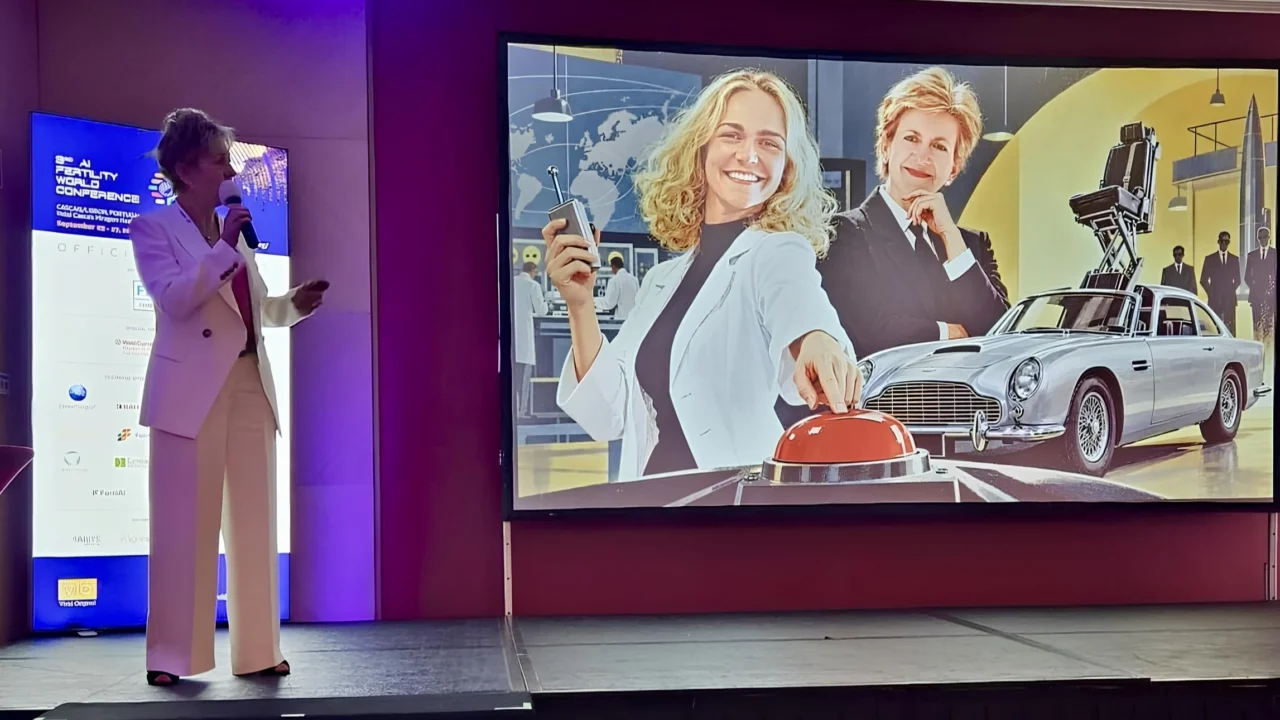
“Every clinic needs a Q.
Opening the 3rd AI Fertility World Conference in Cascais last week with a reference to Bond might seem an unlikely choice, but the analogy was carefully chosen.
I have always been first in the queue when it comes to new technology, while wearing the hat of caution. The arrival of AI has been no exception. I see the tremendous potential it brings to almost every aspect of fertility care, but I see a good deal of risk too.
I drive a car perfectly capable of driving itself but deliberately turn that feature off. I use every bit of intelligence it can give me, while keeping my hands firmly on the wheel, staying in control.
Our hero Bond gets the gadgets, the car and the glory. But Q, the man in the basement who builds the kit, understands the technology, knows its limitations and has thought about what happens when it meets the real world. He knows where to put the ejector seat.
As clinicians and scientists working in fertility, we need to understand the technology well enough to control what it does next. That is what safe AI looks like, and its responsible integration into healthcare should be our number one priority.
My own approach to AI at the Agora Clinic, where we have been early adopters, has always been to buy a conversation, not a gadget or piece of software. A good example is the many conversations we have had with Cecilie Jakobsen, one of my favourite Qs, along with her team at wawa Fertility as we implement their records system. Together we are building the best solutions for our patients and staff.
During the conference, we saw AI mapped across the entire fertility journey from patient engagement and administration through clinical care and laboratory assessment to data extraction and analysis.
Our panel discussions focused on what sits beneath the technology: data, validation, evidence, governance and trust. Ying Cheong and Rabi Ahmed-Odia led a lively debate on how best to measure AI impact and whether RCTs are still the best tool to validate new technology, given the pace of change in AI.
One of the most thought-provoking moments came on the final morning when human intelligence and artificial intelligence sat together in the same room, analysing what AI had drawn from two days of multidisciplinary talks and discussions and considering how we integrate it responsibly into fertility care.
The time has come for us to shift from Bond to Q: from simply using increasingly clever technology to understanding it well enough to question it, challenge it and help shape what it does next.
Ultimately, our patients will not care how clever the algorithm was. They will care whether it helped us, as humans, give them better care and the best possible chance of the child they long for. That is the AI gold standard we should strive for.
Thank you, Dr. Cristina Hickman and Nikica Zaninovic, for bringing us all together for such an inspiring conference.”
Stay informed with the latest updates in fertility and reproductive medicine on Fertility News.
-
Nov 22, 2026, 17:01Insights from ISFP 2026
-
Nov 22, 2026, 16:17Khalil Faaed: The Dark Center of the Oocyte
-
Nov 22, 2026, 16:10Jyoti Gupta: Proud to Join Cloudnine Fertility, Golf Course Road, Gurugram, as Director
-
Nov 22, 2026, 15:45Francine Freitas Fernandes: 3D and 4D Hysterosalpingo-Contrast Sonography
-
Nov 22, 2026, 15:25New RBMO Study Links Microfluidic Sperm Sorting to Higher Blastocyst Formation and Lower Miscarriage Rates
-
Nov 22, 2026, 15:21Michelle Mason: Pleased to Attend the Annual SWIGS Conference with the Care Fertility Cardiff Team
-
Nov 22, 2026, 15:18Rajeev Agarwal: The Lining Is 6.5 mm – Will the Embryo Transfer Fail?
-
Nov 22, 2026, 15:11The Automated IVF Laboratory Lecture by Jacques Cohen at the 5th Narture – Conceivable Life Sciences
-
Nov 22, 2026, 15:07Laura Rienzi: Same Message, 2 Slides – Which One Would You Rather See at a Congress?