
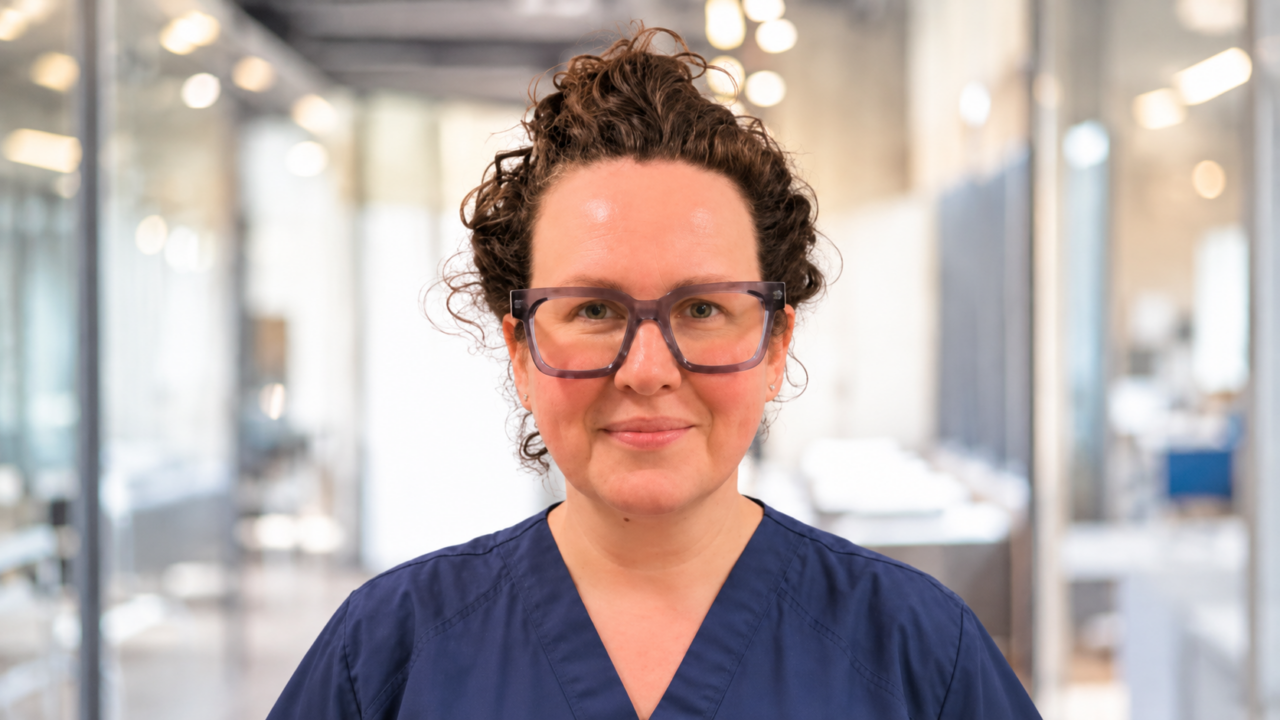
Aishling Burke: Why Are Women Turning to TikTok and Social Media for Menopause Advice in the First Place?
Aishling Burke, Clinical Specialist in Pelvic Health and Physiotherapist at Restore Physiotherapy, Kent, shared a post on LinkedIn about a paper by Leona Hariharan et al. published in Menopause:
“Why are women turning to TikTok and social media for menopause advice in the first place?
Because access to trained healthcare professionals who specialise in menopause care is still far too limited.
When patients cannot get answers in the clinic, they search for them on their feeds.
However, a recent study by Hariharan et al. highlights major flaws in relying on social platforms for health education:
What the study uncovered:
- Sexual health is virtually absent: Out of 834 top TikTok menopause videos analysed, critical issues like vaginal dryness (3.5%), dyspareunia/pain (2.0%), and orgasmic challenges (0.1%) were barely mentioned, despite how common they are.
- Lack of medical voices: Only 1 out of the 10 most influential menopause creators studied was an actual medical professional.
- Validation over solutions: Over 50% of content focused solely on symptom validation, while less than 20% offered actual management strategies.
- The hidden barrier: Censorship. Even when creators want to educate on topics like Genitourinary Syndrome of Menopause (GSM), sexual health, or anatomy, platform algorithms routinely censor, flag, or shadowban the content.
This leaves women caught between two systemic failures: a healthcare system where trained care is hard to access, and social platforms that actively suppress the medical terms needed to educate them.
Where do we go from here?
As pelvic health therapists, we are uniquely placed in clinic to bridge this gap.
We have the time, the clinical expertise, and the safe space to talk openly about topical oestrogens, sexual health, and why these physiological changes are happening in the first place, without fear of an algorithm silencing the conversation.
(In my view, while non-medical creators often bring a wealth of invaluable lived experience, knowledge, and community support, having so few medical voices on these platforms still leaves a critical gap in access to evidence-based care.)
How do we break through both the clinical access barrier and the social media censorship trap?
Organizations like Center for Intimacy Justice and campaigns like CensHERship are fighting this digital suppression daily, but what more can we do as clinicians and advocates to ensure women get accurate, uncensored medical information earlier in their journey?
I would love to hear thoughts from fellow healthcare professionals, pelvic health clinicians, and advocates below.
Thanks to Vikram Sinai Talaulikar for sharing the research study!”
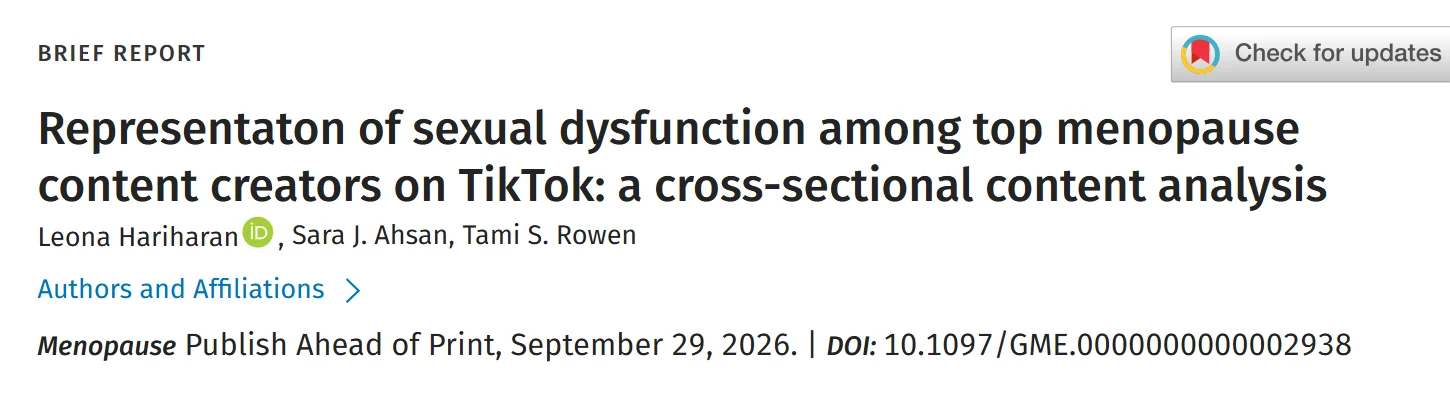
Title: Representation of sexual dysfunction among top menopause content creators on TikTok: a cross-sectional content analysis
Authors: Leona Hariharan, Sara J Ahsan, Tami S Rowen
You can read the Full Article in Menopause.
Stay informed with the latest updates in fertility and reproductive medicine on Fertility News.
-
Oct 5, 2026, 18:07Laura Rienzi: Enjoyed Attending the First Standalone Gedeon Richter Meeting on Fertility
-
Oct 5, 2026, 18:05Ying Cheong: Delighted to Join the Institute of Obstetricians and Gynaecologists Webinar on RIF
-
Oct 5, 2026, 18:02Wendaline VanBuren: Bringing Patients and Experts Together to Explore Unanswered Questions About Women’s Health
-
Oct 5, 2026, 17:59Laura Rienzi: What Happens When You Bring Together the Best Minds in Reproductive Medicine?
-
Oct 5, 2026, 17:51Registration Is Open for the Procreation Symposium Naples 2026 by IVIRMA Italia
-
Oct 5, 2026, 17:42Margaret Cali: You’re Allowed to Rest Without Having Earned It First…
-
Oct 5, 2026, 17:39Chadi Yazbeck: Fibroids and Infertility – Do You Really Need Surgery?
-
Oct 5, 2026, 17:33Nina Brown: Until a Few Weeks Ago, I Didn’t Even Know Silent Endometriosis Existed…
-
Oct 5, 2026, 17:27Theofano Bounartzi: Professional Growth in Embryology Comes from Continuously Investing in Learning