
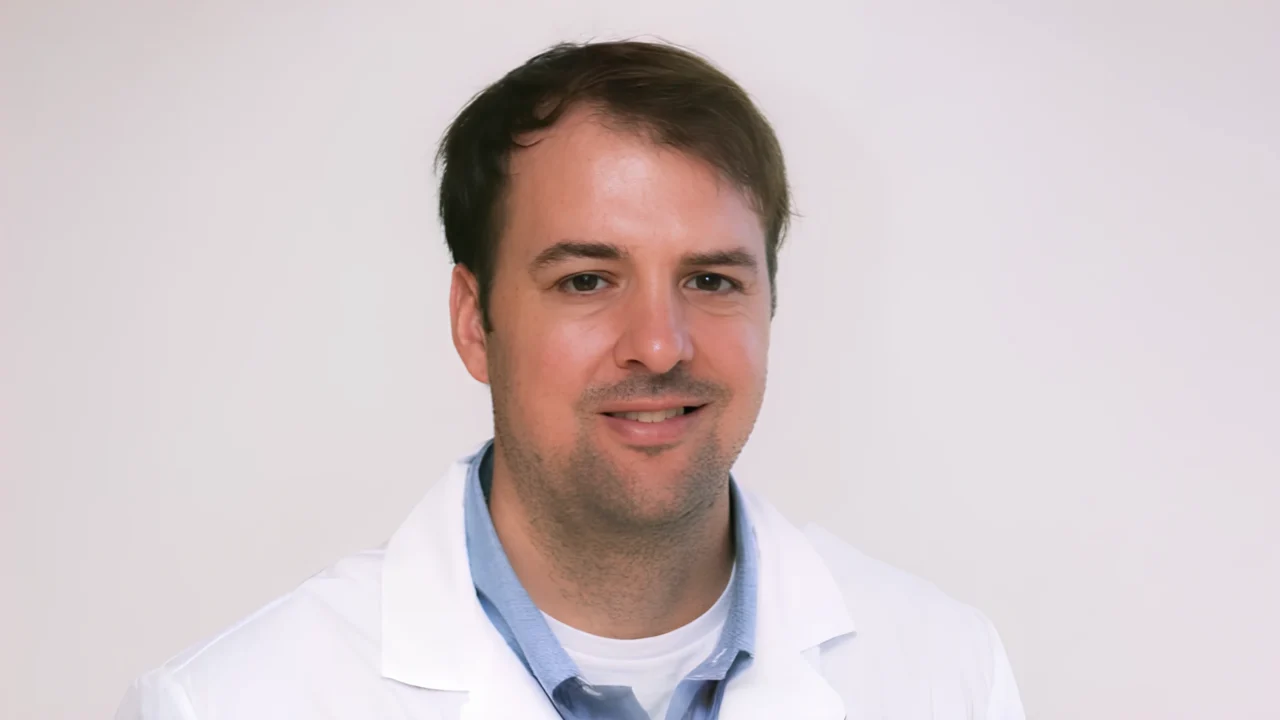
Manuel Viotti: New Data on Whole-Chromosome and Segmental Aneuploid Embryo Transfers
Manuel Viotti, SVP of Preimplantation Genetic Testing at Kindbody, shared on LinkedIn about a paper he co-authored with colleagues published in Fertility and Sterility:
”I’m happy to share that our latest IRMET paper has now been published online by Fertility and Sterility in its final journal-formatted version and is available open access:
This study examined 250 transfers of embryos classified by PGT-A as nonmosaic whole chromosome aneuploid (WCA, n=168) or segmental aneuploid (SA, n=82). A particularly important feature of this dataset is the inclusion of nonselection transfers, in which embryos were transferred without knowledge of the PGT-A result.
- Whole chromosome aneuploid embryos: 0 live births among 168 transfers, including 111 nonselection transfers. Even among 8 embryos with aneuploidies theoretically compatible with life, no live births occurred.
- Segmental aneuploid embryos: 17.1% live birth rate (14/82), including 13.0% in the nonselection subgroup.
Taken together, the multicenter and nonselection data provide an unusually direct test of the biological meaning of contemporary PGT-A classifications. The absence of live births after whole chromosome aneuploid embryo transfer was consistent across different clinical settings, while segmental aneuploid embryos retained meaningful reproductive potential.
The segmental findings are also notable. From the perspective of clinical outcomes, the data further support the idea that a segmental finding in a single trophectoderm sample may sometimes not represent the chromosomal constitution of the embryo as a whole.
More broadly, I think this study highlights the value of large, collaborative datasets in answering questions that are very difficult for any single center to address. As the use of PGT-A continues to grow worldwide, careful outcome data are essential to understanding the biological and clinical meaning of different embryo classifications.
I am especially grateful to the centers and investigators who have contributed to IRMET over the years. Bringing together data from different countries, laboratories, and clinical settings is what makes studies like this possible.
IRMET is also evolving with the science. The registry now officially stands for the International Registry of Mosaic/Aneuploid Embryo Transfers, reflecting the broader scope of the data we collect.
Thank you to everyone who has contributed to this work and continues to support the registry.”
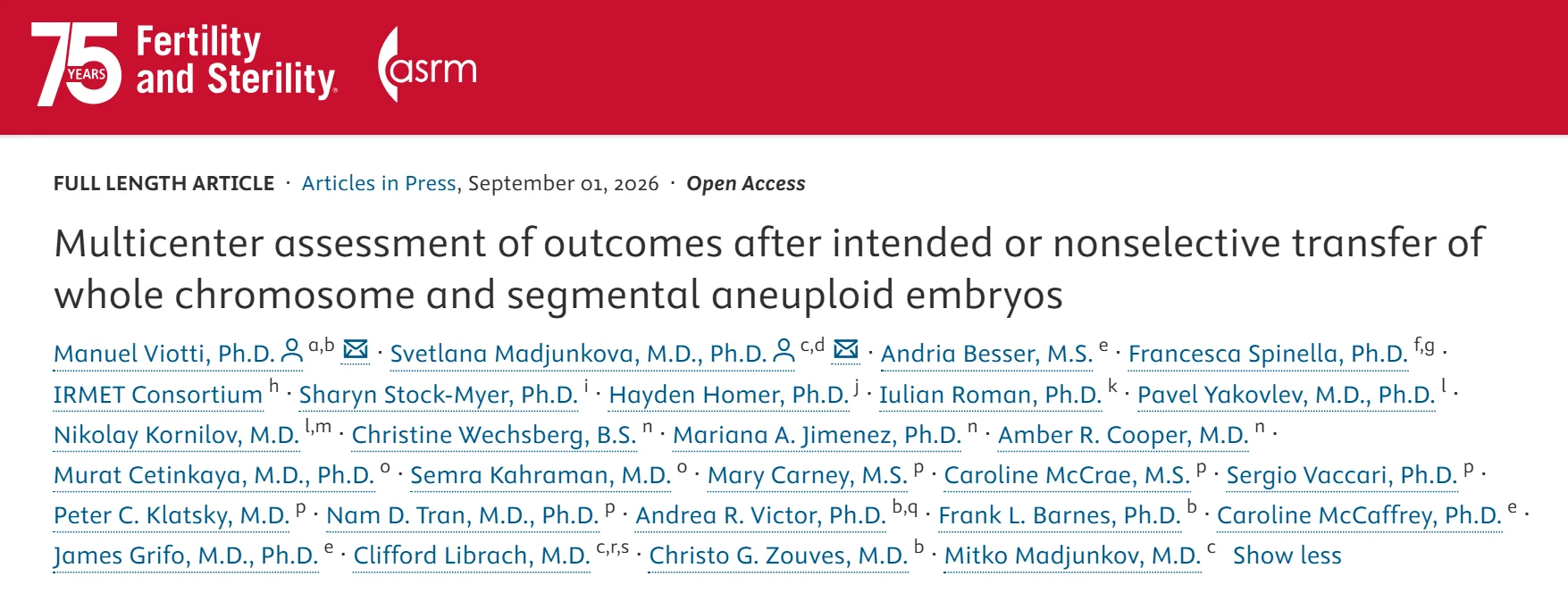
Title: Multicenter assessment of outcomes after intended or nonselective transfer of whole chromosome and segmental aneuploid embryos
Authors: Manuel Viotti, Svetlana Madjunkova, Andria Besser, Francesca Spinella, Sharyn Stock-Myer, Hayden Homer, Iulian Roman, Pavel Yakovlev, Nikolay Kornilov, Christine Wechsberg, Mariana A. Jimenez, Amber R. Cooper, Murat Cetinkaya, Semra Kahraman, Mary Carney, Caroline McCrae, Sergio Vaccari, Peter C. Klatsky, Nam D. Tran, Andrea R. Victor, Frank L. Barnes, Caroline McCaffrey, James Grifo, Clifford Librach, Christo G. Zouves, Mitko Madjunkov.
You can read the Full Article in Fertility and Sterility.
Stay informed with the latest updates in fertility and reproductive medicine on Fertility News.
-
Oct 7, 2026, 16:31IJGO Special Issue on Women’s Mental Health Throughout the Life Course
-
Oct 7, 2026, 16:27Ljiljana Marina: Great Pleasure to Take Part in the International UroAndrology Congress in Belgrade
-
Oct 7, 2026, 16:21Jennifer Elworthy: It’s Good to Remember the Lighter Side of the Treatment
-
Oct 7, 2026, 16:19Stella Dzotsenidze: Medicine Is Not Only About Knowledge…
-
Oct 7, 2026, 16:11Andreu Vives Perelló: Evaluating the Implementation of Kitazato’s UFW Protocol Across the Care Fertility Network
-
Oct 7, 2026, 15:57Devyanshi Dixit։ Is “Normal Period Pain” Actually Normal?
-
Oct 7, 2026, 15:55Richa Jagtap: Not “Social Freezing”, Not “Fertility Preservation”
-
Oct 7, 2026, 15:53Devyanshi Dixit: Featured Speaker Spotlight – Dr. Chimdinma
-
Oct 7, 2026, 15:39Hossam Elzeiny։ Our Review on RIF Has Been Published in Frontiers in Endocrinology