
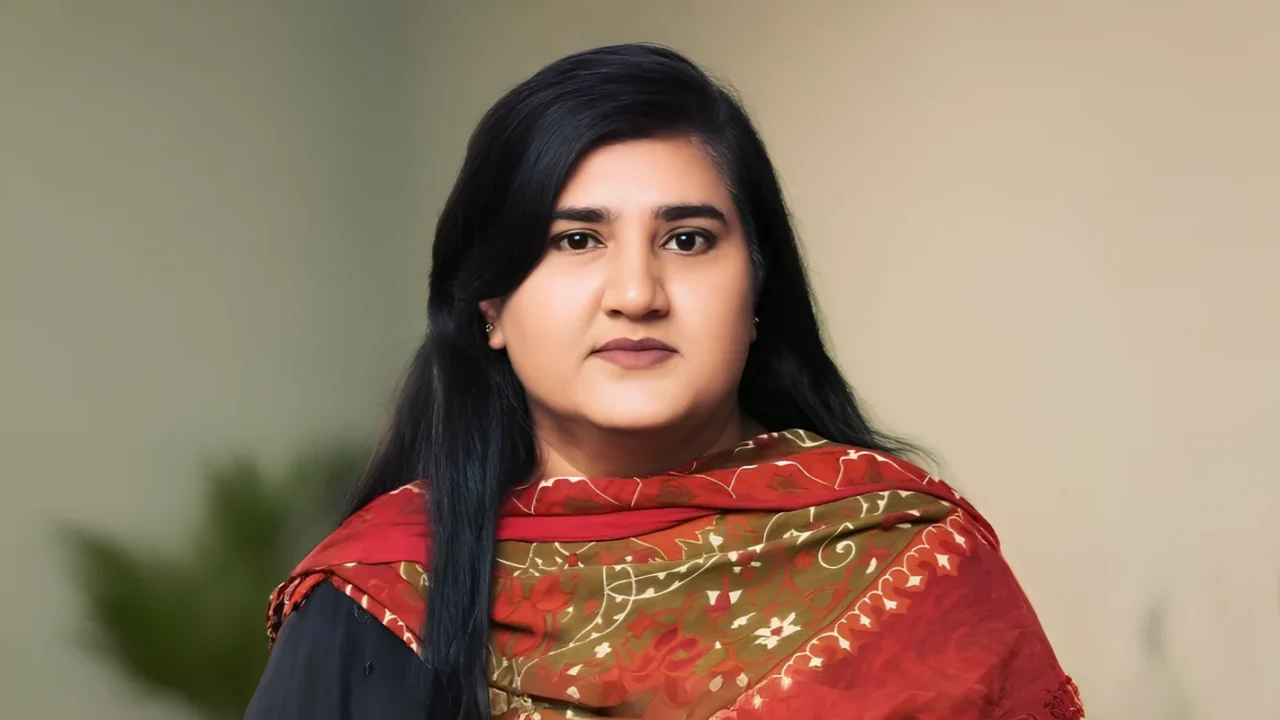
Saira Amir: Can a Semen Analysis Look Normal While the Sperm Epigenome Quietly Signals Reduced Fertility?
Saira Amir, Assistant Professor at COMSATS University Islamabad, shared a post on LinkedIn about a paper by Karolina Nowak et al. published in Human Reproduction:
”Can a semen analysis look normal while the sperm epigenome quietly signals reduced fertility?
How much biology do we miss when a semen report ends at count, motility and morphology?
A new study in Human Reproduction examined this question through the sperm epigenome.
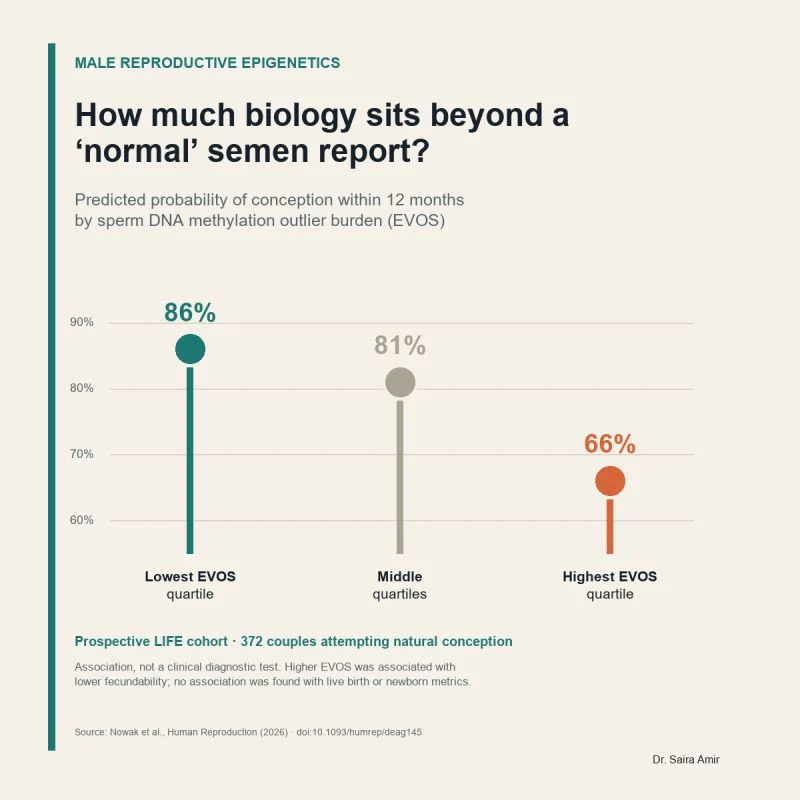
Researchers analysed sperm DNA methylation from 372 couples attempting natural conception. They developed EVOS, a measure of how many CpG sites in an individual’s sperm showed unusual deviations from expected methylation patterns.
The result deserves attention.
Couples in the highest EVOS quartile had a predicted 66% probability of conceiving within 12 months, compared with 86% among those in the lowest quartile.
After adjustment for male and female age, BMI and smoking, higher EVOS remained associated with a lower probability of conception per cycle.
What I found particularly interesting was that the association persisted when the analysis was restricted to 285 men classified as normospermic.
This does not make EVOS a clinical fertility test. The study found no association with live birth, gestational age or newborn measurements, and the result requires validation in independent populations.
But it raises an important methodological question, can a conventional semen profile appear reassuring while molecular instability remains undetected?
Semen analysis remains essential.
Still, male fertility assessment may eventually need to combine conventional parameters with carefully validated genomic, epigenetic and functional biomarkers.
‘Normal’ on one level of biology should not automatically end the investigation.”
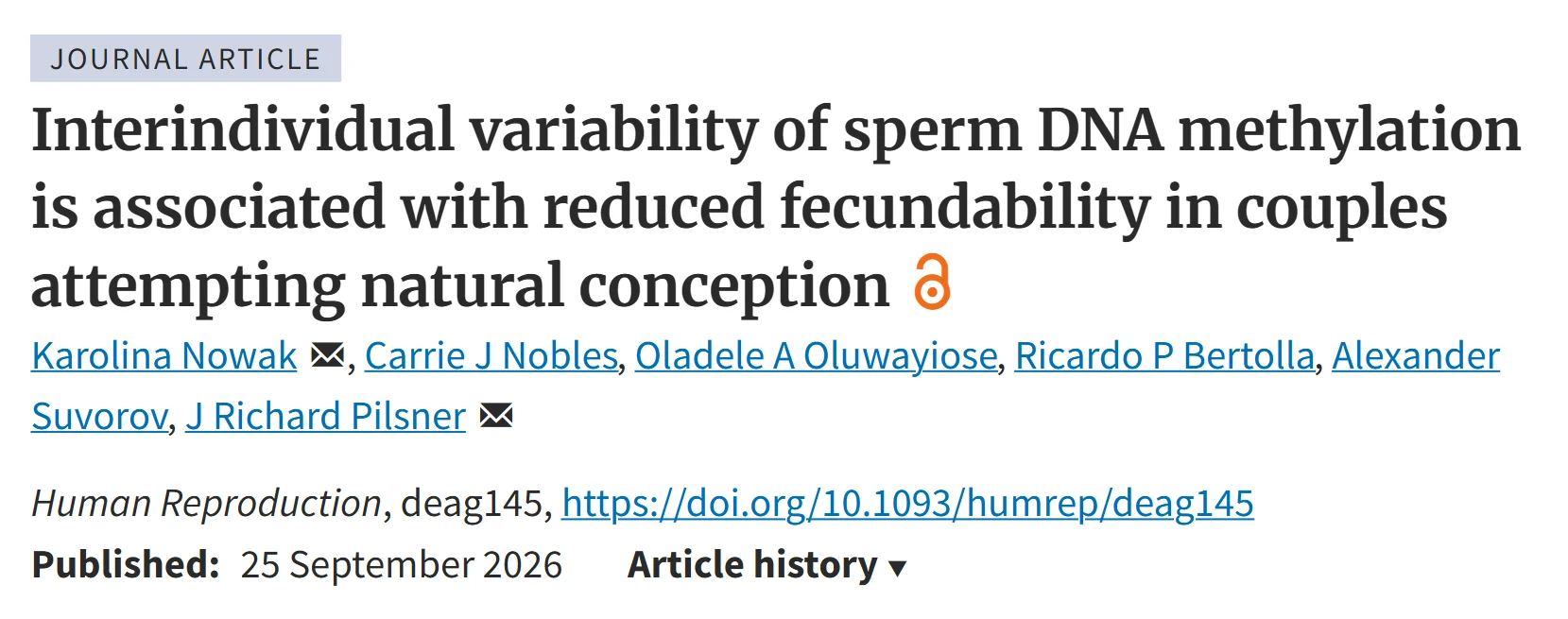
Title: Interindividual variability of sperm DNA methylation is associated with reduced fecundability in couples attempting natural conception
Authors: Karolina Nowak, Carrie J Nobles, Oladele A Oluwayiose, Ricardo P Bertolla, Alexander Suvorov, J Richard Pilsner.
You can read the Full Article in Human Reproduction.
Stay informed with the latest updates in fertility and reproductive medicine on Fertility News.
-
Nov 26, 2026, 17:49Vrinda Trivedi: Honored to Contribute to the Issue of Obstetrics and Gynecology Clinics of North America
-
Nov 26, 2026, 17:46Simon Meagher: A Vanishing Twin, a High-Risk NIPT Result and a Reassuring Co-Twin
-
Nov 26, 2026, 17:42Jiří Hrdý: The Immunological Effects of Progesterone Therapy in Pregnant Women at Risk of Spontaneous Preterm Birth
-
Nov 26, 2026, 17:35Maternal Age as the Primary Driver of Embryo Aneuploidy – RBMO
-
Nov 26, 2026, 17:31Elena Korchivaia: Officially Graduated with an MSc in Clinical Embryology from the University of Oxford
-
Nov 26, 2026, 17:22New Study from Richard Pilsner and Colleagues Suggests Normal Semen Parameters May Not Tell the Whole Fertility Story
-
Nov 26, 2026, 17:16Presenting as an Expert Witness on the State of Fertility in Canada – Canadian Fertility and Andrology Society
-
Nov 26, 2026, 17:11Paul Pirtea: New Webinar on Why Embryo Fail to Implant
-
Nov 26, 2026, 17:08Sean Lauber: The Type of Lactobacillus in the Vaginal Microbiome May Matter for IVF Success