
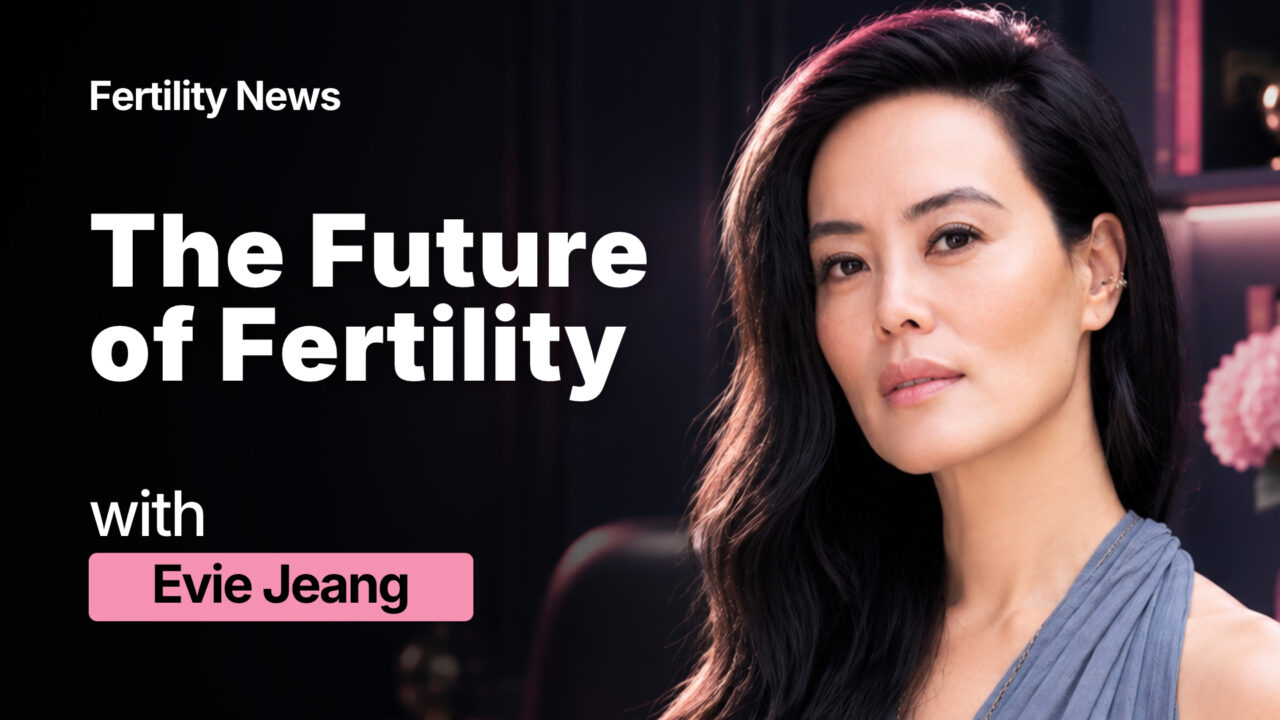
The Future of Fertility: Evie Jeang on AI, Longevity, and Reproductive Innovation
As reproductive medicine continues to evolve, advances in technology and growing awareness of reproductive choices are reshaping the future of family building.
At the intersection of these developments is Evie Jeang, an attorney, entrepreneur, and fertility advocate. She founded Hera Family Planning, Surrogacy Concierge, and Raised By A Village; hosts the Evie Unbounded podcast; and is The Modern Family Architect. Drawing on her professional expertise and personal experience with assisted reproduction, she works to make family-building resources more accessible.
Ahead of her participation in Racing Capital 2026 in Las Vegas, Evie Jeang joins Fertility News to discuss her journey, the inspiration behind Hera Family Planning, and the intersection of fertility, artificial intelligence, longevity, and women’s health.
Part I. Getting to Know Evie Jeang
1. For readers who are meeting you for the first time, could you introduce yourself and tell us about your professional journey? How did your career evolve from law into fertility advocacy, entrepreneurship, and women’s health innovation?
My journey has never followed a traditional path, but there has always been one belief at the heart of everything I do: family should never be confined to a single definition, a conventional pathway, or society’s expectations.
I have always believed that family is defined by love, commitment, and the relationships we nurture – not simply by biology or traditional family structures. Everyone should have the freedom to envision and create a family in a way that is meaningful to them.
I began my professional career as an attorney, helping individuals and families navigate complex legal matters and protect what matters most to them. My personal experience with IVF and surrogacy later opened my eyes to the extraordinary possibilities of assisted reproductive technology (ART), as well as the challenges individuals face when pursuing alternative pathways to parenthood.
That experience inspired me to establish Surrogacy Concierge, where I combined my legal background with my passion for helping intended parents navigate the medical, legal, emotional, and practical complexities of family building.
But I wanted to go further. I recognized that access to fertility education, resources, and professional guidance should not be limited to those who could afford personalized concierge services.
That vision led me to create Hera Family Planning, a digital platform designed to make modern family-building resources more accessible, transparent, and connected.
Today, I describe myself as The Modern Family Architect because my mission goes beyond helping people have children. It is about challenging outdated definitions of family, embracing the possibilities of modern reproductive medicine, and empowering people to build the families they envision – on their own terms.
2. You have built a career across several fields, including law, family planning, entrepreneurship, and media. What connects these different areas of your work, and what motivates you most today?
The common thread throughout my career has always been family and children – not only helping people create families, but also ensuring that children have the love, protection, and support they deserve.
There is an African proverb that says, “It takes a village to raise a child.” That belief inspired me many years ago to establish my nonprofit organization, Raised By A Village, dedicated to supporting children who have experienced the loss or absence of parental support due to divorce, illness, accidents, or other unexpected life circumstances.
Interestingly, when my journey led me into fertility and assisted reproductive technology, I realized that the same philosophy applies even before a child is born.
It takes a village to raise a child, but sometimes it also takes a village to bring that child into the world.
Today, bringing a child into the world through assisted reproductive technology may involve an entire team of fertility specialists, embryologists, egg or sperm donors, gestational surrogates, attorneys, counselors, and other professionals working together to help someone fulfill their dream of parenthood.
To me, that is one of the most beautiful aspects of modern family building. It reminds us that family is not defined solely by biology or traditional expectations, but also by love, intention, and the people who come together to make it possible.
My work as an attorney, the founder of Raised By A Village, Surrogacy Concierge, and now Hera Family Planning may appear to span different industries, but they are all extensions of the same mission.
Even my podcast, Evie Unbounded, reflects this philosophy of challenging limitations, embracing unconventional journeys, and empowering people – especially women – to define their own lives.
Whether we are helping a child who needs a village of support or helping an intended parent find the village needed to bring a child into the world, the purpose remains the same: giving families the opportunity to grow, thrive, and experience love.
That is what motivates me most – creating an impact that extends beyond one individual and touches generations to come.
3. Your personal experience with IVF and surrogacy has played an important role in your professional journey. Would you share some of that experience and explain how it changed your perspective on fertility care and family building?
My personal journey taught me that fertility is never simply a medical experience. It is an emotional, financial, legal, and deeply human journey.
When someone begins exploring IVF or surrogacy, they enter an unfamiliar world filled with complicated medical terminology, significant financial commitments, difficult decisions, and uncertainty.
Even with my legal background, I realized how challenging it could be to navigate the process and understand all the available options.
What struck me most was how much responsibility falls on intended parents to coordinate everything themselves – from finding the right medical professionals to understanding legal protections and making decisions that could affect their future families.
That experience fundamentally changed my perspective.
I began to see that fertility care needed more than excellent medical treatment. It needed education, transparency, coordination, and emotional support.
Most importantly, it reinforced my belief that there is no single definition of family. Some families are created through unassisted conception, others through IVF, donor conception, surrogacy, adoption, or blended family structures.
The pathways may be different, but the love and intention behind building a family are equally meaningful.
4. Looking back at your own journey to parenthood, what were the greatest challenges you encountered? Was there a particular moment when you realized that the fertility and surrogacy experience needed to change?
One of the greatest challenges was navigating fragmented information and understanding whom to trust.
Fertility treatment often involves multiple professionals, including physicians, attorneys, agencies, counselors, and other specialists. Yet patients are frequently expected to coordinate much of that process themselves.
I remember thinking that if someone with my professional background could find the process overwhelming, how much more difficult must it be for someone without those resources?
That realization stayed with me.
I wanted to create a future where intended parents would not have to spend countless hours trying to understand the process, identify qualified professionals, or figure out which questions they should be asking.
I also realized that people pursuing alternative paths to parenthood sometimes face judgment or misunderstanding because their family-building choices do not fit conventional expectations.
I believe we need to change that narrative.
Building a family should not begin with confusion, fear, or judgment. It should begin with knowledge, compassion, and the freedom to explore possibilities.
Part II. Hera Family Planning and the Future of Family Building
1. You founded Hera Family Planning with the goal of making family-building resources more accessible. What inspired the idea for Hera, and what problem did you most want to solve?
Hera was born from a simple question: Why is something as important as building a family still so difficult to navigate?
We live in a world where technology has transformed how we access financial services, education, travel, and information. Yet fertility care remains fragmented, intimidating, and often difficult to understand.
Through Surrogacy Concierge, I saw firsthand how much time, energy, and financial commitment intended parents invested simply trying to identify the right resources.
I wanted to create a platform that brings the family-building ecosystem together in one place.
Hera is designed to help people discover resources, explore their options, and connect with professionals and services relevant to their journey.
My broader vision is to move fertility care from a reactive model to a proactive one, where people understand their reproductive options earlier and can make informed decisions on their own timeline.
I want Hera to become the village that helps people find the right support to build their families.
2. Could you introduce the Hera Family Planning app to our readers? How does it work, who is it designed for, and what makes it different from traditional fertility agencies or other family-planning platforms?
Hera Family Planning is a digital platform designed to simplify access to fertility and family-building resources.
Through our mobile app and digital ecosystem, users can explore information and resources related to IVF, egg donation, sperm donation, surrogacy, and other pathways to parenthood.
Our goal is to help intended parents identify relevant professionals, agencies, and services while making the discovery process more transparent and approachable.
What differentiates Hera from a traditional fertility agency is that we are building a broader ecosystem rather than focusing exclusively on one service or pathway.
We recognize that modern families are created in many different ways. Some people may be considering fertility preservation, others may be pursuing IVF, and others may need donor or surrogacy support.
Hera is designed to meet people at different stages of their journeys.
I often describe Hera as a way of bringing the family-building village together through technology.
Ultimately, I envision Hera becoming a trusted starting point for anyone exploring how to build a family, regardless of their background, relationship status, or chosen pathway.
3. Before launching Hera, you founded Surrogacy Concierge. How did your experiences supporting intended parents, surrogates, and donors influence the development of Hera?
Surrogacy Concierge gave me firsthand insight into the practical challenges that intended parents, surrogates, and donors face.
Every family-building journey is different. Some clients need extensive coordination and personalized support, while others simply need reliable information or access to the right professionals.
Working closely with intended parents showed me how important communication, transparency, and trust are throughout the process.
It also reinforced something I had believed since founding Raised By A Village: no family should have to navigate life’s most important moments without a support system.
I realized that many of the questions families ask are similar, even though their circumstances are unique.
Hera allows us to take what we have learned through high-touch concierge services and apply those insights to a more scalable technology platform.
In many ways, Surrogacy Concierge helped me understand the challenges, and Hera represents my effort to build a broader solution.
4. Trust, privacy, and transparency are especially important when people make reproductive decisions. How does Hera approach these concerns, and what safeguards do you believe every digital fertility platform should have?
Trust is foundational in fertility care because the decisions people make can affect their health, finances, relationships, and future families.
I believe every digital fertility platform should prioritize clear communication about how information is collected, used, and shared.
Users should understand whether they are receiving educational information, professional referrals, or medical advice, and they should never feel pressured into making decisions they do not fully understand.
Privacy, informed consent, responsible data handling, and transparency about business relationships are essential.
At Hera, these principles guide how we think about building and evolving our platform.
Technology should empower users to make informed decisions, not replace the judgment of qualified healthcare and legal professionals.
Ultimately, trust is not just about technology. It is about treating every person’s family-building journey with dignity, respect, and compassion.
Part III. Women’s Health, Fertility Awareness, and Evie Unbounded
1. You also host the podcast Evie Unbounded, where you explore women’s empowerment, health, and personal experiences. What inspired you to create this platform, and what conversations do you feel are still missing from mainstream discussions about women’s health?
I created Evie Unbounded because I believe women’s stories deserve to be heard beyond the roles and expectations society places upon us.
As women, we are often defined by our careers, relationships, motherhood, or age. But our identities are much more complex.
Through the podcast, I wanted to create a space for authentic conversations about women’s health, entrepreneurship, relationships, personal transformation, and the courage to redefine ourselves.
One conversation I believe is still missing is how women’s reproductive health connects to their overall well-being and long-term quality of life.
We need to discuss fertility not only when a woman is trying to conceive, but throughout her life, including hormonal health, fertility preservation, perimenopause, and healthy aging.
I also want women to understand that motherhood is a choice, not an obligation, and that choosing a different path does not make their lives any less meaningful.
The essence of Evie Unbounded is freedom – the freedom to define success, happiness, womanhood, and family on our own terms.
2. Through your podcast, you have explored topics such as PCOS, hormonal health, fertility wellness, and women’s experiences within healthcare. What have these conversations taught you about the way reproductive health is currently understood and discussed?
One of the most important lessons is that women are often expected to understand their bodies without being given sufficient education.
Many women first learn about conditions such as PCOS, diminished ovarian reserve, or hormonal imbalances when they encounter fertility challenges.
I believe reproductive health education should begin much earlier and continue throughout a woman’s life.
We also need to move away from treating women’s health as a collection of isolated conditions.
Hormonal health, metabolic health, mental well-being, reproductive function, and aging are interconnected.
The more openly we discuss these subjects, the more empowered women become to advocate for themselves.
Knowledge should not come only after a diagnosis or fertility challenge. It should be part of preventive healthcare.
3. Beyond medical treatment, fertility challenges can affect relationships, mental health, identity, and financial stability. What forms of emotional and practical support do you believe remain overlooked in fertility care?
Fertility challenges can affect nearly every aspect of a person’s life.
There is often an invisible emotional burden: the disappointment of unsuccessful treatments, the strain on relationships, the pressure of financial decisions, and the feeling that time is running out.
I believe emotional support should be integrated into fertility care rather than treated as an optional service.
We also need greater transparency around financial planning, legal considerations, and realistic expectations.
Patients deserve to understand not only the medical possibilities, but also the practical implications of each decision.
And just as importantly, they need a community.
This brings me back to my belief that it takes a village. Whether someone is navigating infertility, considering donor conception, or pursuing surrogacy, having the right people around them can make an enormous difference.
No one should feel that they have to navigate their fertility journey alone.
Part IV. AI, Longevity, and Reproductive Health
1. Artificial intelligence is increasingly influencing healthcare, including reproductive medicine. Where do you see the greatest potential for AI to improve fertility education, patient navigation, and access to family-building services?
I believe one of AI’s greatest opportunities is making complex reproductive health information easier to understand and navigate.
Fertility care can involve an overwhelming amount of information, and patients frequently struggle to identify which resources are relevant to their circumstances.
AI has the potential to improve educational tools, personalize resource discovery, support patient navigation, and reduce administrative barriers.
For platforms such as Hera, I see an opportunity to explore how responsible AI could help users navigate the family-building ecosystem more efficiently.
Imagine someone beginning their fertility journey and being able to access understandable educational resources, identify relevant professional services, and better prepare for conversations with their healthcare providers.
However, AI should complement – not replace – qualified medical professionals. Privacy, accuracy, fairness, and transparency must remain central to how these tools are developed and evaluated.
The goal should be to make healthcare more accessible, informed, and human-centered.
2. Looking at IVF, fertility preservation, reproductive diagnostics, and personalized care, which emerging technologies do you believe have the greatest potential to transform the fertility experience over the next decade?
I am particularly interested in advancements in reproductive diagnostics, fertility preservation, and personalized treatment.
Improved diagnostic tools may help clinicians better understand individual reproductive health and develop more tailored treatment strategies.
AI-assisted embryo assessment and laboratory technologies are also areas worth watching, although their clinical benefits must continue to be evaluated through rigorous research.
Beyond medical innovation, I believe digital platforms that improve coordination between patients, providers, agencies, and other professionals will be equally important.
Innovation should not be measured only by scientific breakthroughs. It should also be measured by how effectively those breakthroughs reach the people who need them.
My hope is that the next decade will bring not only better reproductive technologies, but also a more accessible and coordinated fertility experience.
3. Longevity has become an increasingly prominent topic in women’s health. However, living longer does not necessarily mean that reproductive capacity extends at the same rate. How do you think the longevity movement should address reproductive aging, fertility preservation, and the biological realities of women’s health?
Longevity is one of the most exciting conversations in healthcare today, but I believe we need to distinguish between living longer and extending reproductive capacity.
A woman may remain healthy, active, and professionally successful well into her later decades, yet her reproductive biology follows a different timeline.
We cannot assume that advances in general longevity will automatically extend fertility.
This is why reproductive education and fertility preservation deserve a more prominent place in women’s longevity discussions.
Women should have access to accurate information about reproductive aging early enough to make meaningful choices. Fertility preservation may expand options for some women, but it does not guarantee a future pregnancy.
I also believe we need to change the conversation around women’s biological clocks. Rather than using fear or social pressure, we should focus on education, informed decision-making, and access to reproductive options.
Longevity should not simply be about adding years to life. It should be about expanding the quality, independence, and possibilities of those years.
Part V. Racing Capital 2026 and the AI Wellness Longevity Panel Series
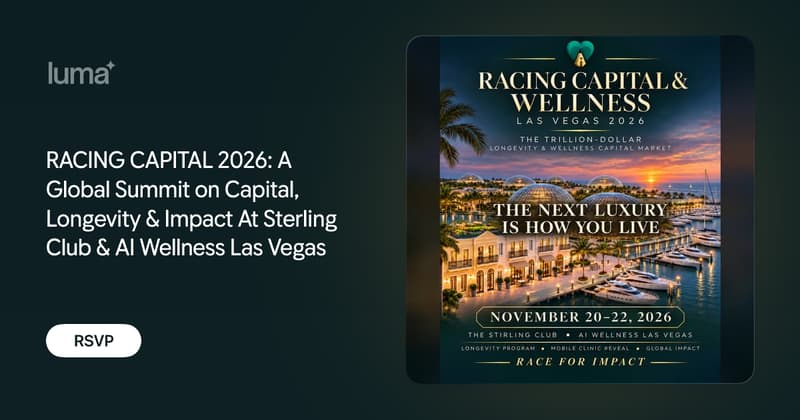
1. You will be speaking at the upcoming Racing Capital 2026 summit and AI Wellness Longevity Panel Series in Las Vegas, taking place during Formula 1 weekend. Could you tell our readers about the event and what makes this gathering particularly significant?
Racing Capital 2026 and the AI Wellness Longevity Panel Series bring together entrepreneurs, investors, healthcare innovators, and thought leaders in Las Vegas during Formula 1 weekend.
What makes this gathering especially exciting is the intersection of capital, technology, and human health.
We are entering a period when advances in AI, biotechnology, and personalized healthcare could fundamentally change how people approach wellness and longevity.
I am honored to participate in two panels that address different but deeply connected aspects of healthcare innovation: Women’s Health and Healthy Aging Across the Lifespan and Longevity and Health Tech Ventures, hosted by UltiQuest.
The first focuses on women’s health and reproductive well-being throughout life, while the second examines the entrepreneurial and investment opportunities emerging from healthcare innovation.
I am particularly excited to bring the perspective of fertility and modern family building into these conversations.
Fertility is often treated as a separate category within healthcare, but I believe it belongs at the center of discussions about women’s health, preventive care, and longevity.
2. What will be the main focus of your participation at the event? Which key messages, experiences, or ideas are you planning to share with the audience?
My participation will focus on two distinct but interconnected themes: empowering women through reproductive health education and advancing healthcare innovation through technology and entrepreneurship.
On Friday, November 20, I will participate in Panel 5: “Women’s Health and Healthy Aging Across the Lifespan.”
My focus will be reproductive autonomy, fertility awareness, hormonal transitions, preventive care, and empowering women to make informed decisions about their long-term health.
I want to emphasize that women’s reproductive health should not be addressed only when they are trying to conceive. Fertility awareness, hormonal health, and reproductive education should be part of a woman’s lifelong healthcare journey.
Women deserve the knowledge and freedom to make informed decisions about their bodies, reproductive futures, and families without being confined by society’s expectations or timelines.
My second panel, “Longevity and Health Tech Ventures,” hosted by UltiQuest, will explore the entrepreneurial and investment opportunities emerging at the intersection of AI, healthcare technology, women’s health, and longevity.
As the founder of Hera Family Planning, I see tremendous opportunities to use technology to connect the fragmented fertility ecosystem, improve access to information, and build scalable solutions that support modern family building.
I believe fertility innovation deserves a much larger place in conversations about healthcare investment and longevity.
Ultimately, both panels reflect one central belief: innovation should not simply help us live longer—it should empower us to live healthier lives, make informed choices, and create the futures and families we envision.
3. If you could bring one fertility-related issue to the attention of the investors, founders, and healthcare innovators attending the event, what would it be, and why do you think it deserves greater attention?
I would ask them to recognize fertility and reproductive health as essential areas of healthcare innovation, rather than niche services.
Family-building decisions affect individuals, relationships, employers, and communities.
Yet many people still face fragmented services, limited access to reliable information, and significant financial barriers.
There is an opportunity for investors and entrepreneurs to support solutions that improve education, transparency, accessibility, and coordination.
I believe the next generation of fertility innovation will involve not only medical breakthroughs, but also the infrastructure that connects patients with the right resources, providers, and support systems.
This is particularly important as more individuals explore fertility preservation, donor conception, and alternative paths to parenthood.
We should be investing not only in technologies that help people live longer, but also in innovations that give people greater control over how and when they build their families.
The future of family building deserves the same attention, innovation, and investment as the future of longevity.
Part VI. Looking Ahead
1. Looking five to ten years into the future, what is your vision for Hera Family Planning and the broader family-building ecosystem? What changes would you most like to see in the experience of people pursuing parenthood?
My vision is for Hera Family Planning to become a globally recognized digital ecosystem for modern family building.
I imagine a future where someone considering fertility preservation, IVF, egg donation, sperm donation, or surrogacy can begin their journey with confidence, knowing that reliable resources and relevant professional connections are accessible in one place.
I also envision greater collaboration between fertility clinics, agencies, legal professionals, technology companies, and healthcare innovators.
Family building should not feel like navigating a maze of disconnected services.
I want Hera to help transform fertility care from a confusing and often reactive experience into one that is more transparent, proactive, and empowering.
But my vision goes beyond technology.
I want to help change the way society defines family.
Whether a child is born through unassisted conception, assisted reproductive technology, donor conception, or surrogacy, every family deserves to be recognized and celebrated.
When I founded Raised By A Village years ago, I believed that no child should grow up without a community of support.
Today, through Hera, I want to extend that philosophy to the very beginning of family creation.
My ultimate vision is to build a village where families can begin, grow, and thrive—regardless of how their journey starts.
2. Finally, what message would you like to share with Fertility News readers—particularly individuals navigating infertility, considering fertility preservation, or exploring alternative paths to parenthood?
I want readers to know that there is no single timeline, no single pathway, and no single definition of family.
Your journey may look different from what you once imagined, and that does not make it any less meaningful.
Educate yourself, ask questions, explore your options, and surround yourself with people who respect your decisions.
If you are considering fertility preservation, give yourself the opportunity to learn about your reproductive health before you feel pressured to make a decision.
If you are navigating infertility, remember that your worth is not defined by your fertility.
And if you are exploring alternative paths to parenthood, know that families are built in many extraordinary ways.
As a mother, entrepreneur, and someone whose own experiences inspired a mission to help others, I believe the future of family building should be defined by possibility rather than limitation.
I have spent much of my career believing that it takes a village to raise a child. Through my work in assisted reproductive technology, I have come to understand that sometimes it takes a village to bring that child into the world.
And there is something incredibly beautiful about that.
Family is not defined by how it begins, but by the love, intention, and commitment that bring people together.
That is the future of family building I hope to help create.
Thank you, Evie, for sharing your valuable insights on fertility innovation, women’s health, and emerging technologies. We look forward to following your continued work in shaping the future of family building.
Stay informed with the latest updates in fertility and reproductive medicine on Fertility News.
Written by Lilia Yeghiazaryan, MD, Managing Editor, Fertility News.
-
Nov 17, 2026, 17:42Marja King Has Been Appointed REI Division Director at the University of Cincinnati
-
Nov 17, 2026, 17:39Abstract Submissions Are Open for ESHRE Campus 2027 – ESHRE SIG Fertility Preservation
-
Nov 17, 2026, 17:37Jewish Fertility Foundation to Bring 12 US Fertility Doctors to Israel
-
Nov 17, 2026, 17:34Sarah Lewen: Where the Emotional Toll of Fertility Treatment Comes From
-
Nov 17, 2026, 17:32The Reality of the IVF Postcode Lottery – The Fertility Alliance
-
Nov 17, 2026, 17:28An Inspiring Evening at RESOLVE – The Association of Reproductive Managers
-
Nov 17, 2026, 17:22Stine Gry Kristensen: Hands-On Workshop on Ovarian Tissue Cryopreservation
-
Nov 17, 2026, 17:20Lucy Froese: How Many Rounds of IUI Do You Try Before Deciding It’s Time for IVF?
-
Nov 17, 2026, 17:17Yasmina Hamdan: Excited to Begin a New Chapter in My Professional Journey