
Can Endometriosis Cause Cancer? Ovarian Cancer Risk and Links to Other Cancers
Endometriosis is a chronic inflammatory condition affecting approximately 10% of women and girls of reproductive age worldwide. It occurs when tissue similar to the lining of the uterus grows outside the uterine cavity, commonly involving the ovaries, pelvic peritoneum, and surrounding organs. Although endometriosis is a benign condition, research has identified associations between endometriosis and certain cancers, particularly ovarian cancer.
Large population-based studies suggest that women with endometriosis have a higher relative risk of developing ovarian cancer than women without the condition. However, the absolute risk remains low, and most women with endometriosis will never develop ovarian cancer.
The strongest associations involve two ovarian cancer subtypes: clear cell carcinoma and endometrioid carcinoma. Evidence linking endometriosis to other malignancies, including breast, uterine, cervical, and colorectal cancers, is less consistent.
Understanding these differences is important because an increased statistical risk does not necessarily mean that endometriosis directly causes cancer or that every endometriotic lesion has the potential to become malignant.
Can Endometriosis Cause Cancer?
Endometriosis is not cancer, and it is not generally considered a precancerous condition. However, certain endometriotic lesions can rarely undergo malignant transformation, particularly in the ovaries.
Endometriosis and cancer share several biological characteristics, including chronic inflammation, estrogen-dependent signaling, abnormal cellular survival, and changes in the surrounding tissue environment. Nevertheless, they are fundamentally different diseases.
Endometriotic lesions are benign, meaning they do not exhibit the uncontrolled malignant growth and metastatic behavior characteristic of cancer. Although endometriosis can infiltrate surrounding tissues and cause significant damage, this does not make it a malignant disease.
Research has identified two important relationships between endometriosis and cancer.
First, epidemiological studies show that women diagnosed with endometriosis have an increased risk of certain ovarian cancers compared with women without endometriosis.
Second, molecular and pathological studies suggest that some ovarian cancers can develop from pre-existing endometriotic lesions. This process is known as malignant transformation.
These relationships should not be interpreted as evidence that endometriosis inevitably progresses to cancer.
According to the European Society of Human Reproduction and Embryology (ESHRE), the overall increase in absolute cancer risk associated with endometriosis is relatively small. Current guidelines do not recommend treating all women with endometriosis as high-risk cancer patients solely because of their diagnosis (Becker et al., 2022).
How Much Does Endometriosis Increase Cancer Risk?
The relationship between endometriosis and cancer is best understood by distinguishing relative risk from absolute risk.
Relative risk compares the likelihood of cancer between two populations. Absolute risk describes the actual probability of developing cancer over a defined period.
A substantial increase in relative risk can still correspond to a relatively small number of additional cancer cases.
What did the 2024 JAMA study find?
A population-based study published in JAMA in 2024 examined the relationship between different types of endometriosis and ovarian cancer.
Researchers used the Utah Population Database, comparing more than 78,000 women diagnosed with endometriosis with a much larger group of women without the condition.
The findings showed that:
- Women with endometriosis had approximately 4.2 times the ovarian cancer risk of women without endometriosis.
- Women with ovarian endometriomas and/or deep infiltrating endometriosis had approximately 9.7 times the risk.
- The association was especially pronounced for certain type I ovarian cancers, including clear cell and endometrioid carcinomas.
- The adjusted absolute difference was approximately 10 additional ovarian cancer cases per 10,000 women over an average follow-up of 12 years.
These findings demonstrate that endometriosis subtype may be important when evaluating ovarian cancer risk.
However, the results are observational and do not establish that endometriosis directly caused each cancer (Barnard et al., 2024).
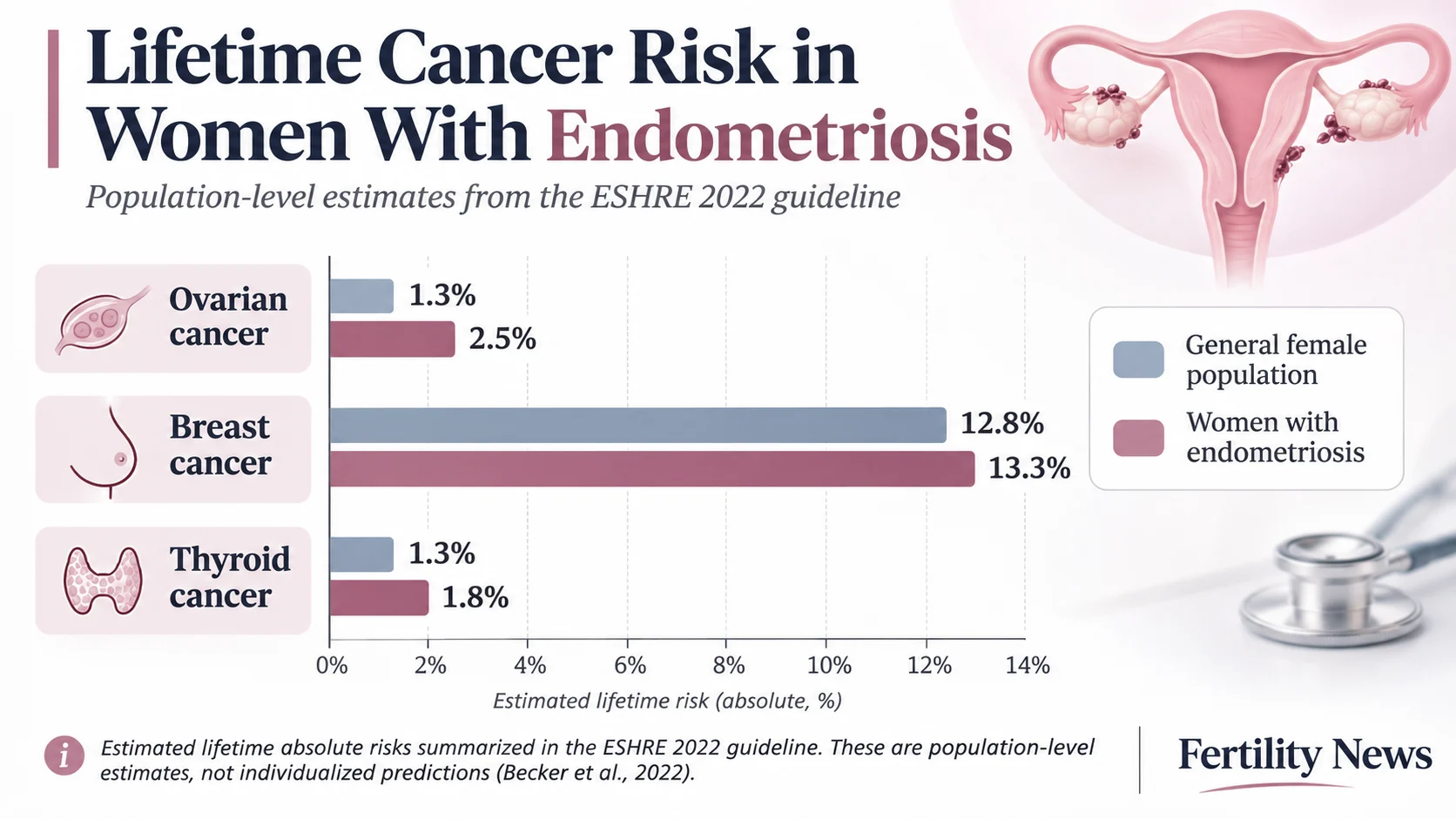
The estimates suggest that endometriosis is associated with an increase of approximately 1.2 percentage points in lifetime ovarian cancer risk.
Importantly, the ESHRE lifetime estimates and the 2024 JAMA study measure risk over different periods and in different populations. They should not be directly compared or combined.
Overall, the evidence indicates that ovarian cancer remains uncommon among women with endometriosis, even though their relative risk is higher.
Endometriosis and Ovarian Cancer: Which Types Carry the Highest Risk?
Ovarian cancer has the strongest and most consistently documented association with endometriosis.
However, ovarian cancer is not a single disease. It includes several histological subtypes that differ in their molecular characteristics, clinical behavior, and possible origins.
The relationship with endometriosis is particularly important for clear cell carcinoma and endometrioid carcinoma.
Clear cell and endometrioid ovarian cancer
Ovarian clear cell carcinoma is a distinct epithelial ovarian cancer subtype. Research has demonstrated a strong association between clear cell carcinoma and ovarian endometriosis, including molecular evidence supporting the possibility that some tumors arise from endometriotic lesions.
Ovarian endometrioid carcinoma is another epithelial subtype associated with endometriosis. Although its name resembles endometrial cancer, ovarian endometrioid carcinoma develops in the ovary rather than the uterine lining.
High-grade serous ovarian carcinoma, the most common epithelial ovarian cancer subtype, has a different predominant biological pathway, often involving the fallopian tube. Its association with endometriosis is generally less pronounced.
In the 2024 JAMA study, women with endometriosis had approximately 11.2 times the risk of clear cell ovarian carcinoma and 8.0 times the risk of endometrioid ovarian carcinoma compared with women without endometriosis. These estimates are based on relatively small numbers of subtype-specific cancers and should be interpreted with appropriate caution (Barnard et al., 2024).
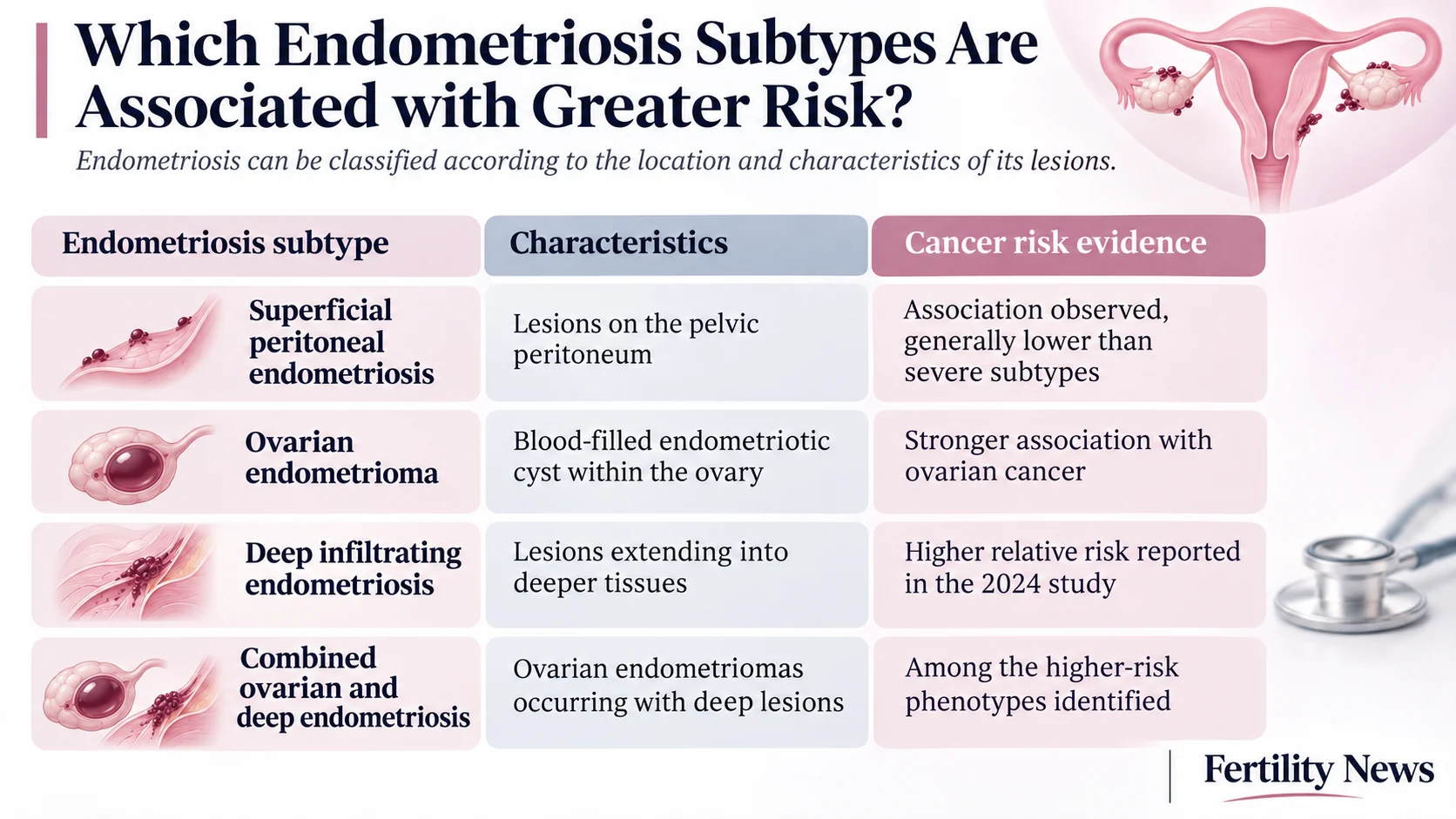
The 2024 study reported a particularly strong association for deep infiltrating endometriosis, although estimates for some specific phenotypes were imprecise.
These findings suggest that the anatomical characteristics of endometriosis may be more informative than a diagnosis of endometriosis alone.
Does stage 4 endometriosis increase cancer risk?
Stage IV endometriosis describes extensive disease, often involving significant adhesions, ovarian endometriomas, or complex pelvic involvement.
However, stage IV endometriosis does not mean stage IV cancer.
The staging systems are entirely different. Endometriosis staging describes the extent and anatomical distribution of benign disease, whereas cancer staging describes the spread of a malignant tumor.
Although severe endometriosis may overlap with phenotypes associated with higher ovarian cancer risk, stage alone cannot reliably predict whether cancer will develop.
Can Ovarian Endometriomas Become Cancerous?
Ovarian endometriomas, commonly called chocolate cysts, are benign cysts containing old blood associated with endometriosis.
They develop when endometrial-like tissue affects the ovary and produces repeated bleeding and inflammatory changes.
Most ovarian endometriomas remain benign. Nevertheless, malignant transformation can occur in rare cases, most commonly involving clear cell or endometrioid carcinoma.
How might malignant transformation occur?
Researchers have proposed several biological mechanisms.
Chronic inflammation: Persistent inflammatory signaling may create an environment that supports abnormal cellular growth and survival.
Repeated bleeding and iron accumulation: Blood breakdown within endometriotic cysts releases iron, which can contribute to oxidative stress and cellular injury.
DNA damage: Reactive oxygen species can damage DNA and potentially contribute to mutations associated with malignant transformation.
Estrogen-dependent signaling: Endometriotic tissue is influenced by estrogen, and prolonged hormonal stimulation may contribute to cellular proliferation.
Molecular alterations: Changes involving genes such as ARID1A, PIK3CA, and PTEN have been identified in endometriosis-associated ovarian cancers and, in some studies, adjacent endometriotic tissue.
These findings support biological pathways through which certain lesions might become malignant. However, identifying a mutation or inflammatory process does not mean that an individual endometrioma will inevitably develop into cancer.
When might an endometrioma require further investigation?
Certain clinical and imaging findings may warrant additional assessment, including:
- A new ovarian mass after menopause.
- A previously stable cyst that develops suspicious solid components or vascularized nodules.
- Progressive or unexplained changes in cyst appearance.
- Persistent new symptoms, particularly abdominal distension or early satiety.
- An indeterminate ovarian mass that cannot be confidently characterized as a typical endometrioma.
Cyst size or persistence alone cannot establish malignancy. A large endometrioma may remain benign, while smaller masses can occasionally require investigation.
Transvaginal ultrasound is commonly used for initial evaluation, with MRI considered when findings are uncertain.
The decision to monitor or surgically manage an endometrioma depends on imaging characteristics, symptoms, age, fertility plans, and individual risk factors.

Is Endometriosis Linked to Breast, Uterine, Cervical, or Colon Cancer?
Although ovarian cancer has the strongest established association with endometriosis, studies have also investigated links with other malignancies. However, findings remain inconsistent, and association does not necessarily mean causation (Kvaskoff et al., 2021).
Endometriosis and Breast Cancer
Research suggests a slightly increased breast cancer risk among women with endometriosis. ESHRE estimates lifetime risk at 13.3%, compared with 12.8% in the general population. This small difference may reflect shared hormonal and reproductive factors rather than a direct causal relationship (Becker et al., 2022).
Endometriosis and Uterine Cancer
Some population studies have reported an increased risk of uterine cancer, but larger systematic reviews have found no consistent association with endometrial cancer. Endometriosis is therefore not considered an established direct cause of uterine malignancy (Eoh et al., 2021; Kvaskoff et al., 2021).
Endometriosis and Cervical Cancer
Cervical cancer is primarily caused by persistent high-risk HPV infection. Studies investigating its association with endometriosis have produced conflicting results, and no direct causal relationship has been established (Kvaskoff et al., 2021).
Endometriosis and Colorectal Cancer
Bowel endometriosis can cause symptoms resembling colorectal cancer, including abdominal pain and altered bowel habits. However, a 2021 meta-analysis found no overall increase in colorectal cancer risk among women with endometriosis (Kvaskoff et al., 2021).
Endometriosis and Thyroid Cancer
Studies have reported a modest association with thyroid cancer, with estimated lifetime risks of 1.8% in women with endometriosis versus 1.3% in the general population. The underlying mechanisms remain uncertain (Becker et al., 2022).
Overall, ovarian cancer remains the most clinically significant cancer association with endometriosis. Evidence linking the condition to other cancers is generally weaker and does not justify additional routine cancer screening solely because of endometriosis.
How Is Cancer Diagnosed in Women With Endometriosis?
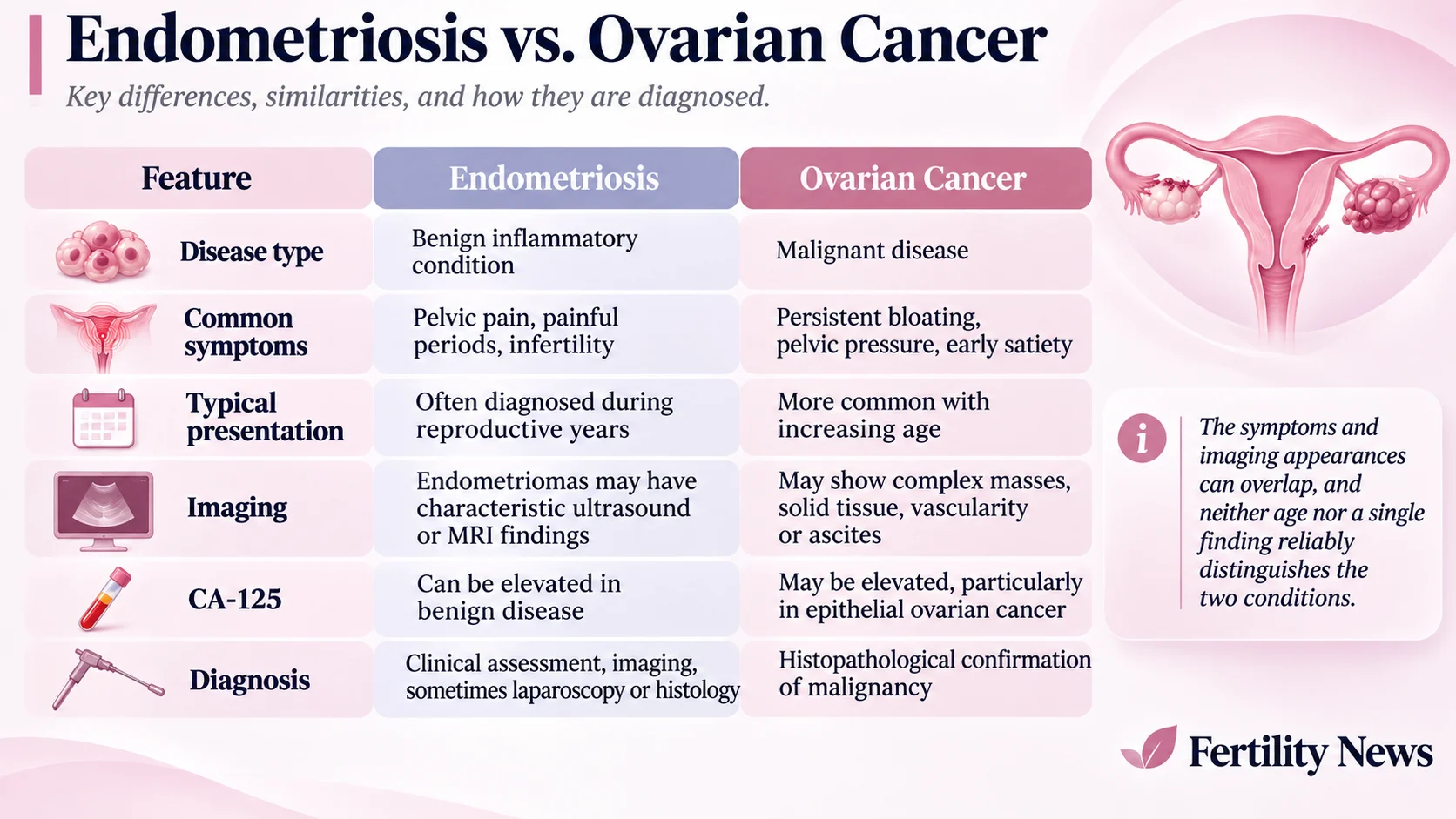
Diagnosing cancer in women with endometriosis can be challenging because benign endometriotic lesions and certain malignancies may produce overlapping symptoms or imaging findings.
Pelvic pain, abdominal bloating, abnormal bleeding, and changes in bowel or bladder habits can occur with endometriosis, but some of these symptoms may also appear in gynecological cancers.
A change from a patient’s usual symptom pattern is particularly important.
Can CA-125 distinguish endometriosis from ovarian cancer?
CA-125 is a blood biomarker that may be elevated in ovarian cancer, but it is not cancer-specific.
Levels can also increase in benign conditions, including endometriosis, menstruation, pelvic inflammation, and other gynecological disorders.
Therefore, an elevated CA-125 result does not establish a diagnosis of ovarian cancer.
Similarly, a normal CA-125 level does not reliably exclude malignancy.
For a suspicious ovarian mass, evaluation may involve transvaginal ultrasound, MRI when appropriate, specialist assessment, and additional investigations based on the clinical findings.
When cancer is suspected, histopathological examination is generally required to establish a definitive tissue diagnosis.
When should women with endometriosis see a doctor?
Medical assessment is particularly important when symptoms are new, persistent, progressive, or different from previously established endometriosis symptoms.
Potential warning signs include persistent abdominal bloating, early satiety, unexplained weight loss, increasing abdominal circumference, new or worsening pelvic pain, changes in bowel or urinary habits, and abnormal vaginal bleeding.
Postmenopausal bleeding should always be evaluated.
An enlarging or suspicious ovarian mass also requires appropriate gynecological assessment, even in someone with a longstanding history of endometriosis.
These symptoms do not necessarily indicate cancer, but they should not automatically be attributed to endometriosis without further evaluation.
Should Women With Endometriosis Get Cancer Screening or Preventive Treatment?
Current ESHRE guidelines do not recommend additional routine cancer screening solely because a woman has endometriosis.
This recommendation reflects the relatively low absolute risk of cancer and the lack of evidence that additional screening improves outcomes in otherwise asymptomatic women with endometriosis.
Routine ovarian cancer screening using CA-125 or transvaginal ultrasound has not been demonstrated to reduce ovarian cancer mortality in average-risk asymptomatic women.
However, screening and follow-up should be individualized when additional risk factors or suspicious clinical findings are present.
Who may need closer evaluation?
Women with a strong family history of ovarian or breast cancer, known inherited cancer-predisposition variants such as BRCA1 or BRCA2, or a suspicious ovarian mass may require specialist evaluation.
Genetic counseling may be appropriate when hereditary cancer risk is suspected.
Importantly, monitoring a known ovarian cyst is different from routinely screening an asymptomatic woman for ovarian cancer.
A patient with an indeterminate or changing endometrioma may need repeat imaging or specialist assessment even though routine ovarian cancer screening is not recommended for all women with endometriosis.
Does treating endometriosis reduce ovarian cancer risk?
Research has investigated whether hormonal treatments or surgical removal of endometriotic lesions influence future cancer risk.
Some observational studies suggest that complete surgical excision of visible ovarian endometriosis may be associated with a reduced subsequent risk of ovarian cancer.
However, surgery also carries potential risks, including complications and damage to ovarian reserve, particularly when ovarian endometriomas are removed.
ESHRE recommends balancing any potential reduction in cancer risk against the consequences of surgery, including effects on fertility and ovarian function.
Hormonal treatments, including combined hormonal contraceptives and progestins, are commonly used to manage endometriosis-related symptoms. Some hormonal contraceptives are associated with reduced ovarian cancer risk in the general population, but treatment specifically to prevent endometriosis-associated cancer requires careful individualized consideration.
Hysterectomy or removal of the ovaries is not routinely recommended solely to prevent cancer in women with endometriosis.
A hysterectomy removes the uterus but does not necessarily remove the ovaries or all endometriotic lesions. Consequently, it does not automatically eliminate the possibility of ovarian cancer or rare malignancies arising from residual endometriosis.
Treatment decisions should primarily consider symptoms, fertility goals, age, lesion characteristics, and individual risk factors (Becker et al., 2022).
Written by Marine Marachlian, MD
FAQ
Can endometriosis turn into cancer?
Rarely, certain endometriotic lesions, particularly ovarian endometriomas, can undergo malignant transformation. However, most endometriotic lesions remain benign, and most women with endometriosis never develop ovarian cancer.
How likely is ovarian cancer in women with endometriosis?
ESHRE estimates lifetime ovarian cancer risk at approximately 2.5% among women with endometriosis, compared with 1.3% in the general female population. These figures are population estimates and do not predict individual outcomes.
Can stage 4 endometriosis become cancer?
Stage IV endometriosis does not mean cancer. Severe endometriosis can involve ovarian endometriomas or deep infiltrating lesions associated with higher relative ovarian cancer risk, but stage IV disease does not inevitably become malignant.
Does untreated endometriosis become cancer?
Untreated endometriosis does not inevitably progress to cancer. Although rare malignant transformation is possible, there is no evidence that every untreated lesion becomes malignant over time. Treatment decisions should consider symptoms, fertility, imaging findings, and individual circumstances.
Can an endometriosis cyst become cancerous?
An ovarian endometrioma can rarely undergo malignant transformation, most commonly into clear cell or endometrioid carcinoma. A suspicious change in cyst appearance warrants further evaluation, but the presence of an endometrioma alone does not indicate cancer.
Does endometriosis cause uterine or endometrial cancer?
A direct causal relationship has not been established. Some observational studies report an association, while larger systematic reviews have found inconsistent or nonsignificant results.
Can endometriosis cause cancer after hysterectomy?
Rarely, malignancy can arise from residual endometriotic tissue after hysterectomy. If the ovaries remain, ovarian cancer is still possible. Even after removal of the ovaries, a small residual risk of primary peritoneal cancer remains, independently of endometriosis.
Should women with endometriosis undergo annual ovarian cancer screening?
Not solely because of endometriosis. ESHRE recommends following standard population-based screening guidelines unless additional risk factors, concerning symptoms, or suspicious imaging findings justify further evaluation.
-
Nov 21, 2026, 17:20Sue Ritchie: Why Isn’t Male Fertility Preparation a Bigger Priority in IVF?
-
Nov 21, 2026, 17:16Ivana Muncie-Vasic: “New Science, New Buyers” at the Decoding Bio Investor Summit
-
Nov 21, 2026, 17:07Sara Alson: Obstetric Outcomes Following IVF/ICSI Treatment in Women with Endometriosis and/or Adenomyosis
-
Nov 21, 2026, 16:56Ana Rita Batista: Looking Forward to MEFS 2026
-
Nov 21, 2026, 16:50Camille A. Clare: Always Grateful to Learn With and From My ACOG Colleagues
-
Nov 21, 2026, 16:44Abdelrahman H. Daifalla: Proud to Share That I’ve Received My ESHRE ECRES Certificate
-
Nov 21, 2026, 16:22What Defines Quality in an IVF Laboratory? – Child Fertility
-
Nov 21, 2026, 16:15Agata Zielinska։ An Amazing Experience Sharing Our Work at Ovo Labs at the IVI Institute Congress
-
Nov 21, 2026, 16:06Natalie Tam: An Achievement in My Embryology Training Journey at WEST