

Why Are Stable Chromosomes So Important for Female Fertility? – Max Planck Institute for Multidisciplinary Sciences
Max Planck Institute for Multidisciplinary Sciences shared a post on LinkedIn about a paper by Melina Schuh et al. published in Science:
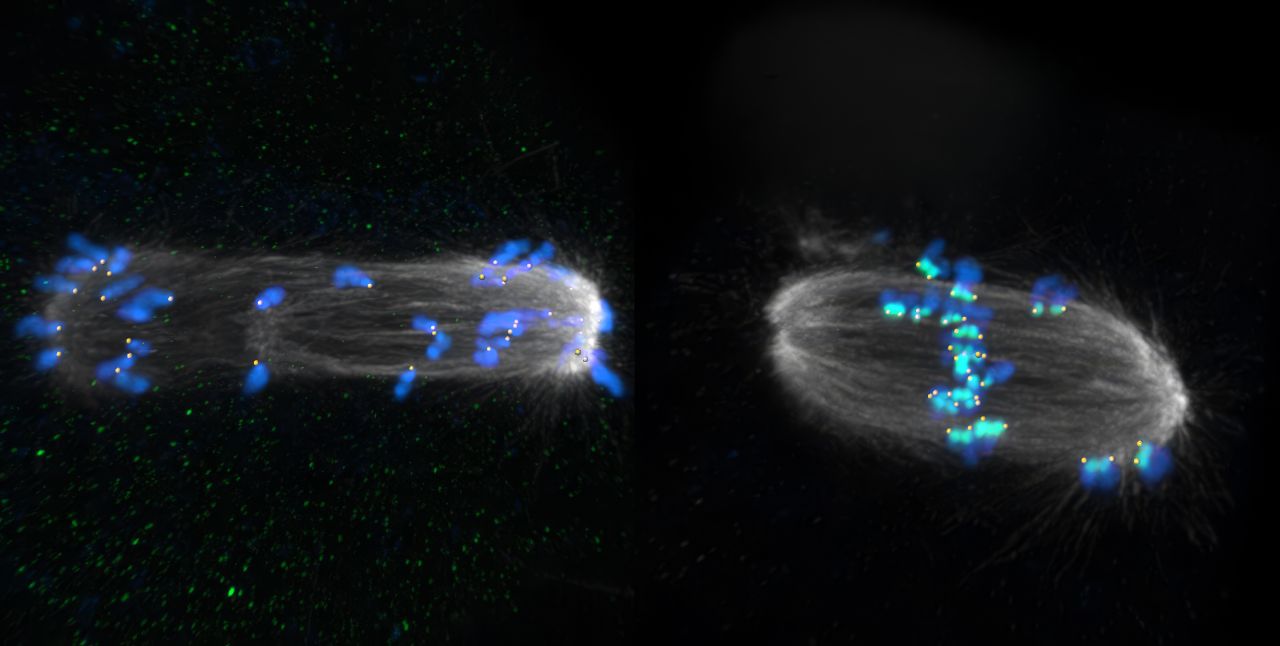
“Scientists led by Melina Schuh at our institute have developed an artificial ‘glue’ that stabilizes the chromosomes in aged mouse eggs. This is a first step towards developing a safe method to improve the quality of aged human eggs and increase the success rates of fertility treatments.
Why are stable chromosomes so important for female fertility?
Their identical halves, the chromatids, are held together by a molecular ‘glue’, the protein complex cohesin. As an egg ages, cohesin gradually detaches from the chromatids and is not replaced.
This increases the likelihood that the chromatids will separate too early and fail to distribute correctly during meiosis. As a result, the egg then contains either too many or too few chromosomes. If such an egg is fertilized, this will lead to an embryo with an abnormal number of chromosomes. In most cases, these embryos do not implant in the uterus, or their do not develop properly.
This is one of the reasons, why fertility treatments involving assisted reproduction (IVF) may be unsuccessful in women in their late 30s.
The researchers have engineered an artificial ‘glue’ called TALhesin, that can take over the binding function of cohesin and hold sister chromatids together in aged mouse eggs. This helped prevent premature separation of the chromatids and improved the quality of aged eggs.
Find out more about this new system and the initial experiments involving mouse and human eggs in our press release.
The peer-reviewed research paper is published in Science Magazine.”
Title: An engineered cohesion system reduces errors in aged mammalian eggs
Authors: Alexandre Webster, Halima Yusuf, Nina Schweizer, Chloe Charalambous, Eike Urs Mönnich, Heike Eckel, Rüdiger Moltrecht, Martyn Blayney, Kay Elder, Claus Sibold, Andreas Tandler-Schneider, Melina Schuh
You can read the Full Article in Science.
Stay informed with the latest updates in fertility and reproductive medicine on Fertility News.
-
Nov 28, 2026, 16:55Jakub Dejewski: 49 Families Across Europe – 11 Clinics Have Already Joined
-
Nov 28, 2026, 16:40Marwa Fakhreldin: Exploring a Novel, Minimally Invasive Treatment for Women with PMOS
-
Nov 28, 2026, 16:27Rajeev Agarwal։ Are Heavy Periods in the 40s Just a Sign of Perimenopause?
-
Nov 28, 2026, 13:43The IVF Center Celebrates Thanksgiving with Gratitude for Its Medical Community
-
Nov 28, 2026, 13:05Yifei Liu: The Embryologist’s Debrief of ASRM 2026
-
Nov 27, 2026, 17:28Science Is Better Together and So Is Growth – ESHRE
-
Nov 27, 2026, 17:19Hugo Manoukian: The Paradox of IVF Reimbursement and Fertility Access in France
-
Nov 27, 2026, 17:09New RBMO Study Links Oocyte Donation to Increased Risk of Postpartum Haemorrhage
-
Nov 27, 2026, 16:57Nada Habeichi Shares New Research on Endometrial Immune Profiling and Reproductive Outcomes