
Unraveling Immune Mechanisms in Reproductive Health – Reproduction and Fertility
Reproduction and Fertility shared a post on LinkedIn:
“Day 2 of RaFJC – Immune Adaptation from Conception to Pregnancy
After exploring how ovulation itself is an immune‑regulated event, with inflammatory mediators shaping oocyte release and follicle competence, today we move forward in the reproductive timeline: conception and implantation: immune cross-talk determines whether the embryo is accepted or rejected.
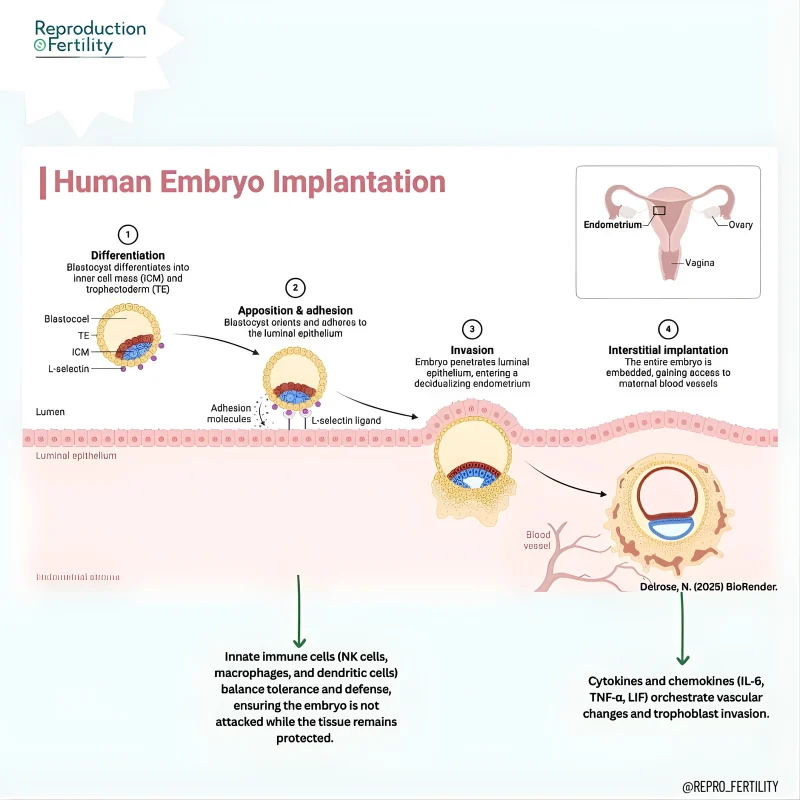
Immune and Inflammatory Responses at Implantation
- During differentiation, the blastocyst expresses L-selectins (a cell adhesion molecule that facilitates the initial ‘tethering’ and ‘rolling’ of leukocytes. L-selectins interact with L-selectin ligands, which are expressed mainly on pinopodes during the implantation window.
- During apposition and the adhesion phase, the blastocyst promotes cleavage of Mucin-1, which drives the implantation window and ensures successful attachment. Cytokines such as Leukemia inhibitory factor (LIF) play an important role during human implantation by supporting the embryo-endometrial interactions.
- During the invasion phase, the trophoblast cells penetrate the endometrial epithelium into the stroma. The extra-villous trophoblast cells proliferate and differentiate into inner cytotrophoblast and outer syncytiotrophoblast.
- When implantation begins, the embryo breaches the luminal epithelium, and the surrounding stromal cells transform into decidual cells. Immune cells, such as macrophages and uterine natural killer (uNK) cells, play an important role during decidualization by promoting an environment conducive to successful implantation.
Dysregulation of these pathways is linked to implantation failure, recurrent miscarriage, and pregnancy complications.
Implantation is not passive! It’s an immune dialogue between the embryo and the endometrium. Understanding this dialogue is critical for improving fertility treatments and predicting pregnancy outcomes.
What immune mechanisms at implantation deserve more attention in reproductive medicine? How can we better translate these findings into clinical practice? We would love to hear your thoughts in the comments.
Are you interested in this topic? Explore our next Serial Collection: Immune Regulation and Inflammatory Mechanisms in Reproductive Health and Disease, and submit your article to be a part of it.
Tomorrow we’ll be extending this discussion into pregnancy and delivery, highlighting maternal immune adaptations – stay tuned!”
Stay updated on all scientific advances in the field of fertility with Fertility News.
-
Sep 13, 2026, 15:11Sachintha Alwis: From Impaired Sperm Motility to Microrobotics
-
Sep 13, 2026, 15:08Laurence Orbuch: Before Endometriosis Surgery, Ask…
-
Sep 13, 2026, 15:05Ademola Ayodele: IUI, IVF or Egg Freezing – Which One Is Right for You?
-
Sep 13, 2026, 14:59Fiona Pathiraja-Møller: Tennis Players No Longer Have to Choose Between Career and Family
-
Sep 13, 2026, 14:571-Day Virtual Experience for People Impacted by PMOS – PCOS Awareness Association
-
Sep 13, 2026, 14:53Ozor Victor: Behind Every Embryo Is a Story of Science, Precision, and Hope
-
Sep 13, 2026, 14:50Diana Kayal: What They Don’t Tell You About IVF
-
Sep 13, 2026, 14:44Vikram Sinai Talaulikar: A Heartfelt Thank You to All Who Donated and Supported “Menopause and Cancer”
-
Sep 13, 2026, 14:41Nicole McPherson: Changing IVF Practices Is Hard – Integration Needs to Be Easy