
Gut Microbiota’s Role in Maternal-Fetal Immune Tolerance – Weill Cornell Medicine
Weill Cornell Medicine shared a post in LinkedIn about a paper by Julia Brown et al. published in Cell:
“Beneficial gut bacteria may help prevent immune system reactions that can lead to pregnancy loss by training a mother’s immune system to adapt to the developing fetus, according to a new preclinical study.
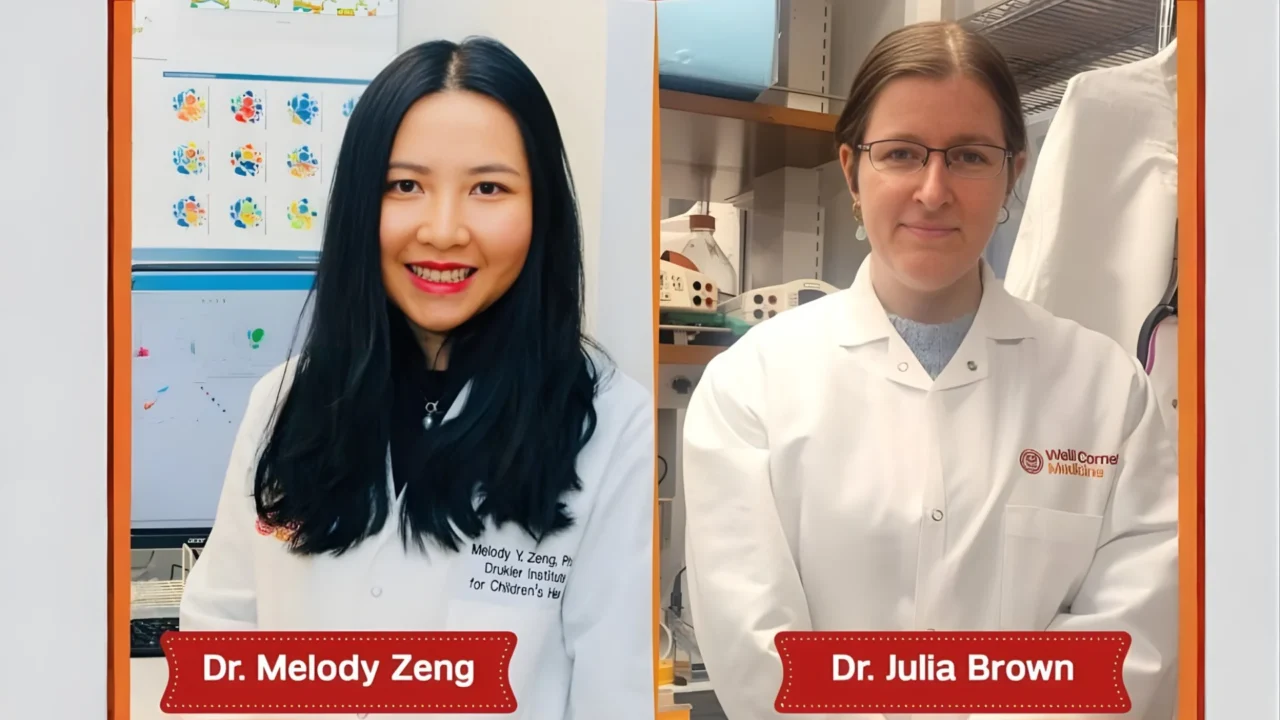
The findings from Weill Cornell Medicine’s Dr. Melody Zeng and Dr. Julia Brown demonstrated that metabolites produced by gut microbes promote the recruitment of two types of protective immune cells to the placenta and help the mother’s immune system learn to tolerate the fetus.
‘During pregnancy, it’s very important that the mom’s immune system is trained to recognize that the fetus is not harmful,’ said Dr. Zeng, who also collaborated with Weill Cornell’s Dr. Virginia Pascual and Dr. Gregory Sonnenberg. ‘That prevents the maternal immune system from attacking the fetus, which can lead to recurrent miscarriages or still births.’
Full story.”
Melody Zeng, Associate Professor of Immunology in Pediatrics at Weill Cornell Medicine, shared Weill Cornell Medicine’s post, adding:
“Thanks Weill Cornell Medicine for highlighting our latest work – out now in Cell Press !
We show that –
- Gut microbiota promotes maternal-fetal tolerance via tryptophan-derived indoles to prime MDSCs & RORγt+ Tregs to suppress IFN-γ/IL-17
- Low placental indoles linked to human recurrent miscarriage
Free access (until 2/5/2026)”
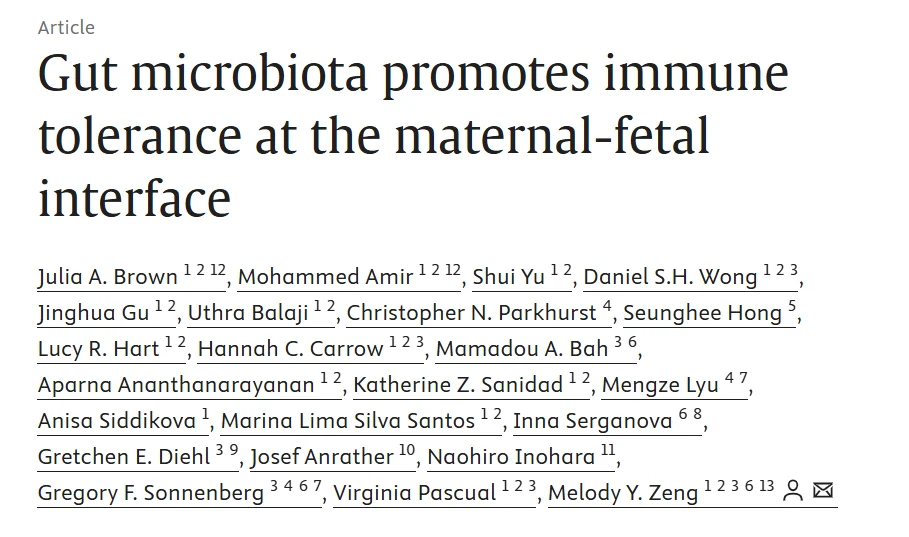
Title: Gut microbiota promotes immune tolerance at the maternal-fetal interface
Authors: Julia A. Brown, Mohammed Amir, Shui Yu, Daniel S.H. Wong, Jinghua Gu, Uthra Balaji, Christopher N. Parkhurst, Seunghee Hong, Lucy R. Hart, Hannah C. Carrow, Mamadou A. Bah, Aparna Ananthanarayanan, Katherine Z. Sanidad, Mengze Lyu, Anisa Siddikova, Marina Lima Silva Santos, Inna Serganova, Gretchen E. Diehl, Josef Anrather, Naohiro Inohara, Melody Y. Zeng
Stay updated on all scientific advances in the field of fertility with Fertility News.
-
Oct 10, 2026, 04:36Tess Kossow: Why I Created Nurture IVF Concierge After My Own Infertility Journey
-
Oct 10, 2026, 04:32Hosting the First Advanced Obstetric Surgical Skills Course – RCOG
-
Oct 10, 2026, 04:29Beyond IVF Laboratory Optimization: Addressing Patient Dropout – RBMO
-
Oct 10, 2026, 04:22Does Lifestyle Really Affect Fertility? – Montgomery Fertility Center
-
Oct 10, 2026, 04:20Mamoon Banat: Quick Recap of the 2026 CFAS Meeting in Calgary, Canada
-
Oct 8, 2026, 17:18Khalil Faaed: Vitrification Prevents Ice, but Does It Prevent Oocyte Damage?
-
Oct 8, 2026, 17:16Ritu Anand: Better Conversations Ultimately Lead to Better Care in Fertility
-
Oct 8, 2026, 17:14Mark Trolice: Excited to Speak at Women’s HealthX
-
Oct 8, 2026, 17:12Delighted to Welcome Dr. Róisín Mortimer – Waterstone Clinic-IVF and Fertility