
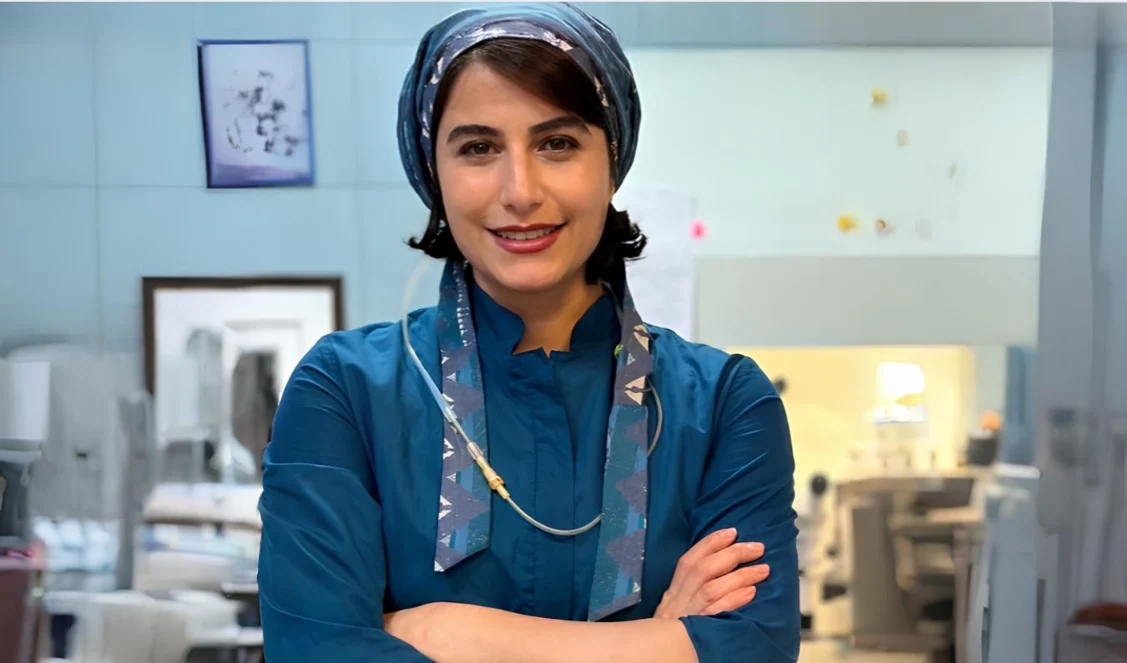
Caspian Ostadian: How Long Should an Embryo Rest After Warming Before Transfer?
Caspian Ostadian, Embryologist at Mehr Assistant Reproductive Center, shared on LinkedIn:
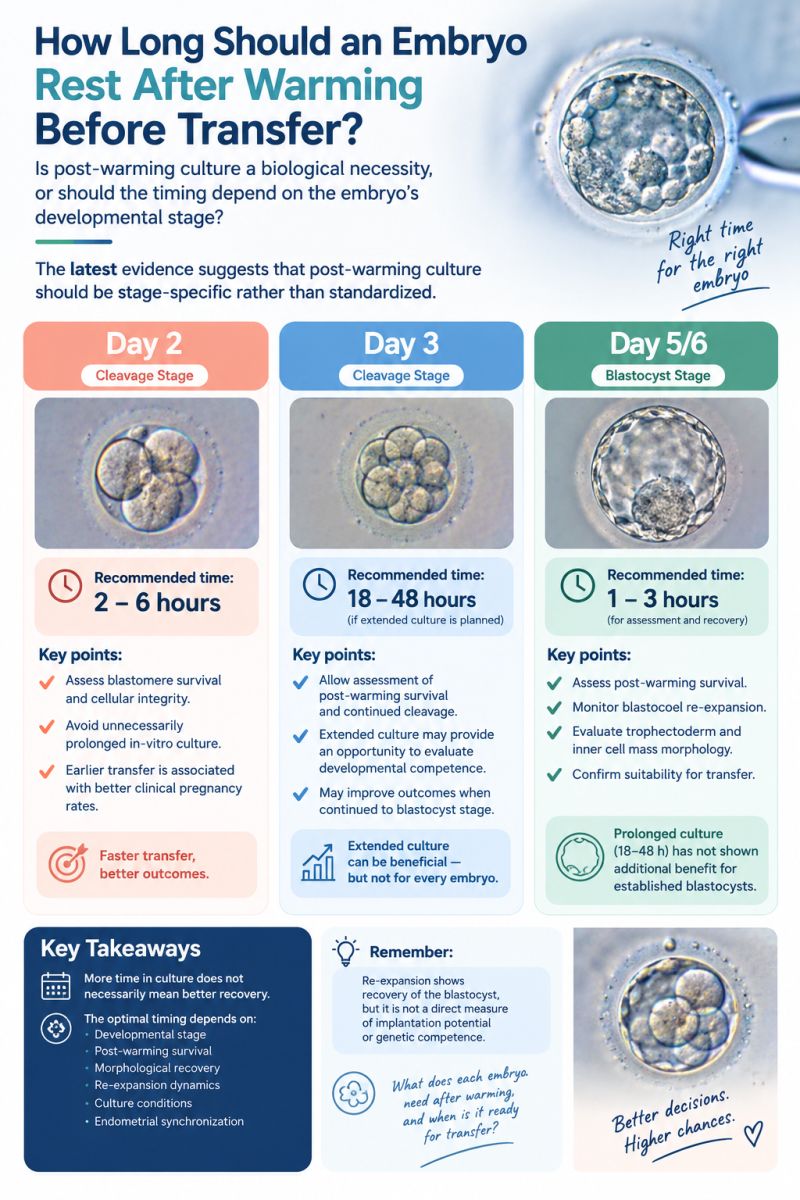
“How Long Should an Embryo Rest After Warming Before Transfer?
Is post-warming culture a biological necessity, or should the timing depend on the embryo’s developmental stage?
After vitrification and warming, embryos may experience osmotic stress, changes in cell volume and temporary alterations in cellular function.
But does every embryo need the same recovery period before transfer?
The latest evidence suggests that post-warming culture should be stage-specific rather than standardized.
1. Day 2 embryos (Cleavage stage)
Suggested approach: Approximately 2–6 hours
- Assess blastomere survival and cellular integrity.
- Avoid unnecessarily prolonged in-vitro culture.
- A 2026 systematic review and meta-analysis found lower clinical pregnancy rates with extended culture compared with earlier transfer in Day-2 embryos.
2. Day 3 embryos (Cleavage stage)
Suggested approach: 18–48 hours when extended culture is planned
- Allow assessment of post-warming survival and continued cleavage.
- Extended culture may provide an opportunity to evaluate developmental competence.
- Some studies suggest improved outcomes when Day-3 embryos are cultured further, particularly when extended to the blastocyst stage.
However, extended culture is not automatically beneficial for every embryo.
3. Day 5/6 embryos (Blastocyst stage)
Suggested approach: Approximately 1–3 hours for assessment and recovery, according to laboratory protocol.
- Assess post-warming survival.
- Monitor blastocoel re-expansion.
- Evaluate trophectoderm and inner cell mass morphology.
- Confirm suitability for transfer.
Importantly, prolonged culture (18–48 hours) has not demonstrated a significant improvement in live birth rates for established blastocysts.
What does the 2026 evidence tell us?
A systematic review and meta-analysis by Cahen-Peretz et al. (2026), including 14 studies and 17,415 FET cycles, reported:
- Day 2: Earlier transfer (2–6 h) was associated with better clinical pregnancy outcomes.
- Day 3: Extended culture was associated with improved live birth rates (RR 1.076).
- Day 3 to blastocyst: Extended culture showed the largest improvement in live birth rates (RR 1.229).
- Day 5/6 blastocysts: No significant live birth benefit was found with extended culture.
A more recent retrospective study by Jiang et al. (2026) also highlighted that post-warming culture time may interact with developmental stage and transfer strategy.
Why does blastocyst re-expansion matter?
Following warming, blastocysts may initially appear collapsed due to fluid loss during vitrification.
Re-expansion reflects the recovery of trophectoderm function, epithelial integrity and fluid transport mechanisms.
However, re-expansion should not be interpreted as a direct measure of implantation potential or genetic competence.”
Other articles featuring Caspian Ostadian on Fertility News.
-
Nov 22, 2026, 17:01Insights from ISFP 2026
-
Nov 22, 2026, 16:17Khalil Faaed: The Dark Center of the Oocyte
-
Nov 22, 2026, 16:10Jyoti Gupta: Proud to Join Cloudnine Fertility, Golf Course Road, Gurugram, as Director
-
Nov 22, 2026, 15:45Francine Freitas Fernandes: 3D and 4D Hysterosalpingo-Contrast Sonography
-
Nov 22, 2026, 15:25New RBMO Study Links Microfluidic Sperm Sorting to Higher Blastocyst Formation and Lower Miscarriage Rates
-
Nov 22, 2026, 15:21Michelle Mason: Pleased to Attend the Annual SWIGS Conference with the Care Fertility Cardiff Team
-
Nov 22, 2026, 15:18Rajeev Agarwal: The Lining Is 6.5 mm – Will the Embryo Transfer Fail?
-
Nov 22, 2026, 15:11The Automated IVF Laboratory Lecture by Jacques Cohen at the 5th Narture – Conceivable Life Sciences
-
Nov 22, 2026, 15:07Laura Rienzi: Same Message, 2 Slides – Which One Would You Rather See at a Congress?