
Albert Irkaliev։ Could Pacemaker-Like Cells Influence Embryo Implantation?
Albert Irkaliev, Reproductologist at SILK Medical, shared on LinkedIn:
“The Uterus Is Not a Passive Organ: Could Pacemaker-Like Cells Influence Embryo Implantation?
In IVF, implantation is usually discussed in terms of embryo competence and endometrial receptivity.
But there may be a third component: uterine dynamics.
The uterus is not a passive cavity. Throughout the menstrual cycle, the myometrium and junctional zone demonstrate coordinated contractile activity – uterine peristalsis – which changes with hormonal conditions.
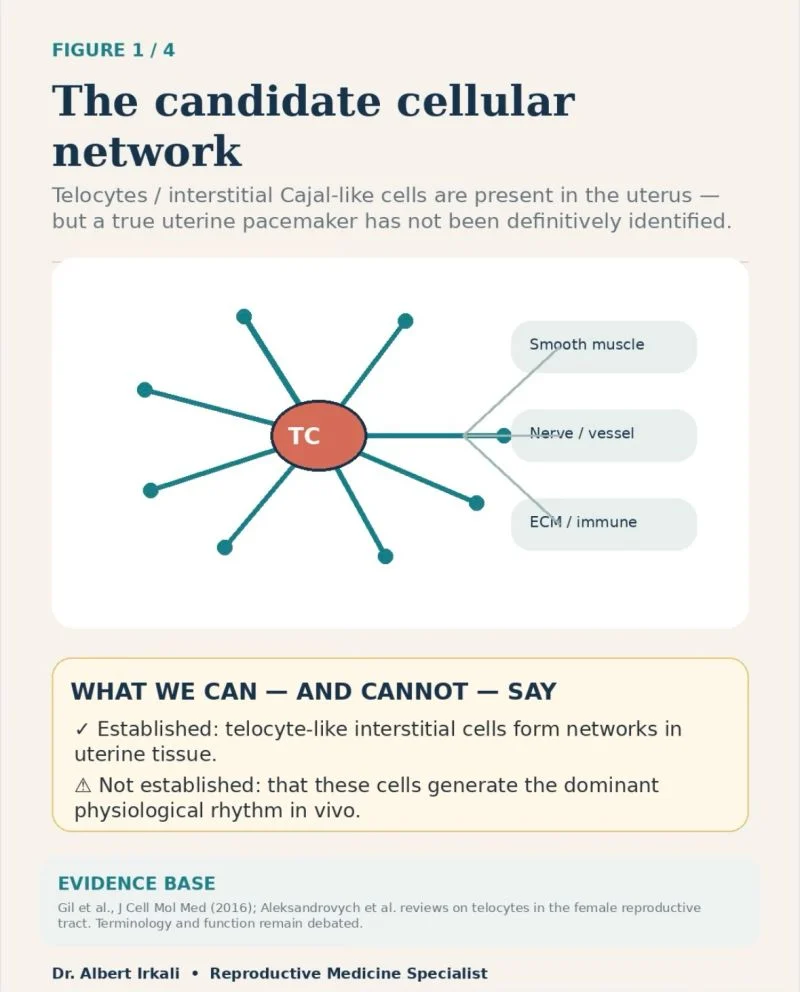
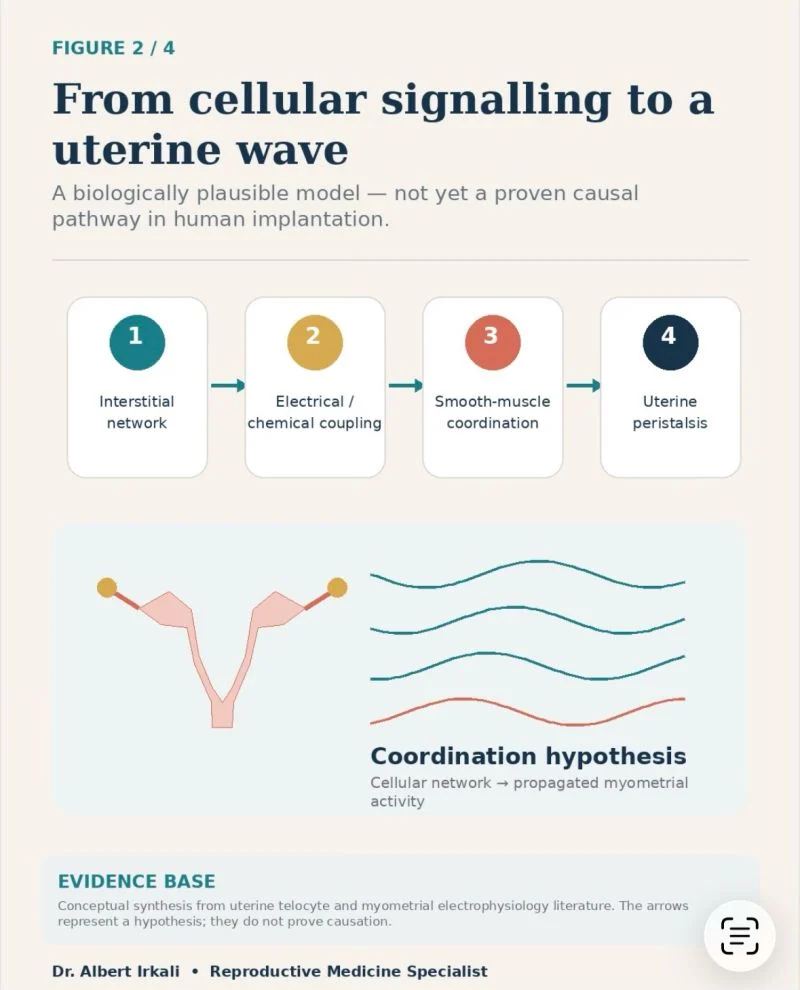
One intriguing area of research involves interstitial Cajal-like cells (ICLCs), often described as telocytes, identified in the human uterus.
These cells form extensive networks and interact with smooth muscle, nerves, and blood vessels. Because of their similarities to the interstitial cells of Cajal – the established pacemaker cells of the gastrointestinal tract – researchers have investigated whether they might contribute to the coordination of uterine contractility.
However, their role as true uterine pacemaker cells remains unproven.
Why could this matter in IVF?
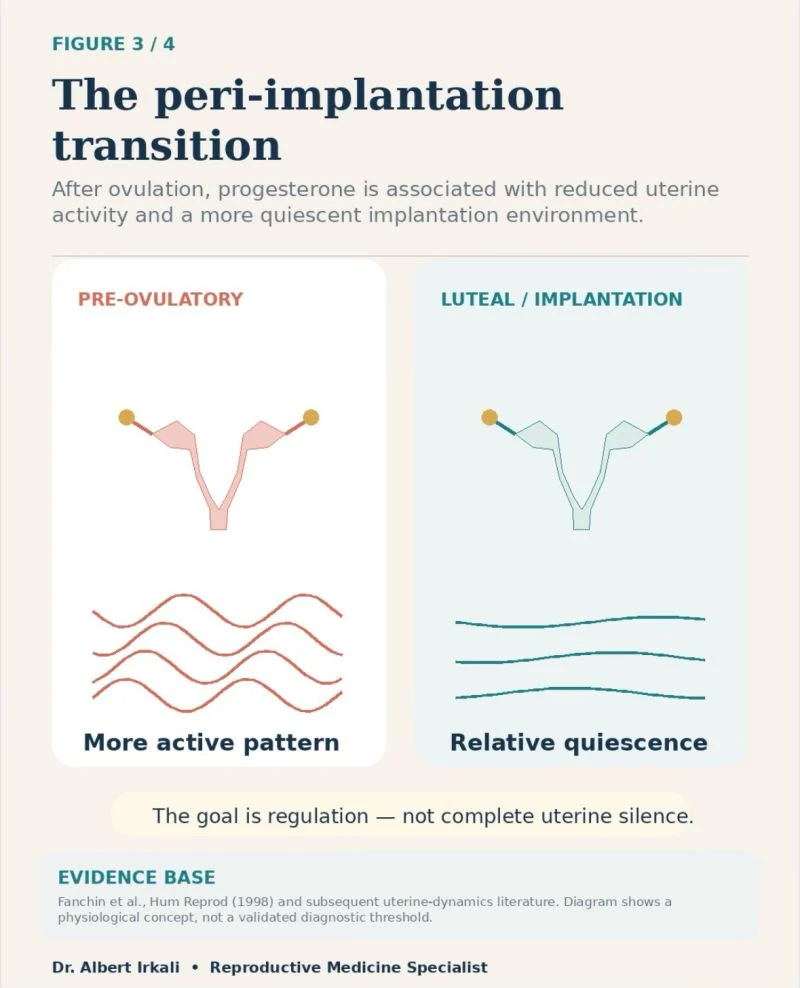
After ovulation, progesterone is associated with reduced uterine contractility, creating a relatively quiet mechanical environment around implantation.
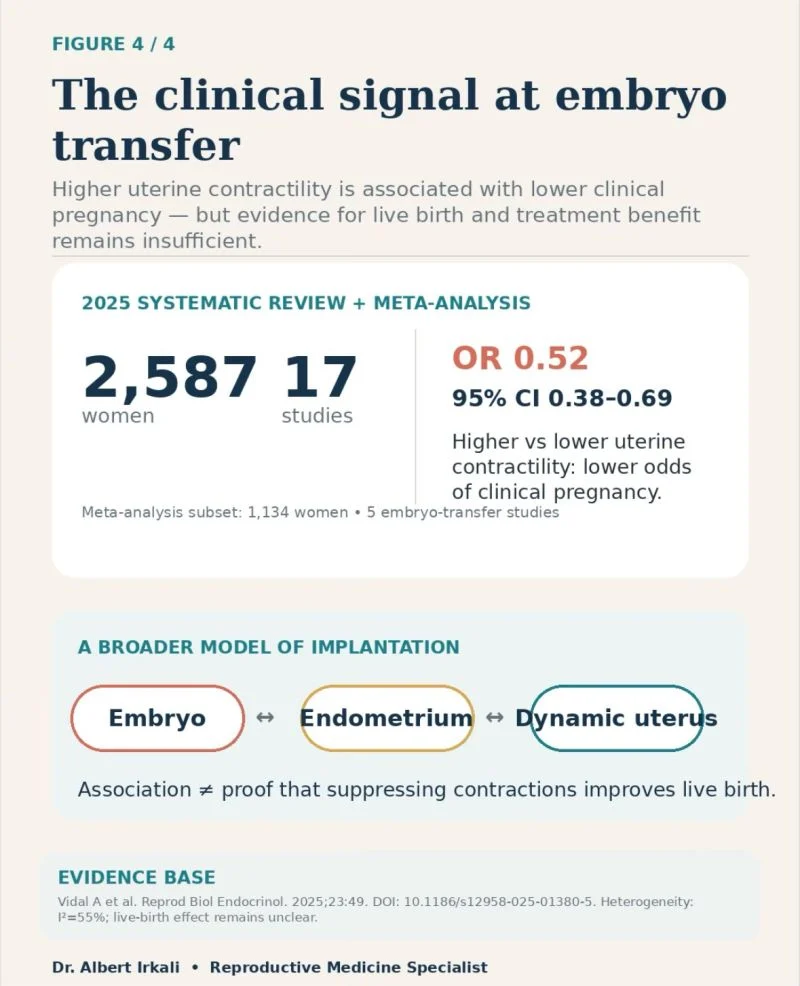
Studies have also reported associations between increased uterine contractions around embryo transfer and lower implantation or pregnancy rates.
This does not mean that uterine contractions cause implantation failure. Nor is ՛telocyte dysfunction՛ currently a clinical diagnosis.
But it raises an interesting concept: embryo transfer occurs in a dynamic muscular organ – not in a static cavity.
Implantation may therefore depend not only on:
- Embryo + Endometrium
but potentially also on:
- Embryo + Endometrium + Uterine Dynamics
Altered uterine contractility has been investigated in conditions such as adenomyosis, endometriosis, fibroids and junctional-zone abnormalities.
At present, there is no validated clinical test for telocyte dysfunction and no established telocyte-targeted IVF treatment.
But understanding uterine cellular, electrical, and mechanical behavior may eventually add another dimension to implantation biology.
The uterus may not simply be the place where implantation occurs. It may be an active participant in how implantation occurs.”
Other articles featuring Albert Irkaliev on Fertility News.
-
Sep 19, 2026, 15:24Sims IVF Appoints Leading Reproductive Medicine Specialist Prof. Enda McVeigh as New Medical Director
-
Sep 19, 2026, 15:22Early Fee for ESHRE Campus 2026 Ends 30 September
-
Sep 19, 2026, 15:17Can You Be a Surrogate After 40? – Egg Donor and Surrogate Solutions
-
Sep 19, 2026, 15:11Sheryl Homa։ Delighted to Present at the ARCS Current Practice in Therapeutic Sperm Preparation
-
Sep 19, 2026, 15:07Ángel Martín Bastida: Happy to Have Contributed to This Initiative With a Chapter on Embryonic Mosaicism
-
Sep 19, 2026, 13:33From IVF to Delivery: The Journey Doesn’t End With a Positive Pregnancy Test
-
Sep 18, 2026, 20:27Hrishikesh Pai: Rethinking Male Infertility
-
Sep 18, 2026, 20:25Eric Verdin: Wrapping Up the Reproductive Aging Summit at the Center for Healthy Aging in Women
-
Sep 18, 2026, 20:21Investigating Pregnancy Outcomes in Women with Idiopathic POI – RBMO