

Asima Ahmad: Can Targeted Light Help More Embryos Develop During IVF?
Asima Ahmad, Co-Founder and Chief Medical Officer at Carrot and Reproductive Endocrinology and Infertility Specialist at Reproductive Medicine Institute, shared on LinkedIn:
“Can targeted light help more embryos develop during IVF?
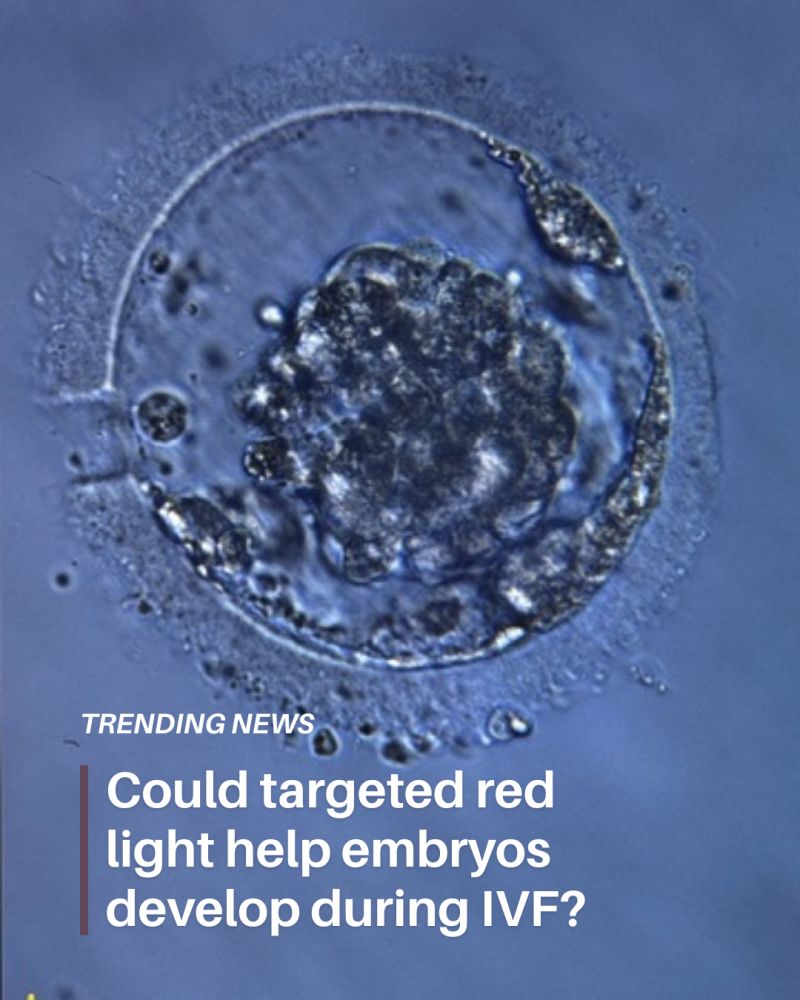
CNN recently covered HELIOS, an experimental technology being studied at Columbia University Fertility Center. It delivers precisely controlled pulses of near-infrared light directly to embryos in the IVF laboratory.
As a reproductive endocrinologist, I’m interested in the question behind this research: can supporting embryo metabolism increase the number of usable embryos from a single egg retrieval?
Early embryo development requires substantial energy. Researchers are testing whether targeted light can support mitochondrial function and help more embryos reach the blastocyst stage, when they may be suitable for freezing, biopsy, or transfer.
According to Columbia, early laboratory studies in mouse and donated human embryos suggested improved energy production and progression to this stage. HELIOS is now being evaluated in a randomized, double-blind clinical trial.
The distinction that matters: encouraging laboratory findings do not yet establish better pregnancy or live-birth rates.
If this approach safely produces more usable embryos – and ultimately more live births per retrieval – it could reduce the need for additional stimulation cycles and procedures. That would matter for patients’ physical and emotional burden, treatment costs, and the employers and health plans supporting their care.
Those benefits remain possibilities being tested.
This research also does not establish that external red-light devices improve egg quality or IVF outcomes. Direct exposure in a laboratory, with a specific wavelength and dose, cannot be equated with using a device at home.
For clinicians, founders, and benefits leaders, the questions are the same: Does it improve outcomes that matter to patients? For whom? And with what safety data?
I’m encouraged by the research and look forward to seeing the trial results.”
Other articles featuring Asima Ahmad on Fertility News.
-
Nov 9, 2026, 18:08Strong Workplaces Start with Supported Employees – ESHRE
-
Nov 9, 2026, 18:00Nicole Haliday: Balancing Work and Fertility Treatment
-
Nov 9, 2026, 17:50How Employers Can Support Employees Facing Fertility Challenges – Ferring Pharmaceuticals
-
Nov 9, 2026, 17:41Esther Eleboh: IUI or IVF?
-
Nov 9, 2026, 17:31Shweta Rajani Goswami: If Your IVF Has Failed, I May Still Tell You That Your First Doctor Did the Right Thing
-
Nov 9, 2026, 17:17Rajeev Agarwal: TSH 3.1 Before Pregnancy
-
Nov 9, 2026, 17:11Diana Kayal: Fertility Is a Conversation for 2
-
Nov 9, 2026, 17:01Lodovico Parmegiani: The Future of ART Laboratories May Already Be Moving Toward 100% ICSI
-
Nov 9, 2026, 16:55Oluyemisi Famuyiwa: How AI Analyzes Sperm Movement and Shape