
Carole Gilling-Smith: Overnight, an NHS Funding Decision Divided My Fertility Patients into 2 Groups…
Carole Gilling-Smith, Medical Director, Consultant Gynaecologist and Fertility Specialist of Agora Clinic, shared on LinkedIn։
“Overnight, an NHS funding decision divided my fertility patients into two groups:
- those who could afford to continue treatment,
- and those who could not.
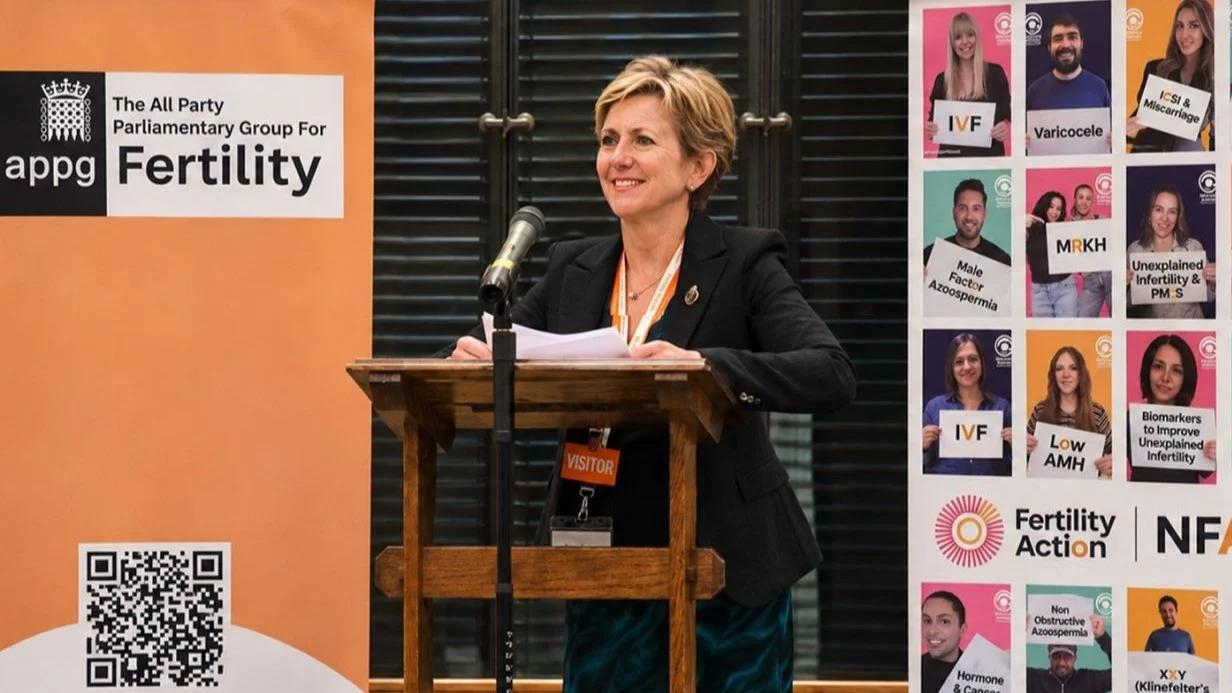
That was one of the messages I took to Parliament earlier this week, where I was invited to speak at the National Fertility Awareness Week reception hosted by Kate Osborne, Chair of the All-Party Parliamentary Group for Fertility.
In July 2025, our Sussex NHS commissioners reduced IVF funding from three full cycles to just one.
Nothing had changed in the medical evidence.
Nothing had changed in our patients’ needs.
Only the budget had changed.
During my talk, I shared key findings from Fertility Access in the UK: The Case for a National Fertility Strategy, a snapshot report I co-authored with Katie Rollings and produced with the support of the charity Fertility Action.
The findings are stark.
Of the 38 English Integrated Care Boards with a stated policy in March 2026, just three funded the three full IVF cycles recommended by NICE. And in 2024, only one in four IVF cycles in England was NHS-funded.
As I told the room, IVF is a course of treatment, not a single procedure.
When the evidence supports a course of chemotherapy, the NHS doesn’t fund the first treatment and ask patients to pay for the rest.
Why should fertility treatment be different?
Let’s not forget the World Health Organisation recognises infertility as a disease.
But access is about more than funding.
It is also about who qualifies for treatment, how quickly infertility is diagnosed, and whether patients receive the right care before time runs out.
I shared the story of a patient who spent seven years navigating NHS investigations and referrals before reaching me, by which time she had gone through the menopause.
It was a devastating reminder that in fertility medicine, delay can change everything.
Our report sets out practical recommendations, including national minimum standards, fairer eligibility criteria, more efficient diagnostic pathways and clear accountability for access to fertility care.
We also heard from Jonathan Ramsay about the importance of addressing male fertility, and from patient advocate John O’Neill who movingly described the isolation of a fertility diagnosis and the support he received from his colleagues when he opened up.
My thanks to Kate Osborne for hosting the evening, to Katie Rollings for her tireless work through Fertility Action, and to everyone who contributed to such an important discussion. It was particularly encouraging to see so many colleagues from across the fertility profession supporting the call for change.
Nearly fifty years ago, Britain gave the world IVF through the pioneering work of Bob Edwards and Patrick Steptoe.
We have spent decades since improving the science. Surely now is the time to improve the system.”
Other articles featuring Carole Gilling-Smith on Fertility News.
-
Nov 8, 2026, 11:51Severe Sperm Dysmorphism: When Should We Consider Surgical Sperm Retrieval Before ICSI?
-
Nov 8, 2026, 09:24AI-Assisted Embryo Selection: From Prediction to Choice
-
Nov 7, 2026, 19:28Championing the Vital Conversation Surrounding Fertility Support, Education, and Patient Advocacy – ARCS
-
Nov 7, 2026, 19:25Emilio Gomez Sanchez: Exploring the Presence of Microplastics in Human Semen
-
Nov 7, 2026, 19:15Moving Towards Standardized Sperm Extraction and Processing Practices – ASRM
-
Nov 7, 2026, 19:12Ivy Fertility Welcomes Aimee Seungdamrong as the Leader of San Diego Fertility Center – Bryant Park
-
Nov 7, 2026, 19:09Arora Suhani Gagan: The Healthcare Struggles Women Rarely Talk About
-
Nov 7, 2026, 19:04Makeba Williams: 2 Weeks of My 1-Year Term as President of The Menopause Society
-
Nov 7, 2026, 19:00Fantastic Day at the Annual Breaking Bad News Event – ARCS