
Esraa Atef: Understanding Oocyte Morphology and ICSI Outcomes
Esraa Atef, Embryologist at City Hospital, shared a post on LinkedIn:
“Understanding Oocyte Morphology in ICSI Failure
Human oocytes show wide morphological variation, but how much do these features really explain fertilization failure?
A recent study analyzed 142 human oocytes that failed to cleave after ICSI, focusing on detailed morphometric and cytoplasmic characteristics such as:
- Oocyte cytoplasmic diameter
- Zona pellucida thickness
- Perivitelline space (PVS) size
- First polar body (PBI) size
- Cytoplasmic granularity patterns and abnormalities (refractile bodies, sER aggregates, vacuoles)
Key findings:
- The majority of non-cleaved oocytes displayed morphological features commonly seen in the general oocyte population.
- Cytoplasmic granularity patterns varied, with fine and dispersed granulation being the most frequent.
- A significant inverse correlation was observed between oocyte cytoplasmic diameter and PVS size.
- Importantly, morphology alone was not sufficient to explain cleavage failure after ICSI.
Takeaway:
While oocyte morphology remains an essential assessment tool in IVF labs, fertilization and early embryo development depend on more complex molecular and cellular mechanisms beyond what we can see under the microscope.
Paper: Morphologic Features and Morphometric Measurements of Human Oocytes That Failed to Cleave after Intracytoplasmic Sperm Injection(ICSI)
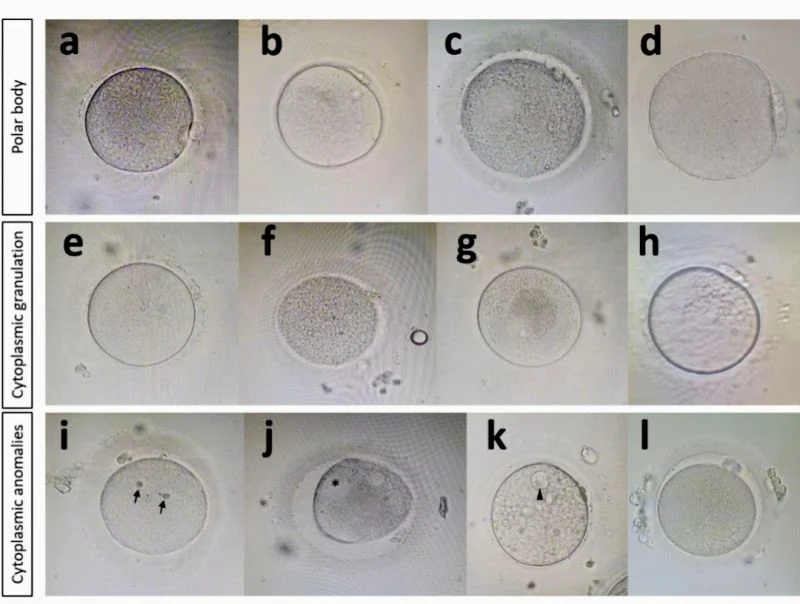
This figure shows: Polar body variations, including regular polar body (PB) (a), fragmented PB (b), double polar bodies (c), and giant PB (d); cytoplasmic granulation patterns: fine (e), dispersed (f), central (g), and uneven (h); cytoplasmic abnormalities: refractile bodies (arrows) (i), smooth endoplasmic reticulum (sER) aggregates (asterisks) (j), vacuoles (arrow head) (k), and dark cytoplasm (l).”
Stay updated on all scientific advances in the field of fertility with Fertility News.
-
Jul 25, 2026, 10:56PMOS Can Affect Much More Than Periods or Fertility – PCOS Awareness Association
-
Jul 25, 2026, 10:42Asma Khalil: Recreational Drug Use During Pregnancy, What Every Expectant Mother Should Know!
-
Jul 25, 2026, 10:40Khalil Faaed: Are Complex Y Chromosome Rearrangements the Missing Link in Unexplained Male Infertility?
-
Jul 25, 2026, 10:38Sean Lauber: Does Transferring a Cleavage or Blastocyst Stage Embryo Affect the Chance of Having a Boy?
-
Jul 25, 2026, 10:33Rokaya Hachicho: The Hidden Cost of Excessive Laser Use During Trophectoderm Biopsy!
-
Jul 25, 2026, 10:31Join the ISUOG Webinar on Late-Evolving Fetal Anomalies – ISUOG
-
Jul 25, 2026, 10:29Waiting Before Clamping the Umbilical Cord Improves Neonatal Outcomes! – RCOG
-
Jul 25, 2026, 10:27Christopher Robinson: The Impact of Body Mass Index on Misoprostol Dosing for Labor Induction!
-
Jul 25, 2026, 10:26Heavy Menstrual Bleeding and Dysmenorrhea in Adolescents – IJGO