
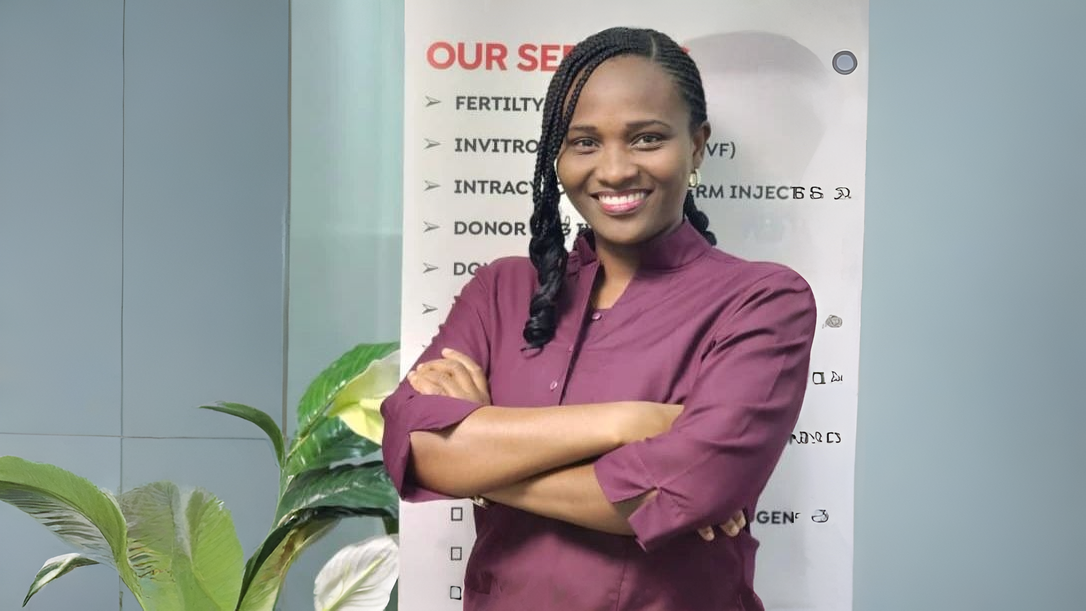
Esther Eleboh: When the Same Protocol Produces Completely Different Embryo Outcomes
Esther Eleboh, Reproductive Health Nurse (Head of Nursing Department) at Viva Fertility Clinic, shared on LinkedIn:
“IVF: When the Same Protocol Produces Completely Different Embryo Outcomes. What Really Happened?
There are certain mysteries in IVF treatment that continue to fascinate me, particularly the unpredictable nature of embryo development.
Let me share a clinical experience.
I had a 30-year-old patient with bilateral blocked fallopian tubes. She was a normal responder, and her partner’s semen parameters were good.
First IVF cycle:
- 12 oocytes retrieved.
- Conventional IVF performed.
- 10 oocytes fertilised.
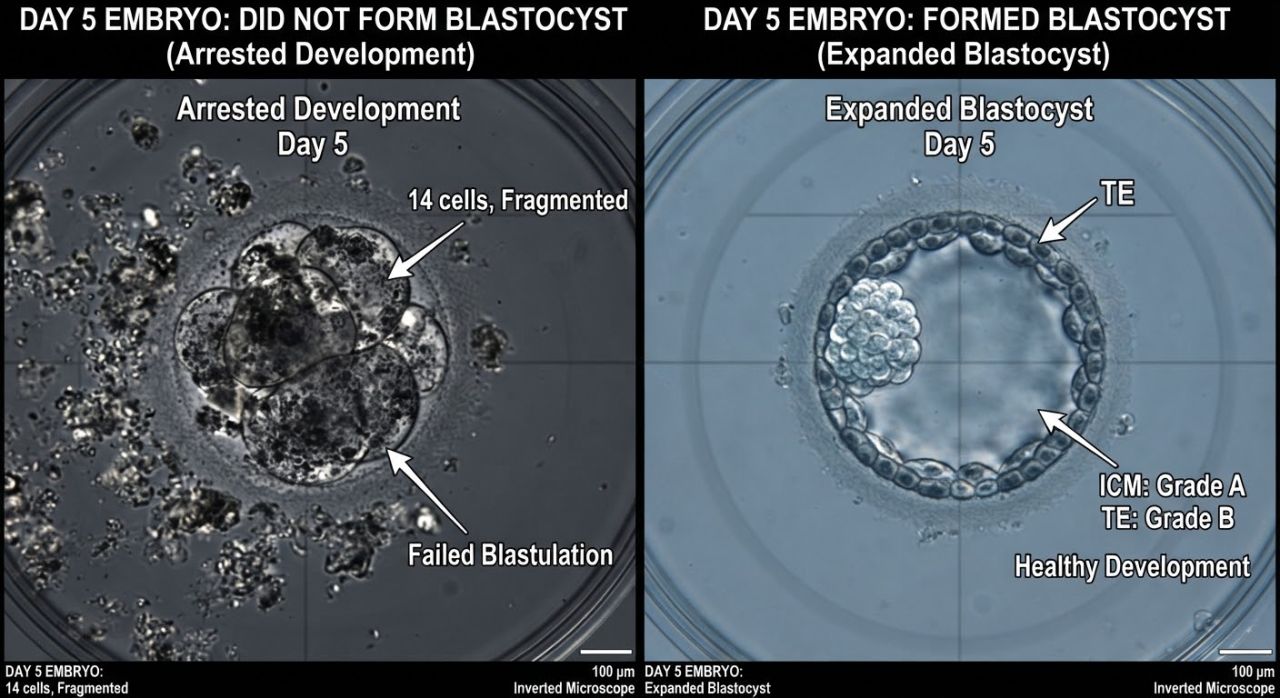
- Unfortunately, no embryos developed to the blastocyst stage.
- Second IVF cycle:
- 13 oocytes retrieved.
- Conventional IVF performed again.
- 11 oocytes fertilised.
- Approximately 6 Day-5 blastocysts generated.
Now, here is the interesting part:
What changed? What made the difference?
The same antagonist stimulation protocol was used. The fertilisation method was also the same. Yet, the embryo development outcomes were remarkably different.
I found myself asking several questions.
Was it oocyte competence? Sperm-related factors? Subtle differences in laboratory conditions? Embryo culture conditions? Or simply biological variability?
Sometimes, even with good ovarian response, good fertilisation rates and apparently favourable clinical parameters, we cannot always predict what will happen during embryo development.
This is one of the fascinating and humbling aspects of assisted reproduction.
Not every IVF cycle follows the same pattern, even in the same patient.
As fertility professionals, we must continue to evaluate, learn, investigate and improve our approaches rather than assume that one cycle defines a patient’s reproductive potential.
IVF is not just about retrieving eggs or achieving fertilisation. It is also about understanding the complex biology of embryo development. Sometimes, we may not have all the answers. But that should never stop us from asking the right questions and striving to do better.
Have you encountered a similar situation where the same patient had completely different embryo outcomes across two IVF cycles? What do you think could explain the difference?
I would love to hear the perspectives of embryologists and fertility specialists.”
Other articles featuring Esther Eleboh on Fertility News.
-
Nov 18, 2026, 18:26Ritu Anand: We’ve Been Talking about Her Fertility – It’s Time to Talk about His
-
Nov 18, 2026, 18:20Sean Lauber: Is It Safe to Thaw and Rebiopsy an Embryo?
-
Nov 18, 2026, 18:14Arsiak Vartenian: 8 Years of Answering “Do You Have Kids?” Is a Long Time
-
Nov 18, 2026, 18:05Resa Nabor: Having PCOS Doesn’t Make You Less of a Woman or Less Deserving of Love
-
Nov 18, 2026, 17:47Diana Kayal: Co-Chairing the 3rd International Conference on Gynecology and Women’s Health
-
Nov 18, 2026, 17:44Karthik Raj: Oocyte Quality Is Not Determined at Retrieval Alone
-
Nov 18, 2026, 17:41Tazeen Farhan: 10 Small Lifestyle Changes to Support Reproductive Health
-
Nov 18, 2026, 17:35Chanju Jung: Nature Paper Explores Base Editing in Human Embryos
-
Nov 18, 2026, 17:28Dina Ibrahem: Should We Always Discard 5PN Embryos?