
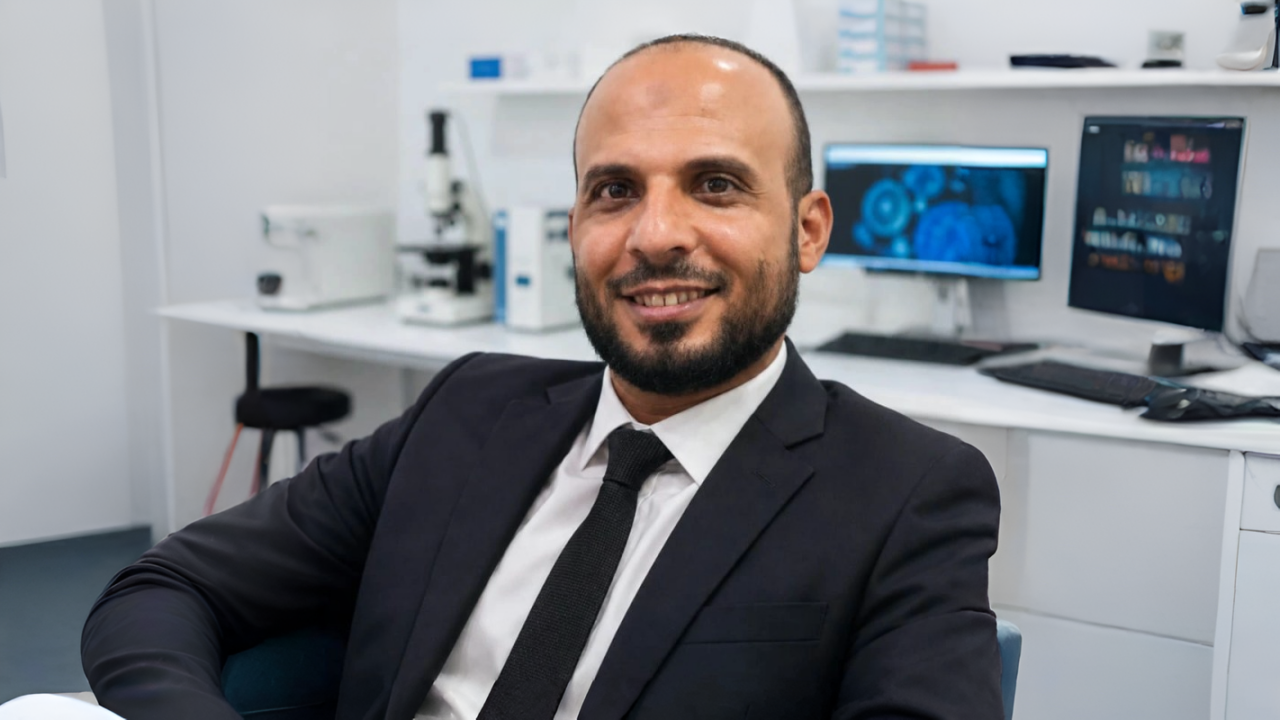
Khalil Faaed: The Critical Timing of Gamete Encounter in IUI
Khalil Faaed, Embryologist at Modern IVF Center, shared on LinkedIn:
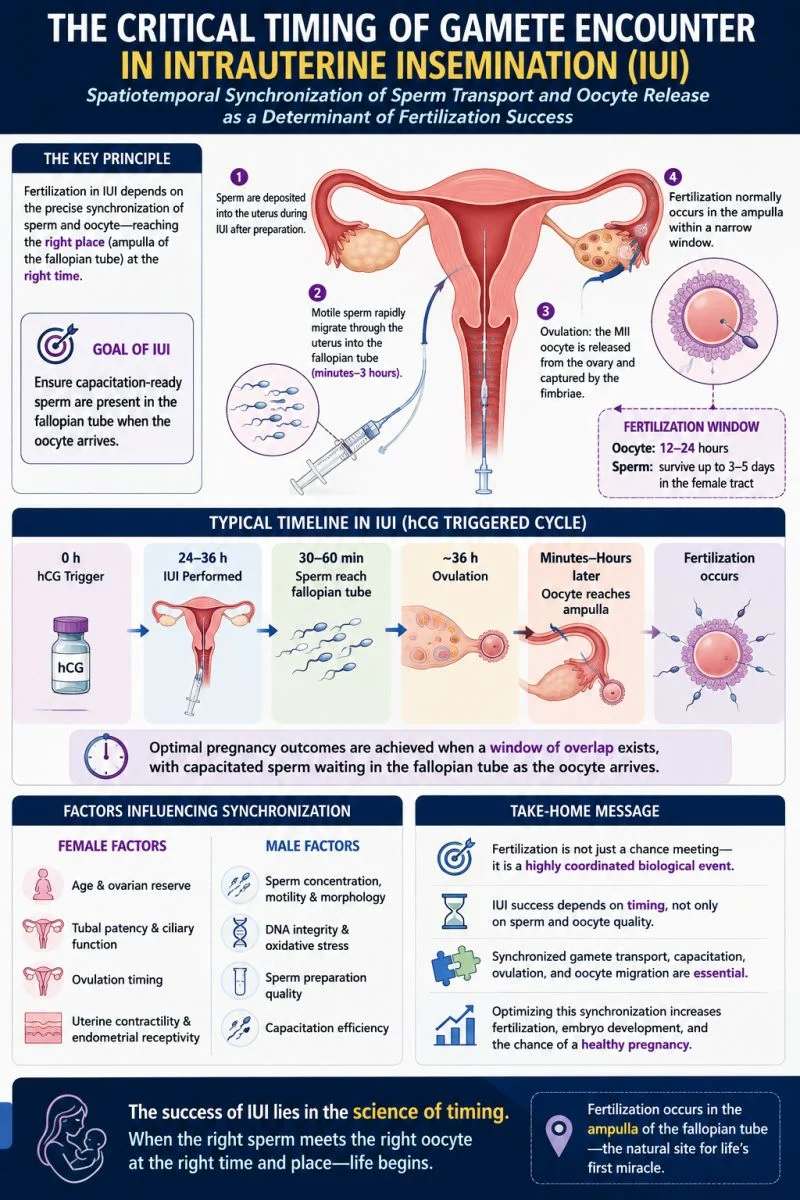
“The Critical Timing of Gamete Encounter in Intrauterine Insemination (IUI): Spatiotemporal Synchronization of Sperm Transport and Oocyte Release as a Determinant of Fertilization Success
Successful intrauterine insemination (IUI) depends on far more than sperm quality or oocyte competence. A key determinant of success is the spatiotemporal synchronization of gametes, ensuring that sperm and the oocyte meet at the right place and right time. Fertilization normally occurs in the ampulla of the fallopian tube, where a narrow physiological window allows both gametes to interact successfully.
During IUI, processed motile sperm are deposited directly into the uterine cavity, bypassing the cervix and rapidly migrating toward the fallopian tube. However, sperm must still undergo capacitation within the female reproductive tract a series of biochemical and functional changes that enable hyperactivated motility, zona pellucida binding, and the acrosome reaction required for fertilization.
Meanwhile, following ovulation, the metaphase II (MII) oocyte is captured by the fimbriae and transported to the ampulla. Unlike sperm, which may remain viable for several days, the oocyte maintains optimal fertilization competence for only 12–24 hours. Consequently, IUI protocols are carefully timed, typically 24–36 hours after hCG triggering to ensure that capacitation-ready sperm are already present in the fallopian tube when the oocyte arrives.
Rather than requiring sperm and the oocyte to reach the ampulla at exactly the same moment, successful fertilization depends on creating a window of biological overlap in which both gametes are simultaneously viable and functionally competent. This synchronization is influenced by sperm quality, tubal transport, ovulation timing, and the efficiency of laboratory sperm preparation.
Ultimately, IUI success reflects not simply the placement of sperm into the uterus, but the precise coordination of gamete transport, capacitation, ovulation, and oocyte migration. This finely regulated biological synchronization remains one of the most critical determinants of fertilization, embryo development, and clinical pregnancy.”
Other articles featuring Khalil Faaed on Fertility News.
-
Sep 21, 2026, 18:01Mostafa Maghraby: What Makes a Good Embryologist?
-
Sep 21, 2026, 17:57Paweł Radwan: Meeting Fertility Leaders at the European Executive and Investors Fertility Meeting
-
Sep 21, 2026, 17:49Anna David: Can You Predict Pregnancy Outcome at Diagnosis of Early-Onset FGR?
-
Sep 21, 2026, 17:44Caspian Ostadian: Oocyte Abnormalities and Blastocyst Formation
-
Sep 21, 2026, 17:40Eric Lameignere: What If Part of the Sperm DNA Damage We Observe is Actually Created in the IVF Laboratory Itself?
-
Sep 21, 2026, 17:29Angelo Tocci: Paying More Without Improving Assisted Reproduction Outcomes
-
Sep 21, 2026, 17:22Santiago Munne: The Latest Bpisode of The Baby Blueprint, About the Worldwide Decline in Birth Rates
-
Sep 21, 2026, 17:12Zeinab Kazemianpour: 1 Embryo, 2 Different Biopsy Strategies
-
Sep 21, 2026, 17:10Diksha Kanekar: A Day in the Life of an Embryologist