
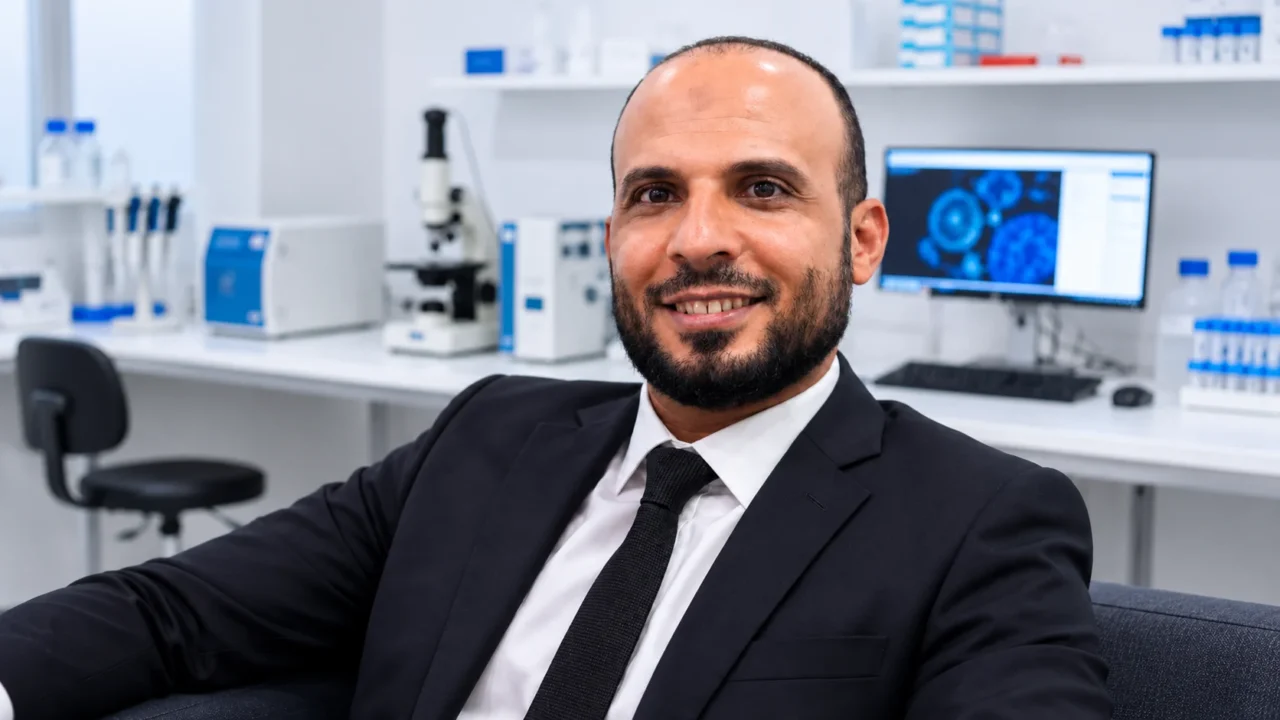
Khalil Faaed: We Can Activate the Oocyte, But Are We Recreating the Right Calcium Signal?
Khalil Faaed, Embryologist at Modern IVF Center, shared on LinkedIn:
“We Can Activate the Oocyte, but Are We Recreating the Right Calcium Signal?
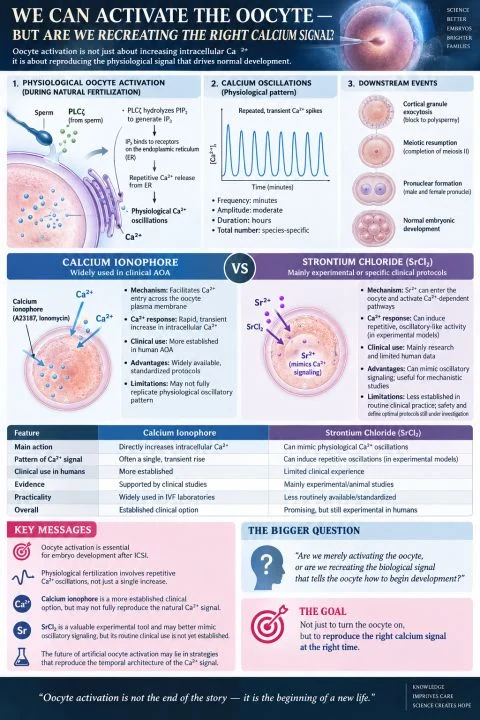
In ICSI, fertilization does not end with sperm injection. It begins with oocyte activation a highly coordinated process in which intracellular Ca²⁺ signaling plays a central role.
Under physiological conditions, sperm-derived phospholipase C zeta (PLCζ) initiates a series of intracellular Ca²⁺ oscillations within the oocyte.
These oscillations are not simply a rise in calcium concentration; their frequency, amplitude, duration, and pattern contribute to downstream events including cortical granule exocytosis, meiotic resumption, pronuclear formation, and subsequent embryonic development.
This raises an important question in artificial oocyte activation: Are we merely increasing intracellular Ca²⁺, or are we reproducing the biological signal required for normal activation?
Calcium ionophore.
Calcium ionophores are among the more established pharmacological approaches used for artificial oocyte activation in human assisted reproduction. They facilitate Ca²⁺ entry across the oocyte membrane, producing a rapid increase in intracellular calcium.
However, this response may differ from the physiological pattern generated by sperm-induced PLCζ activity. A pharmacological Ca²⁺ rise therefore demonstrates that the oocyte can be activated, but it does not necessarily reproduce the complete dynamics of physiological fertilization.
Strontium chloride (SrCl₂).
SrCl₂ has been extensively used as an experimental activator of mammalian oocytes and can induce intracellular Ca²⁺ responses, including repetitive oscillatory activity in experimental models. This makes SrCl₂ particularly interesting from a mechanistic perspective.
However, its role in routine human clinical AOA is much less established than calcium-ionophore-based approaches, and findings from animal or experimental systems cannot automatically be translated into clinical practice.
The deeper question.
The important distinction is therefore:
Oocyte activation ≠ physiological fertilization signaling.
A successful activation protocol should ideally consider not only whether the oocyte undergoes activation, but also whether the induced Ca²⁺ dynamics are sufficiently compatible with the downstream molecular and cellular events required for embryo development.
This is why the future of artificial oocyte activation may not simply be about finding a stronger activator.
It may be about developing strategies that better reproduce the temporal architecture of the Ca²⁺ signal generated during natural fertilization.
The goal is not simply to turn the oocyte on.
The goal is to reproduce the biological conversation that tells the oocyte how to begin development.”
Other articles featuring Khalil Faaed on Fertility News.
-
Nov 21, 2026, 18:17Sean Lauber: Euploid and Live Birth Rates Vary Across PGT-A Labs
-
Nov 21, 2026, 18:13Your Next Career Opportunity in Reproductive Medicine – ASRM
-
Nov 21, 2026, 18:09Can Preeclampsia Increase Your Risk of Heart Disease Later in Life? – Preeclampsia Foundation
-
Nov 21, 2026, 18:05Natalie Tam: Officially a WEST Graduate
-
Nov 21, 2026, 18:02Lucy Froese: She Was Told to Expect Six Eggs, but They Collected 18
-
Nov 21, 2026, 17:57An Effective Regulatory Framework for Surrogacy, ALRC Report – The Fertility Society of Australia and New Zealand
-
Nov 21, 2026, 17:53Irfana Koita: Should Treatment Start With IUI or IVF?
-
Nov 21, 2026, 17:50Amit Mangal: India’s Biggest IVF Chain May Be Up for Sale
-
Nov 21, 2026, 17:48Sue Hammoud: Excited to Be Attending My 1st JPM Healthcare Week