
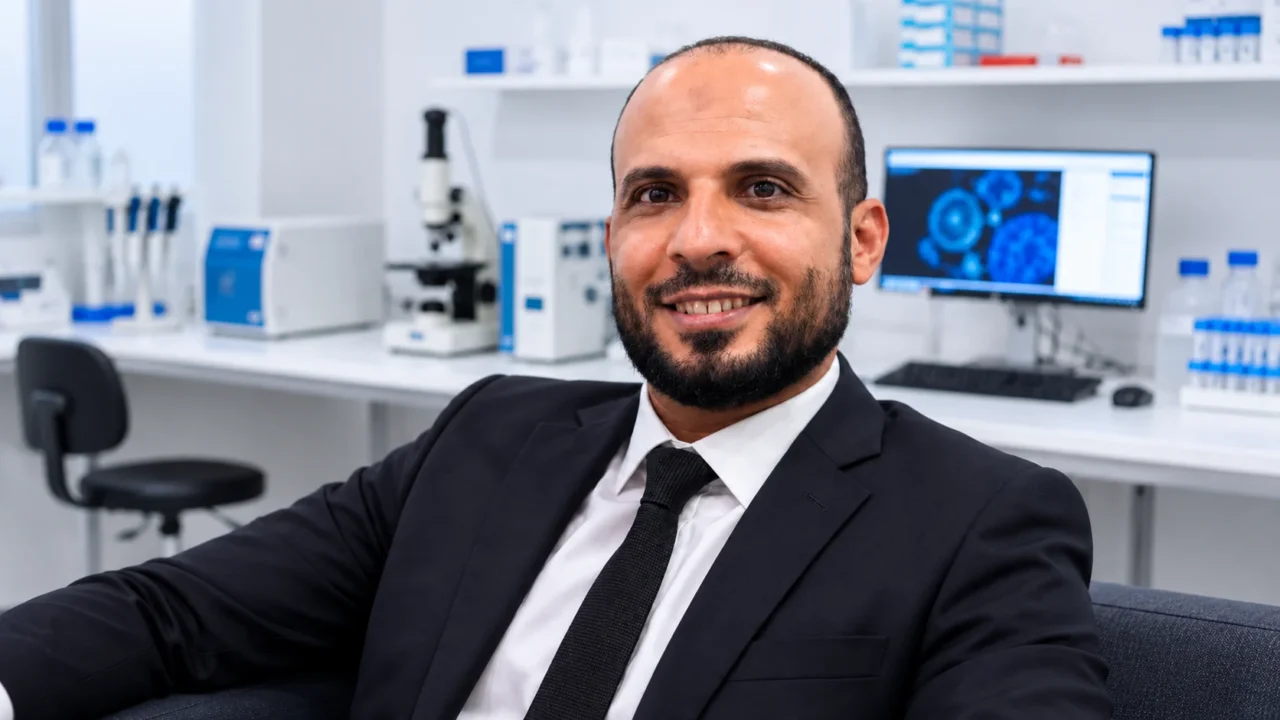
Khalil Faaed: Vitrification Prevents Ice, but Does It Prevent Oocyte Damage?
Khalil Faaed, Embryologist at Modern IVF Center, shared on LinkedIn։
“Vitrification Prevents Ice but Does It Prevent Oocyte Damage?
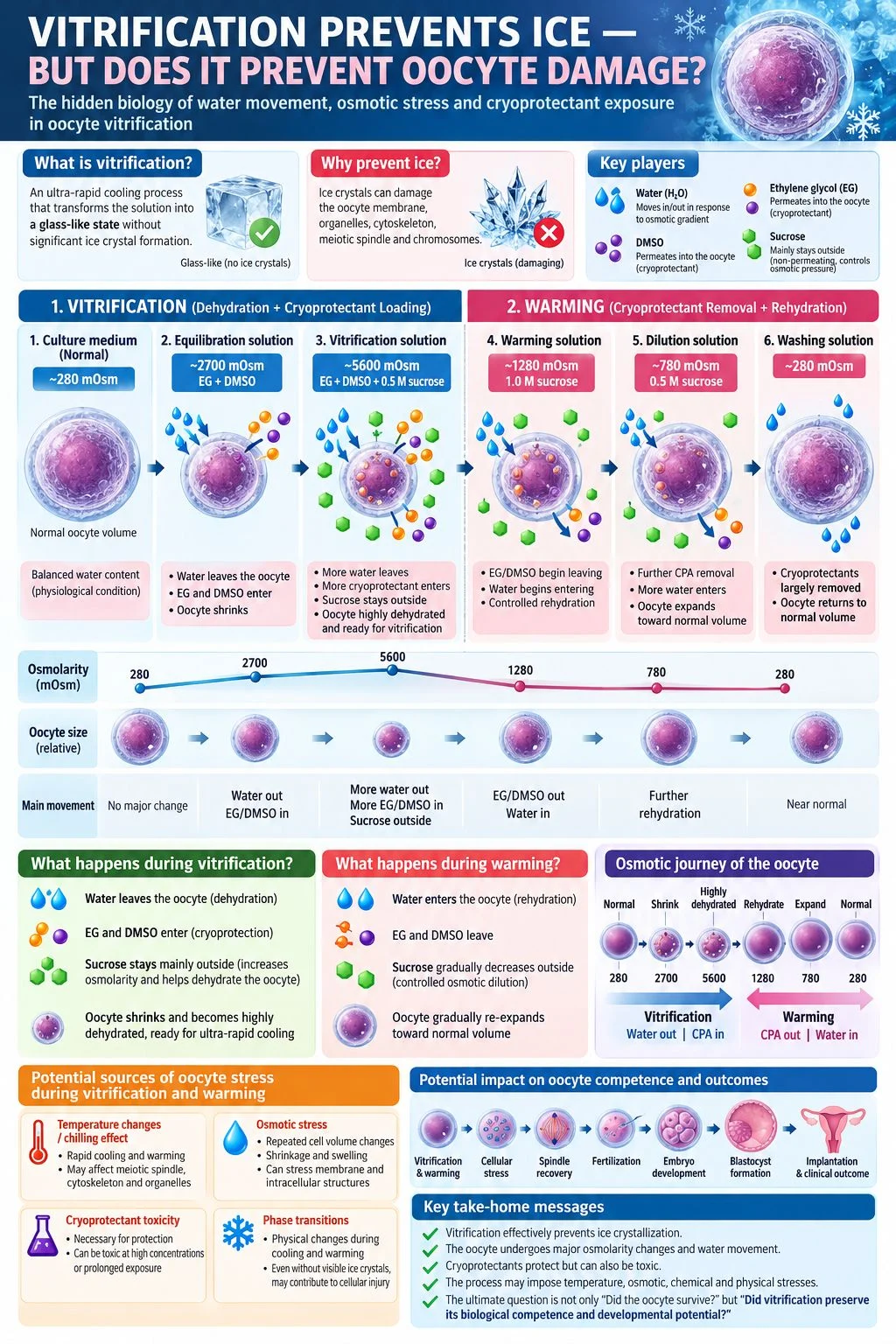
Oocyte vitrification has transformed cryopreservation by allowing ultra-rapid cooling of the oocyte into a glass-like state with minimal ice-crystal formation. But eliminating ice does not necessarily mean eliminating stress.
The oocyte undergoes a remarkable physical journey before, during, and after vitrification.
During equilibration, the extracellular osmolarity rises dramatically from approximately 280 mOsm in culture medium to ~2700 mOsm, while permeating cryoprotectants such as ethylene glycol (EG) and DMSO enter the oocyte. Water moves outward, causing the oocyte to shrink.
Then, in the vitrification solution, osmolarity reaches approximately 5600 mOsm, with EG, DMSO, and sucrose. Further water loss and cryoprotectant loading prepare the oocyte for ultra-rapid cooling. But the story does not end with cooling. During warming, the direction of osmotic movement begins to reverse.
The oocyte must progressively remove cryoprotectants while allowing water to return.
This is why the warming process uses a controlled osmotic sequence:
- 1.0 M sucrose – ~1280 mOsm
- 0.5 M sucrose – ~780 mOsm
- ~280 mOsm washing solution
The oocyte gradually rehydrates and returns toward its original volume. And this is where the deeper question begins.
Vitrification successfully addresses one of the greatest threats to cryopreservation ice crystallization. But the oocyte may still encounter several forms of stress:
- Temperature changes/chilling effects
- Osmotic stress and rapid volume changes
- Cryoprotectant toxicity
Physical phase transitions during cooling and warming
Therefore, the real question is not simply:
Did the oocyte survive vitrification?
A more important question is: Did vitrification preserve the biological competence of the oocyte?
Because survival is only the beginning.
The ultimate biological consequences may extend to:
oocyte survival – spindle recovery – fertilization – embryo development – blastocyst formation – implantation – clinical outcome.
This is why understanding the physics of water movement is not just theoretical knowledge for an embryologist.
It is part of understanding what happens to the biology of the oocyte.
No Ice Does Not Mean No Stress.
The challenge for modern cryobiology is therefore not merely to prevent ice formation but to determine how effectively we can preserve the structural and functional competence of the oocyte throughout the entire vitrification warming journey.
What do you think is the most critical variable in oocyte vitrification: osmotic stress, cryoprotectant toxicity, temperature, or the warming process?”
Other articles featuring Khalil Faaed on Fertility News.
-
Oct 8, 2026, 17:16Ritu Anand: Better Conversations Ultimately Lead to Better Care in Fertility
-
Oct 8, 2026, 17:14Mark Trolice: Excited to Speak at Women’s HealthX
-
Oct 8, 2026, 17:12Delighted to Welcome Dr. Róisín Mortimer – Waterstone Clinic-IVF and Fertility
-
Oct 8, 2026, 17:09Deirdre Zander-Fox: Pleased to Be an Invited Speaker at ESHRE Precision ART
-
Oct 8, 2026, 17:06Roohi Jeelani: Is Modern Life Actually Making It Harder to Get Pregnant?
-
Oct 8, 2026, 17:04Robert Borowczyk: We Judge the Newest IVF Consultation Group Too Quickly…
-
Oct 8, 2026, 17:01Carlos Guerrero: Great Couple of Days Visiting the Team at New Leaders in Fertility and Endocrinology
-
Oct 8, 2026, 17:00Sarah Banks: Improving Patient Experience Isn’t Always About Making Huge Changes…
-
Oct 8, 2026, 16:57Hannah Carty Has Been Promoted to Senior Embryologist at Sims IVF Swords