
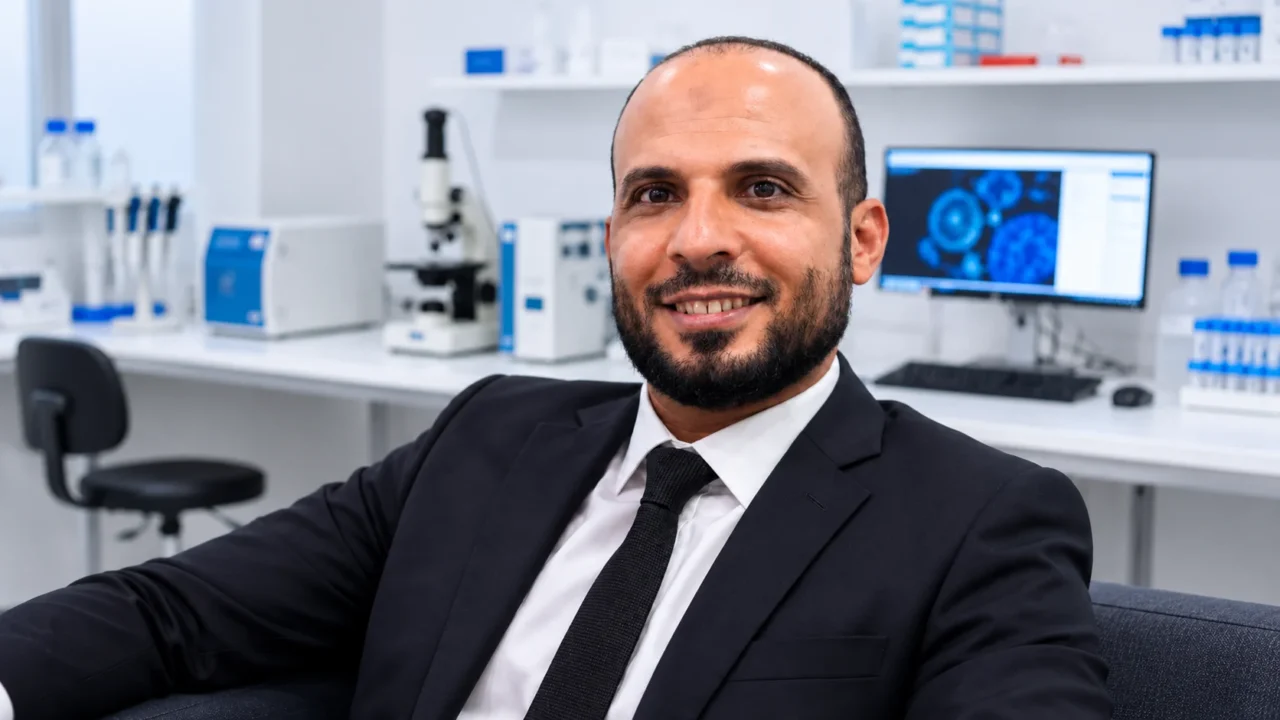
Khalil Faaed: The Embryological, Anatomical, and Endocrine Basis of MRKH Syndrome
Khalil Faaed, Embryologist at Modern IVF Center, shared on LinkedIn:
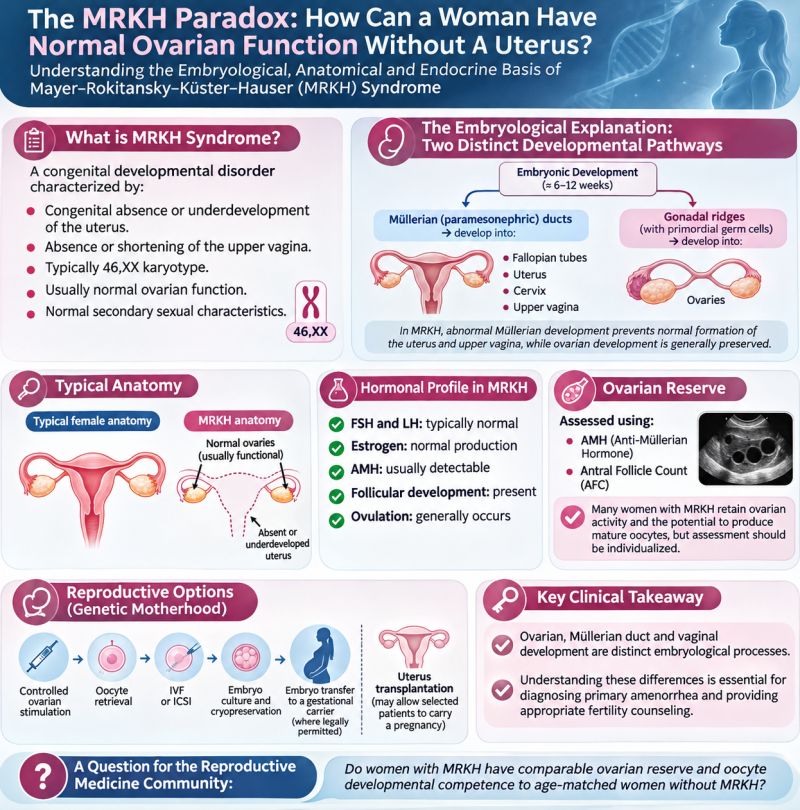
“The MRKH Paradox: How Can a Woman Have Normal Ovarian Function Without a Uterus?
Understanding the Embryological, Anatomical, and Endocrine Basis of Mayer-Rokitansky-Küster-Hauser (MRKH) Syndrome
MRKH syndrome is a fascinating congenital disorder that highlights an important principle of reproductive biology: ovarian development and Müllerian duct development are two distinct processes. But how can a woman have functional ovaries without a normally developed uterus?
1. What is MRKH syndrome?
MRKH is characterized by:
- Congenital absence or underdevelopment of the uterus.
- Absence or shortening of the upper vagina.
- Typically, a 46,XX karyotype.
- Usually preserved ovarian function.
- Normal secondary sexual characteristics.
It is commonly diagnosed during adolescence due to primary amenorrhea (absence of the first menstrual period).
2. The embryological explanation
The Müllerian (paramesonephric) ducts contribute to the development of the fallopian tubes, uterus, cervix and upper vaginal structures. In contrast, the ovaries develop from the embryonic gonadal ridges, with contributions from primordial germ cells.
Therefore, abnormal Müllerian development can affect uterine formation while ovarian development remains preserved.
3. Why are hormonal levels usually normal?
Because ovarian function is generally preserved, patients may have:
- Normal FSH and LH.
- Normal estrogen production.
- Detectable AMH.
- Follicular development and ovulation.
Importantly, absent menstruation does not necessarily indicate ovarian failure. It primarily reflects the absence of a functional uterine endometrium.
4. What about ovarian reserve?
AMH and Antral Follicle Count (AFC) help assess ovarian reserve. Many women with MRKH retain the potential to produce mature oocytes. However, ovarian reserve must be evaluated individually.
5. Can women with MRKH achieve genetic motherhood?
Yes. When ovarian function is preserved, reproductive options include:
- Controlled ovarian stimulation.
- Oocyte retrieval.
- IVF or ICSI.
- Embryo culture and cryopreservation.
- Gestational carrier, where legally permitted.
Uterus transplantation may also allow selected patients to carry a pregnancy.
6. The most important clinical lesson
MRKH demonstrates that ovarian development, Müllerian duct development and vaginal development involve distinct embryological processes. Understanding these differences is essential for diagnosing primary amenorrhea and providing appropriate fertility counseling.
A question for the reproductive medicine community:
Do women with MRKH have comparable ovarian reserve and oocyte developmental competence to age-matched women without MRKH?
Scientific knowledge begins with understanding the biology behind the clinical presentation.”
Other articles featuring Khalil Faaed on Fertility News.
-
Nov 26, 2026, 17:49Vrinda Trivedi: Honored to Contribute to the Issue of Obstetrics and Gynecology Clinics of North America
-
Nov 26, 2026, 17:46Simon Meagher: A Vanishing Twin, a High-Risk NIPT Result and a Reassuring Co-Twin
-
Nov 26, 2026, 17:42Jiří Hrdý: The Immunological Effects of Progesterone Therapy in Pregnant Women at Risk of Spontaneous Preterm Birth
-
Nov 26, 2026, 17:35Maternal Age as the Primary Driver of Embryo Aneuploidy – RBMO
-
Nov 26, 2026, 17:31Elena Korchivaia: Officially Graduated with an MSc in Clinical Embryology from the University of Oxford
-
Nov 26, 2026, 17:22New Study from Richard Pilsner and Colleagues Suggests Normal Semen Parameters May Not Tell the Whole Fertility Story
-
Nov 26, 2026, 17:16Presenting as an Expert Witness on the State of Fertility in Canada – Canadian Fertility and Andrology Society
-
Nov 26, 2026, 17:11Paul Pirtea: New Webinar on Why Embryo Fail to Implant
-
Nov 26, 2026, 17:08Sean Lauber: The Type of Lactobacillus in the Vaginal Microbiome May Matter for IVF Success