

Nitin Kataria: The Importance of Embryonic Genome Activation, The Moment the Embryo Takes Control
Nitin Kataria, Senior Clinical Embryologist and Quality Manager at Indira IVF Group, shared a post on LinkedIn:
“The Importance of Embryonic Genome Activation: The Moment the Embryo Takes Control
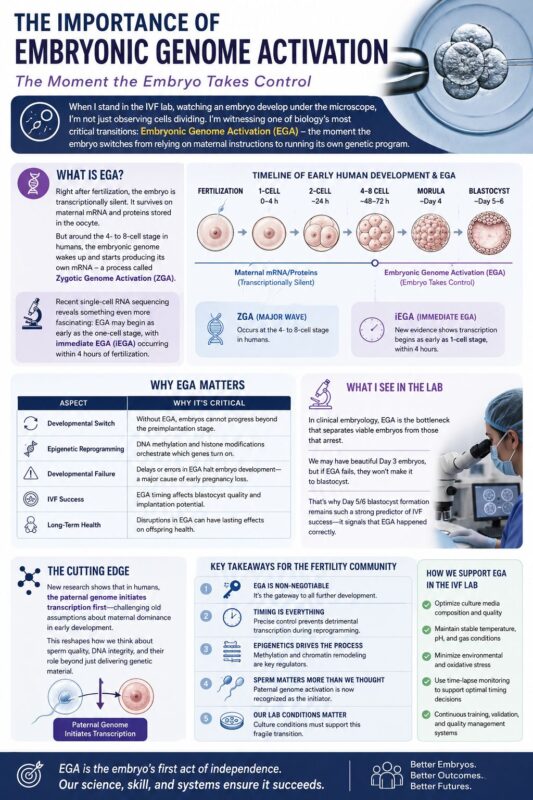
When I stand in the IVF lab, watching an embryo develop under the microscope, I’m not just observing cells dividing. I’m witnessing one of biology’s most critical transitions: Embryonic Genome Activation (EGA) the moment the embryo switches from relying on maternal instructions to running its own genetic program.
What Is EGA?
Right after fertilization, the embryo is transcriptionally silent. It survives on maternal mRNA and proteins stored in the oocyte. But around the 4- to 8-cell stage in humans, the embryonic genome wakes up and starts producing its own mRNA a process called Zygotic Genome Activation (ZGA).
Recent single-cell RNA sequencing reveals something even more fascinating: EGA may begin as early as the one-cell stage, with immediate EGA (iEGA) occurring within 4 hours of fertilization.
Why EGA Matters?
- Aspect | Why It’s Critical |
- Developmental Switch | Without EGA, embryos cannot progress beyond the preimplantation stage |
- Epigenetic Reprogramming | DNA methylation and histone modifications orchestrate which genes turn on|
- Developmental Failure | Delays or errors in EGA halt embryo development a major cause of early pregnancy loss |
- IVF Success | EGA timing affects blastocyst quality and implantation potential |
- Long-Term Health | Disruptions in EGA can have lasting effects on offspring health |
What I See in the Lab?
In clinical embryology, EGA is the bottleneck that separates viable embryos from those that arrest. We may have beautiful Day 3 embryos, but if EGA fails, they won’t make it to blastocyst. That’s why Day 5/6 blastocyst formation remains such a strong predictor of IVF success it signals that EGA happened correctly.
The Cutting Edge
New research shows that in humans, the paternal genome initiates transcription first challenging old assumptions about maternal dominance in early development. This reshapes how we think about sperm quality, DNA integrity, and their role beyond just delivering genetic material.
Key Takeaways for the Fertility Community
- EGA is non-negotiable it’s the gateway to all further development
- Timing is everything precise control prevents detrimental transcription during reprogramming
- Epigenetics drives the process methylation and chromatin remodeling are key regulators
- Sperm matters more than we thought paternal genome activation is now recognized as the initiator
- Our lab conditions matter culture conditions must support this fragile transition.”
Stay updated on all scientific advances in the field of fertility with Fertility News.
-
Sep 13, 2026, 15:11Sachintha Alwis: From Impaired Sperm Motility to Microrobotics
-
Sep 13, 2026, 15:08Laurence Orbuch: Before Endometriosis Surgery, Ask…
-
Sep 13, 2026, 15:05Ademola Ayodele: IUI, IVF or Egg Freezing – Which One Is Right for You?
-
Sep 13, 2026, 14:59Fiona Pathiraja-Møller: Tennis Players No Longer Have to Choose Between Career and Family
-
Sep 13, 2026, 14:571-Day Virtual Experience for People Impacted by PMOS – PCOS Awareness Association
-
Sep 13, 2026, 14:53Ozor Victor: Behind Every Embryo Is a Story of Science, Precision, and Hope
-
Sep 13, 2026, 14:50Diana Kayal: What They Don’t Tell You About IVF
-
Sep 13, 2026, 14:44Vikram Sinai Talaulikar: A Heartfelt Thank You to All Who Donated and Supported “Menopause and Cancer”
-
Sep 13, 2026, 14:41Nicole McPherson: Changing IVF Practices Is Hard – Integration Needs to Be Easy