

Samer R. Hammoudeh։ What Are We Missing When a Euploid Embryo Fails to Implant?
Samer R. Hammoudeh, IVF Lab Director at Fakih IVF Fertility Center, shared on LinkedIn:
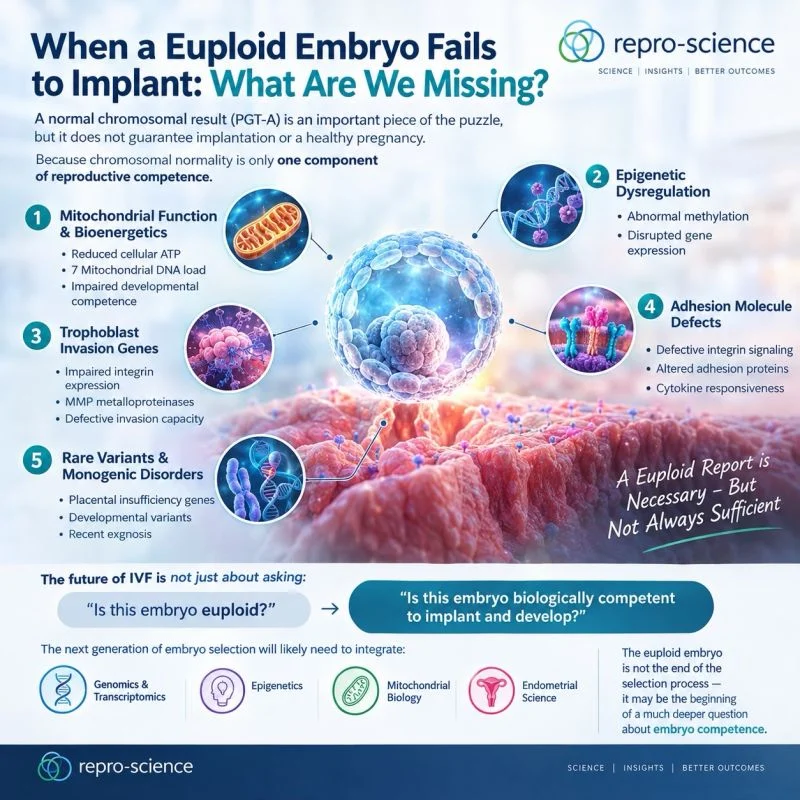
“When a euploid embryo fails to implant: what are we missing?
A euploid embryo is often considered the gold standard for embryo selection. But a normal PGT-A result does not guarantee implantation or a healthy pregnancy.
Why?
Because chromosomal normality is only one component of reproductive competence.
When a euploid embryo fails, we should think beyond aneuploidy and consider several biological layers:
- Mitochondrial function and bioenergetics
Embryos require enormous amounts of ATP during development. Mitochondrial function and mtDNA characteristics may influence developmental competence. - Epigenetic programming
Normal chromosomes do not necessarily mean normal gene expression. Abnormal DNA methylation and epigenetic dysregulation may affect implantation and development. - Trophoblast competence
Successful implantation requires the embryo to attach, invade, and communicate with the endometrium. Integrins, metalloproteinases and other invasion pathways are critical. - Cell adhesion and maternal – embryo communication
Implantation is not simply an ’embryo attaching to the uterus.’ It is a highly coordinated molecular interaction involving adhesion molecules, cytokines, and endometrial signaling. - Rare genetic and developmental variants
Some variants affecting placental development, implantation, or early embryogenesis may not be detected through routine PGT-A.
The key message:
PGT-A tells us about chromosome copy number. It does not tell us everything about embryo competence.
The future of IVF may therefore move from simply asking:
‘Is this embryo euploid?’
to asking:
‘Is this embryo biologically competent to implant and develop?’
This is where the convergence of genomics, transcriptomics, epigenetics, mitochondrial biology, AI-based embryo assessment and endometrial science becomes particularly exciting.
The euploid embryo is not the end of the selection process – it may be the beginning of a much deeper question about embryo competence.
- Genetic integrity
- Metabolic competence
- Epigenetic programming
- Endometrial receptivity
The next generation of embryo selection will likely need to integrate all four.”
Other articles featuring Samer R. Hammoudeh on Fertility News.
-
Nov 24, 2026, 19:43Evie Jeang: That’s a Wrap on F1 Weekend in Las Vegas
-
Nov 24, 2026, 19:30Kadhim Alabady: Chairing the 12th Global Summit on Gynecology, Fertility and Women’s Health
-
Nov 24, 2026, 19:18Rafael Trinchant Becomes an ESHRE-Certified Senior Clinical Embryologist
-
Nov 24, 2026, 19:06Stephen Parker Ellington: How Much Is Patient Dropout Costing Your Fertility Clinic?
-
Nov 24, 2026, 18:59Laura Rienzi: The Longer the Follow-up, the More Women Return for Their Frozen Eggs
-
Nov 24, 2026, 18:53Akram Kharbat: Fertility Science Has No Borders
-
Nov 24, 2026, 18:48Resa Nabor: To Every Woman Still Waiting for Her Miracle, Your Journey Matters
-
Nov 24, 2026, 18:33Fertilization Failure After ICSI: A Phenotype-First Framework for Biological Diagnosis
-
Nov 24, 2026, 17:42Peris Njoga-Kagotho: Who Bears the Responsibility When Assisted Reproduction Goes Wrong?