
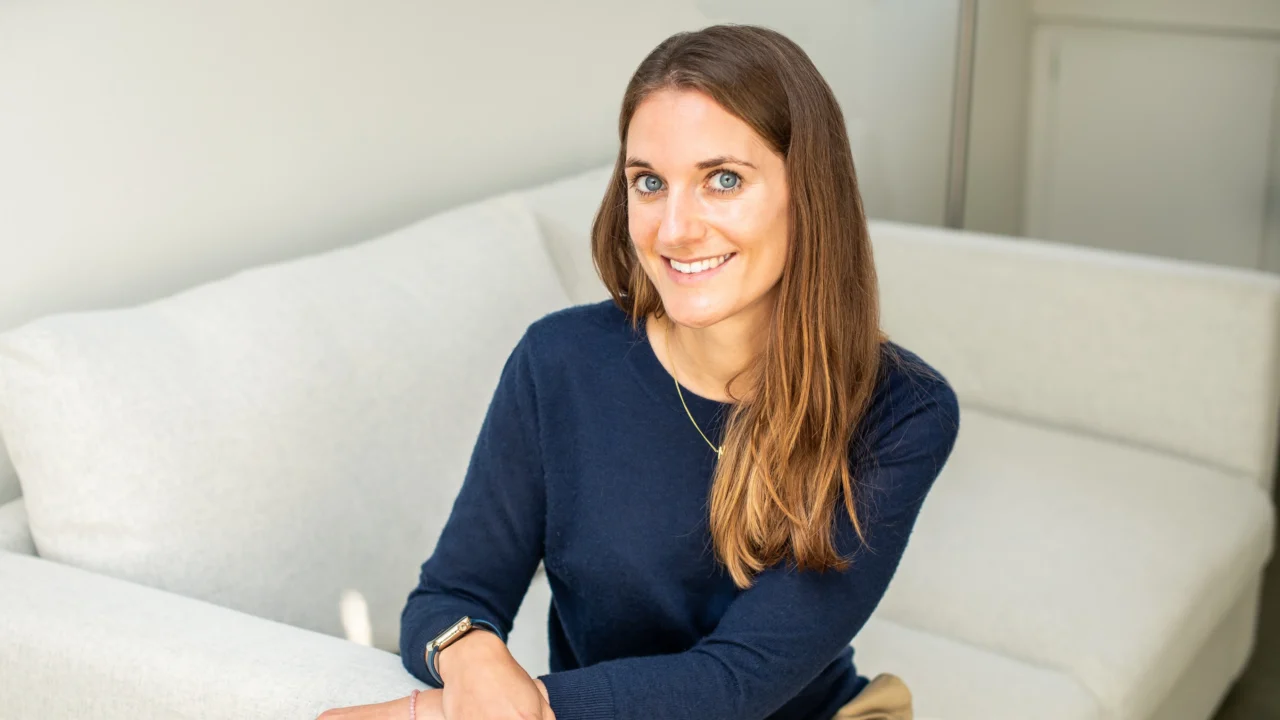
Susanne Mitschke: When Fertility Clinics Close, Patients Absorb the Fallout
Susanne Mitschke, CEO and Co-Founder of Citruslabs, shared on LinkedIn:
“In 2023, fertility startup Kindbody was valued at $1.8 billion.
On December 4, its clinics in Houston, Denver, and Washington, D.C. will close, after earlier closures in Chicago, Dallas, Minneapolis, Princeton, and half a dozen other cities. Its valuation has dropped to roughly $420 million.
If you haven’t heard of Kindbody, it promised to reinvent fertility care. It ran its own clinics with spa-like waiting rooms and in-house embryo labs, and it also managed fertility benefits for more than 100 large employers, covering millions of workers. Investors, including a $25 million bet from J.P. Morgan’s health arm, poured in money so it could buy up clinics and grow fast.
Here is what that growth looked like for patients. Bloomberg reported that doctors were pushed to hit egg retrieval targets and sell add-on services. Clinics lost physicians and cut back monitoring appointments. And this summer, Kindbody started shipping nearly all of its patients’ frozen eggs and embryos to a storage facility in Massachusetts.
The CEO told Inside Reproductive Health that every patient was contacted by email, portal message, or certified letter, but some patients told CBS Chicago they found out secondhand, and a law firm is now investigating allegations of embryo mishandling during the move.
Think about who those patients are. Many spent years and tens of thousands of dollars to create those embryos, often after miscarriages or failed rounds of IVF. For some, what sits in that tank is their only realistic chance at a biological child, and they learned where it was going from an email they may never have opened.
Running an IVF clinic is expensive in ways software never is (embryology labs, surgical suites, liquid nitrogen tanks, highly specialized staff), and that cost doesn’t shrink because a pitch deck says it should. When the numbers stop working, the growth plan gets cut first, and the patients in the middle of treatment absorb the fallout.
There is also very little in place to protect them. When a fertility clinic closes or moves its frozen tissue, oversight is mostly left to a patchwork of state rules, and patients often have no say in who stores their embryos next.
I run clinical studies for a living, and our principal investigators have the final word on whether a participant is safe to enroll or continue, regardless of what the timeline or the client wants.
The same principle should apply to fertility care, where doctors make the medical calls, patients always know where their embryos are stored, and investor timelines come second to both.”

Other articles featuring Susanne Mitschke on Fertility News.
-
Nov 25, 2026, 18:38Yousef Alebrahim: Delighted to Stand for Junior Clinician Representative on the British Fertility Society
-
Nov 25, 2026, 18:33Theo Lemouton: Does Adenomyosis Have Symptoms of Its Own?
-
Nov 25, 2026, 18:27Rajeev Agarwal: Which Medicines You Should Stop Before Pregnancy
-
Nov 25, 2026, 18:23Helen O’Neill Presents First Findings from Hertility’s Proprietary Frontier Model at Harvard and MIT
-
Nov 25, 2026, 18:16Paresh Makwana: Delighted to Pass the ESHRE Senior Clinical Embryologist Certification Exam
-
Nov 25, 2026, 18:12Ippokratis Sarris: Talking About Women Having Babies Later in Life with Shay Kaur Grewal
-
Nov 25, 2026, 18:06New RBMO Study Finds Comparable Rates of Rare Autosomal Aneuploidies in ART and the General Population
-
Nov 25, 2026, 17:56Lowell Ku: Protecting Your Peace Isn’t Rude, Sometimes It’s Necessary
-
Nov 25, 2026, 17:53Sangita Jindal: Wrapping Up My Final Visit of 2026 to South Coast Fertility