

Vinoad Bharrati: 6 Important Fertility Tests Based on Medical History and Clinical Evaluation
Vinoad Bharrati, Director, Gynaecologist and Infertility Specialist at Rising Medicare Hospital, Director and Co-Founder, Head of Clinical Research and Formulations at Cureado, shared on LinkedIn:
“Most couples focus on getting pregnant. Few focus on whether they have the right information before they start trying.
When pregnancy doesn’t happen as expected, the first step isn’t guessing.
It’s getting the right tests done.
A fertility evaluation can often identify treatable factors early, helping couples make informed decisions and avoid unnecessary delays.
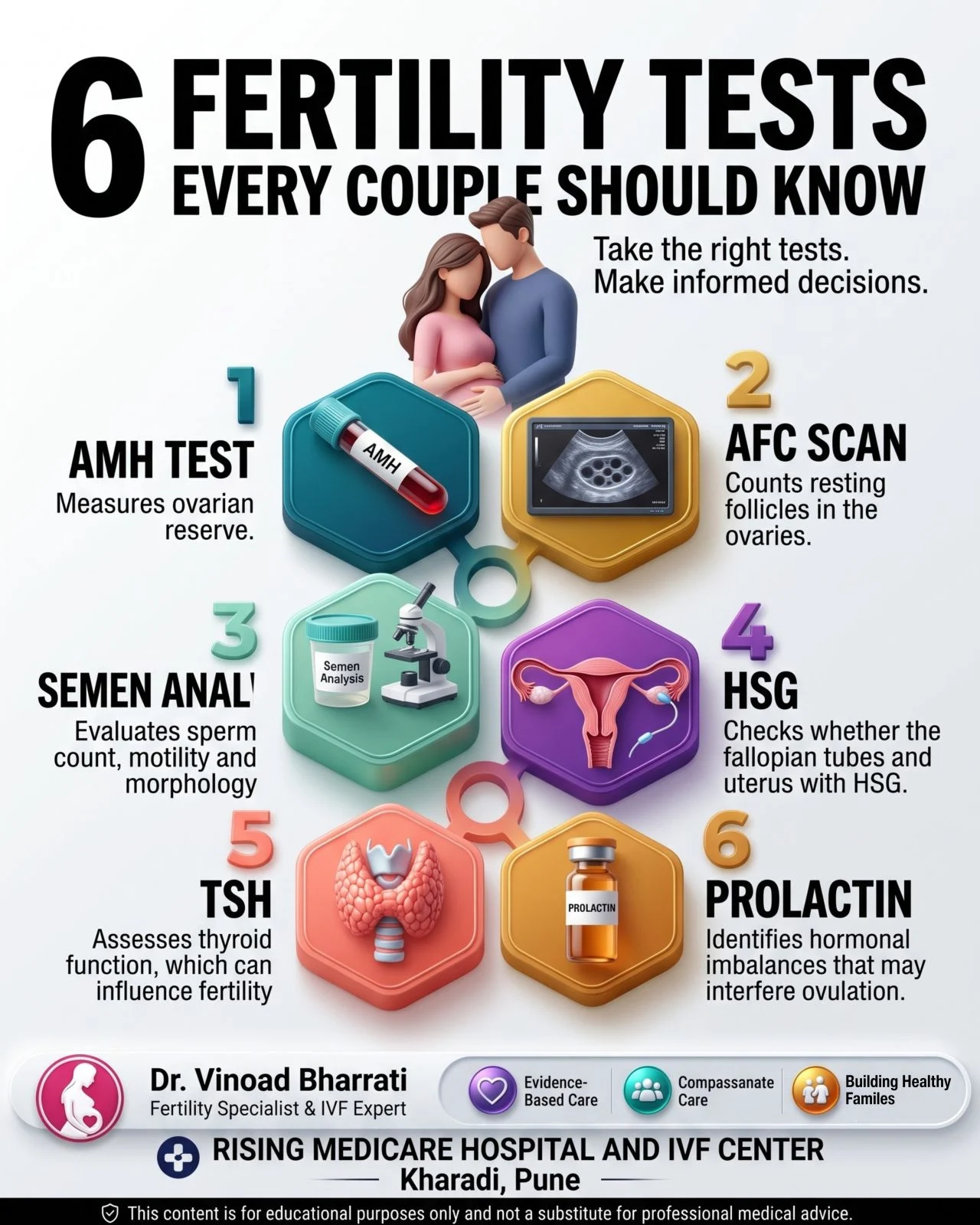
Here are 6 important fertility tests that are commonly recommended based on your medical history and clinical evaluation:
- AMH Test
Measures ovarian reserve and helps estimate the remaining egg supply. - AFC (Antral Follicle Count) Scan
An ultrasound that counts resting follicles in the ovaries and provides additional information about ovarian reserve. - Semen Analysis
Evaluates sperm count, motility, morphology, and other important parameters affecting male fertility. - HSG (Hysterosalpingography)
Checks whether the fallopian tubes are open and assesses the shape of the uterine cavity. - TSH (Thyroid Function Test)
Even mild thyroid dysfunction can affect ovulation, menstrual cycles, implantation, and pregnancy outcomes. - Prolactin Test
High prolactin levels may interfere with ovulation and menstrual regularity.
One important point to remember:
These tests are not necessary for every couple at the same time. The appropriate investigations depend on factors such as age, duration of infertility, menstrual history, previous pregnancies, and the male partner’s health.
A personalized fertility evaluation helps avoid unnecessary testing while ensuring that important causes are not overlooked.
If you’ve been trying to conceive for 12 months (or 6 months if the woman is over 35 years of age), it’s a good time to consult a fertility specialist.
Early diagnosis often means more treatment options and better outcomes.
Have you or someone you know undergone a fertility evaluation? Which test did you find most informative?.”
Stay informed with the latest updates in fertility and reproductive medicine on Fertility News.
-
Sep 20, 2026, 15:47Christina Walker: Why Must Male Fertility Be Part of the Conversation?
-
Sep 20, 2026, 15:43A Wonderful Day of Learning and Socializing at the ARCS Symposium
-
Sep 20, 2026, 15:40Sean Lauber: Is a Day 3 or Day 5 Embryo Transfer Better?
-
Sep 20, 2026, 15:36Diana Tain: Things Patients Actually Ask Embryologists
-
Sep 20, 2026, 15:33Robert F. Casper’s Incredible Legacy in Reproductive Medicine – TRIO Fertility
-
Sep 20, 2026, 12:44Justin Houman: Honored to Be Selected for Inclusion in 2027 Southern California Super Doctors Rising Stars
-
Sep 20, 2026, 12:41Lorene Lteif: Honored to Have Been a Speaker at the 2nd Trust Fertility and Gynecology Conference 2026
-
Sep 20, 2026, 12:39Maria Satchi: Presenting 2 Topics at BFS Study Week on Male Fertility
-
Sep 20, 2026, 12:36The Most Important Name Tag in Your IVF Journey – Indira IVF Group