

Abnormal Embryos That Might Not Be So Abnormal After All – Fertility Plus
Fertility Plus shared a post on LinkedIn:
” ‘Abnormal’ embryos that might not be so abnormal after all.
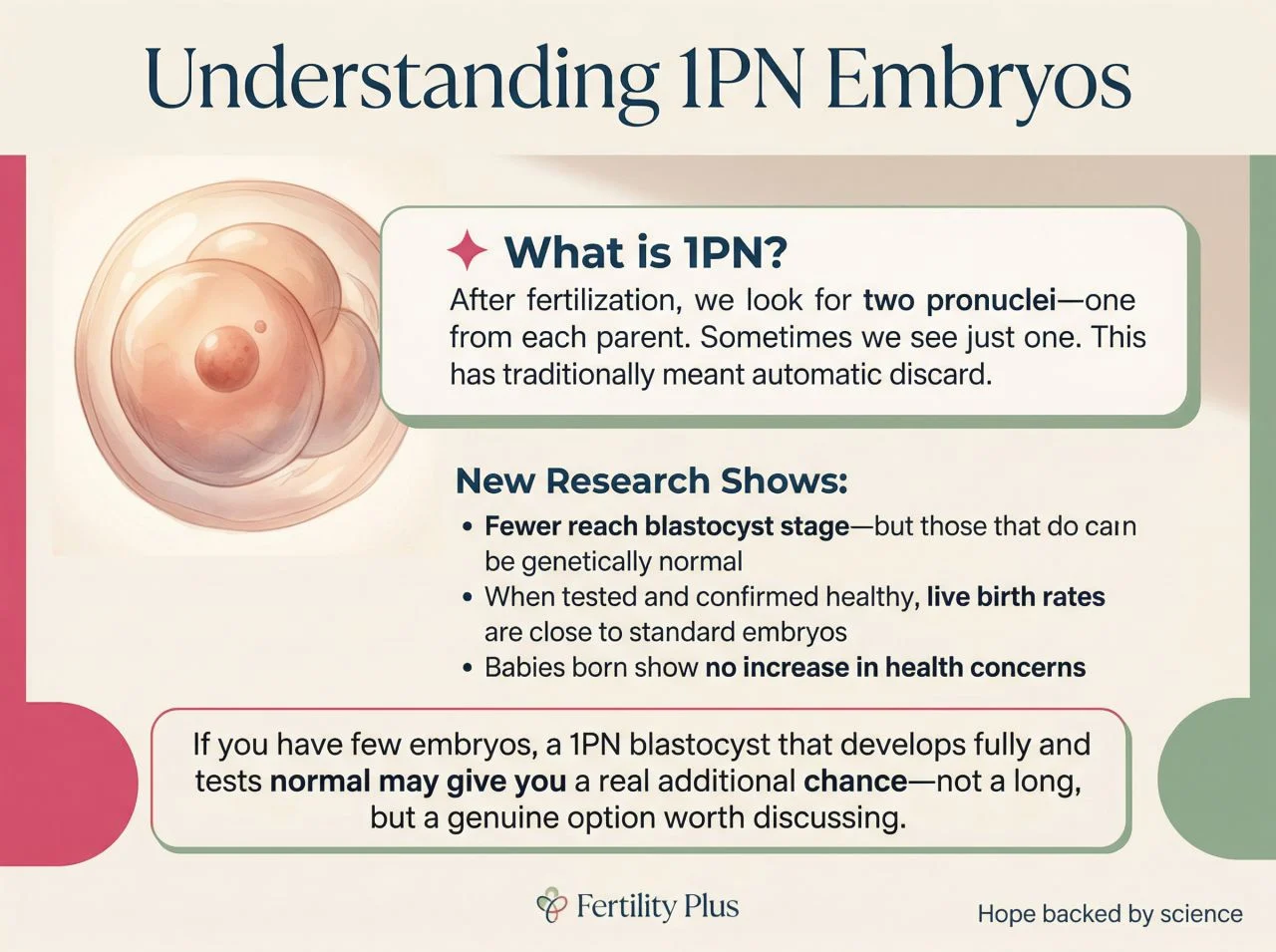
In IVF, we look for two little bubbles of DNA in the egg after fertilisation—two pronuclei (2PN). That’s our classic sign of ‘normal.’ When we see just one (1PN), many labs assume the embryo is abnormal and throw it away.
A new analysis of almost 300,000 embryos tells a different story.
Yes, 1PN embryos are less likely to make it to the blastocyst stage and, if you transfer them without testing, they have lower live birth rates than standard 2PN embryos.
But here’s the twist: when 1PN blastocysts are genetically tested and confirmed to have the right amount of DNA (euploid, diploid, both parents contributing), their chance of a baby looks very similar to tested 2PN embryos.
And the babies? No clear differences in birthweight, gestational age, or congenital malformations between 1PN and 2PN derived births in the studies analysed.
One more nuance: 1PN embryos created with standard IVF seem to do much better than those created with ICSI, which show much lower live birth rates.
What this means for patients:
- If you have very few embryos, that ‘odd’ 1PN blastocyst might still represent a real chance.
- With modern genetic testing, we can identify which 1PN embryos are likely safe to use.
- Decisions should be individual, based on lab expertise and careful counselling.
Science is showing that some embryos deserve a second look—not the bin. Would you want your clinic to consider a carefully tested 1PN embryo if it was your only option?
Lee T, Qi F, Peirce K, et al. To discard or not to discard 1PNs? A systematic review and meta analysis on 291,474 embryos. Reproductive BioMedicine Online. 2026;52(2):105080.”
Stay updated on all scientific advances in the field of fertility with Fertility News.
-
Sep 18, 2026, 20:27Hrishikesh Pai: Rethinking Male Infertility
-
Sep 18, 2026, 20:25Eric Verdin: Wrapping Up the Reproductive Aging Summit at the Center for Healthy Aging in Women
-
Sep 18, 2026, 20:21Investigating Pregnancy Outcomes in Women with Idiopathic POI – RBMO
-
Sep 18, 2026, 20:18Sue Ritchie: Why Aren’t We Talking About Male Fertility More?
-
Sep 18, 2026, 20:13Salma Yasin: Every Day of BFS Study Week 2026 Has Been an Exceptional Learning Experience
-
Sep 18, 2026, 20:01Qingcai Wang: Over 35 and Torn Between Trying Longer and Starting IVF?
-
Sep 18, 2026, 19:58Bhumika: Can a Woman Become Pregnant Again While Already Pregnant?
-
Sep 18, 2026, 19:5215 More Experts Join the International Fertility Forum Mumbai 2026
-
Sep 18, 2026, 19:50Curious About What Happens Behind the Scenes in the Labs? – Sims IVF