
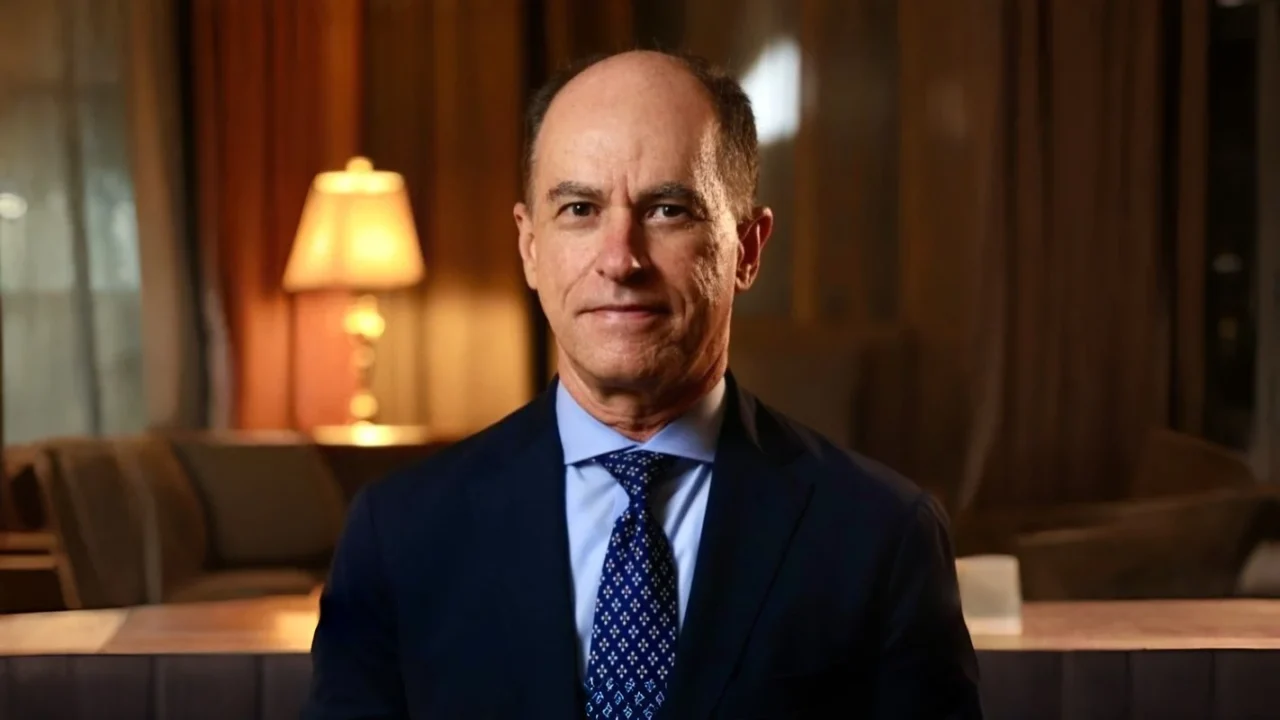
Sandro Esteves: APHRODITE Criteria for More Targeted Male Infertility Care
Sandro Esteves, Honorary Professor of Reproductive Medicine at Aarhus University, shared a post on LinkedIn:
“Despite advances in ART, many men are still managed with oral agents prescribed without a clear endocrine rationale, often with variable and modest effects. This approach contrasts sharply with what we have learned in female reproductive medicine, where treatment evolved toward physiology-driven strategies.
In this opinion article co-authored with Peter Humaidan, we revisit that gap and argue that the field is ready for a shift.
The APHRODITE criteria integrate patient clinical characteristics, endocrine phenotype, and spermatogenic status to align treatment with underlying biology rather than empirical convention.
A key implication is the repositioning of gonadotropins—not as a last resort, but as a rational, earlier-line option in selected patients. Unlike oral agents (e.g., SERMS, AIs), gonadotropins act directly at the testicular level, restoring the physiological drivers of spermatogenesis.
This is not about replacing one treatment with another.
It is about abandoning non-stratified care.
As in ovarian stimulation, progress in male infertility will likely depend on recognizing that biological heterogeneity matters—and that treatment should follow phenotype, not habit.
The next step is clear: prospective evidence built around APHRODITE-defined phenotypes. Until then, continuing purely empirical therapy without phenotyping may no longer be justifiable.”
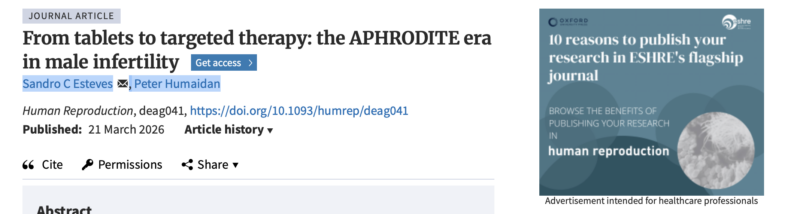
Title: From tablets to targeted therapy: the APHRODITE era in male infertility
Authors:Sandro C Esteves , Peter Humaidan
Read the full article.
Stay updated on all scientific advances in the field of fertility with Fertility News.
-
Sep 18, 2026, 20:27Hrishikesh Pai: Rethinking Male Infertility
-
Sep 18, 2026, 20:25Eric Verdin: Wrapping Up the Reproductive Aging Summit at the Center for Healthy Aging in Women
-
Sep 18, 2026, 20:21Investigating Pregnancy Outcomes in Women with Idiopathic POI – RBMO
-
Sep 18, 2026, 20:18Sue Ritchie: Why Aren’t We Talking About Male Fertility More?
-
Sep 18, 2026, 20:13Salma Yasin: Every Day of BFS Study Week 2026 Has Been an Exceptional Learning Experience
-
Sep 18, 2026, 20:01Qingcai Wang: Over 35 and Torn Between Trying Longer and Starting IVF?
-
Sep 18, 2026, 19:58Bhumika: Can a Woman Become Pregnant Again While Already Pregnant?
-
Sep 18, 2026, 19:5215 More Experts Join the International Fertility Forum Mumbai 2026
-
Sep 18, 2026, 19:50Curious About What Happens Behind the Scenes in the Labs? – Sims IVF