

Muskan Thakur: PV Spotting During Pregnancy: When Is It Normal, and When Should You Worry?
Muskan Thakur, Resident Doctor at DR. D. Y. Patil Vidyapeeth (DPU) shared a post on LinkedIn:
“PV Spotting During Pregnancy: When Is It Normal, and When Should You Worry?
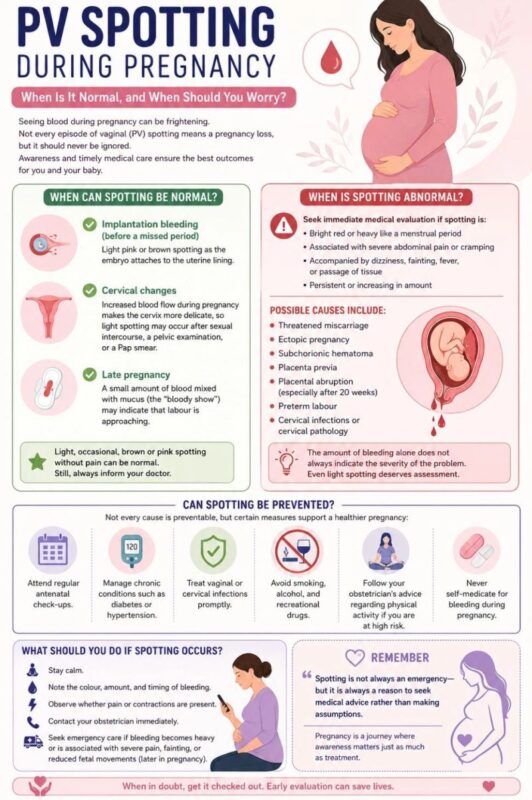
Seeing blood during pregnancy can be frightening. But not every episode of vaginal (PV) spotting means a pregnancy loss. At the same time, it should never be ignored.
Understanding when spotting is expected and when it requires urgent medical attention can make a significant difference.
When can spotting be normal?
- Implantation bleeding (before a missed period): Light pink or brown spotting as the embryo attaches to the uterine lining.
- Cervical changes: Increased blood flow during pregnancy makes the cervix more delicate, so light spotting may occur after sexual intercourse, a pelvic examination, or a Pap smear.
- Late pregnancy: A small amount of blood mixed with mucus (the “bloody show”) may indicate that labour is approaching.
When is spotting abnormal?
Seek immediate medical evaluation if spotting is:
- Bright red or heavy like a menstrual period
- Associated with severe abdominal pain or cramping
- Accompanied by dizziness, fainting, fever, or passage of tissue
- Persistent or increasing in amount
Possible causes include
- Threatened miscarriage
- Ectopic pregnancy
- Subchorionic hematoma
- Placenta previa
- Placental abruption (especially after 20 weeks)
- Preterm labour
- Cervical infections or cervical pathology
Remember, the amount of bleeding alone does not always indicate the severity of the problem. Even light spotting deserves assessment.
Can spotting be prevented?
Not every cause is preventable, but certain measures support a healthier pregnancy:
- Attend regular antenatal check-ups.
- Manage chronic conditions such as diabetes or hypertension.
- Treat vaginal or cervical infections promptly.
- Avoid smoking, alcohol, and recreational drugs.
- Follow your obstetrician’s advice regarding physical activity if you are at high risk.
- Never self-medicate for bleeding during pregnancy.
What should you do if spotting occurs?
- Stay calm.
- Note the colour, amount, and timing of bleeding.
- Observe whether pain or contractions are present.
- Contact your obstetrician immediately.
- Seek emergency care if bleeding becomes heavy or is associated with severe pain, fainting, or reduced fetal movements (later in pregnancy).
Pregnancy is a journey where awareness matters just as much as treatment.
The key message: Spotting is not always an emergency—but it is always a reason to seek medical advice rather than making assumptions.”
Stay updated on all scientific advances in the field of fertility with Fertility News.
-
Jun 30, 2026, 17:44Preeclampsia Recognized as a Risk Factor for Future Heart Disease – Preeclampsia Foundation
-
Jun 30, 2026, 17:32Amos Grünebaum: The Pregnancy Due Date Is a Guess, Not a Deadline
-
Jun 30, 2026, 13:15Have You Checked Out the FIGO Leadership Empowerment Series – IJGO
-
Jun 30, 2026, 12:37Vikram Sinai Talaulikar: Menopause Affect on Hearing and Listening
-
Jun 30, 2026, 12:19Christopher Robinson: Surgical Management of Complex Cesarean Delivery
-
Jun 30, 2026, 12:15Femi Oladapo: Postpartum Haemorrhage As One of the Most Urgent Challenges in Maternal Health
-
Jun 30, 2026, 12:03Asma Khalil: Turning Maternity Review Recommendations into Everyday Practice!
-
Jun 30, 2026, 11:58Applying WHO Contraceptive Guidelines in Practice, What Every Clinician Should Know? – IJGO
-
Jun 30, 2026, 11:53Latika Singh: A Privilege to Be Part of an Inspiring Panel Discussion!