
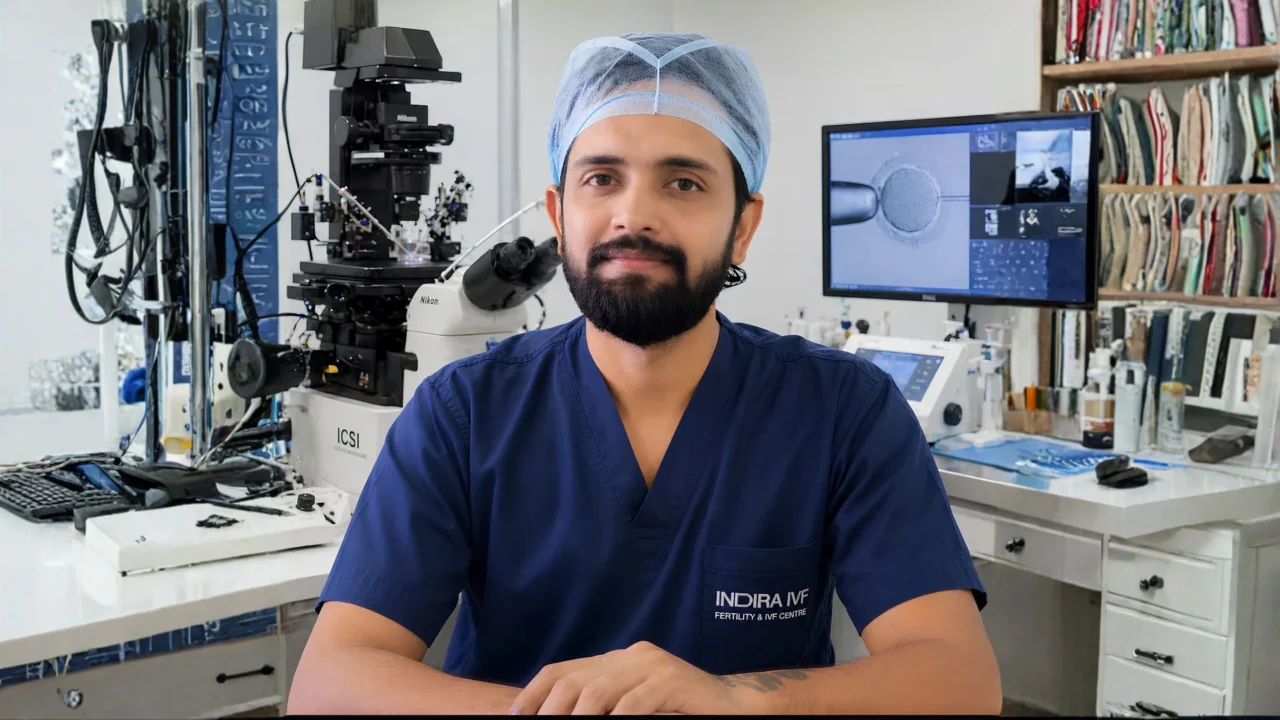
Nitin Kataria: Can We Predict Oocyte Quality Before IVF?
Nitin Kataria, Senior Clinical Embryologist and Quality Manager at Indira IVF Group, shared a post on LinkedIn:
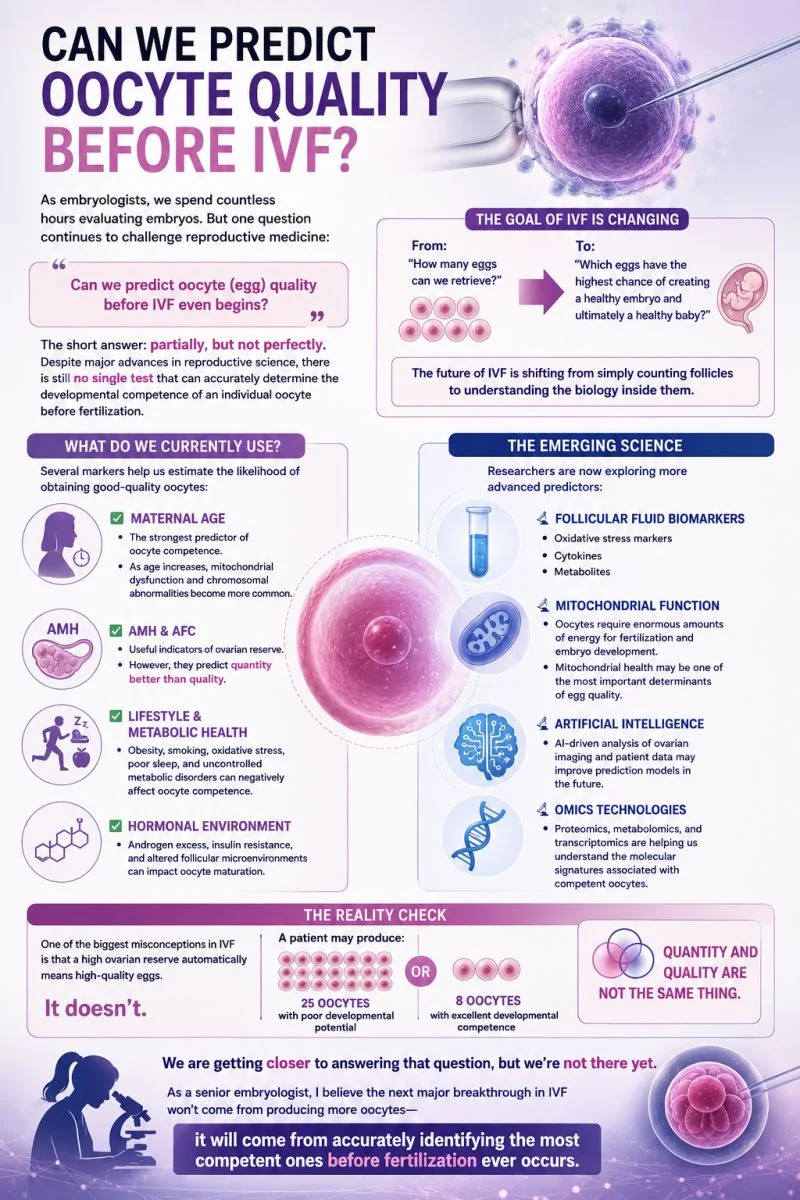
“Can We Predict Oocyte Quality Before IVF?
As embryologists, we spend countless hours evaluating embryos. But one question continues to challenge reproductive medicine:
Can we predict oocyte (egg) quality before IVF even begins?
The short answer: partially, but not perfectly.
Despite major advances in reproductive science, there is still no single test that can accurately determine the developmental competence of an individual oocyte before fertilization.
What Do We Currently Use?
Several markers help us estimate the likelihood of obtaining good-quality oocytes:
1. Maternal Age
- The strongest predictor of oocyte competence.
- As age increases, mitochondrial dysfunction and chromosomal abnormalities become more common.
2. AMH and AFC
- Useful indicators of ovarian reserve.
- However, they predict quantity better than quality.
3. Lifestyle and Metabolic Health
- Obesity, smoking, oxidative stress, poor sleep, and uncontrolled metabolic disorders can negatively affect oocyte competence.
4. Hormonal Environment
- Androgen excess, insulin resistance, and altered follicular microenvironments can impact oocyte maturation.
The Emerging Science
Researchers are now exploring more advanced predictors:
1. Follicular Fluid Biomarkers
- Oxidative stress markers
- Cytokines
- Metabolites
2. Mitochondrial Function
- Oocytes require enormous amounts of energy for fertilization and embryo development.
- Mitochondrial health may be one of the most important determinants of egg quality.
3. Artificial Intelligence
- AI-driven analysis of ovarian imaging and patient data may improve prediction models in the future.
4. Omics Technologies
- Proteomics, metabolomics, and transcriptomics are helping us understand the molecular signatures associated with competent oocytes.
The Reality Check
One of the biggest misconceptions in IVF is that a high ovarian reserve automatically means high-quality eggs. It doesn’t. A patient may produce
25 oocytes with poor developmental potential, or 8 oocytes with excellent developmental competence.
Quantity and quality are not the same thing.
What This Means for IVF
The future of IVF is shifting from simply counting follicles to understanding the biology inside them.
The goal is no longer just:
How many eggs can we retrieve?
The more important question is:
Which eggs have the highest chance of creating a healthy embryo and ultimately a healthy baby?
We are getting closer to answering that question, but we’re not there yet.
As a senior embryologist, I believe the next major breakthrough in IVF won’t come from producing more oocytes it will come from accurately identifying the most competent ones before fertilization ever occurs.”
Stay updated on all scientific advances in the field of fertility with Fertility News.
-
Sep 18, 2026, 20:27Hrishikesh Pai: Rethinking Male Infertility
-
Sep 18, 2026, 20:25Eric Verdin: Wrapping Up the Reproductive Aging Summit at the Center for Healthy Aging in Women
-
Sep 18, 2026, 20:21Investigating Pregnancy Outcomes in Women with Idiopathic POI – RBMO
-
Sep 18, 2026, 20:18Sue Ritchie: Why Aren’t We Talking About Male Fertility More?
-
Sep 18, 2026, 20:13Salma Yasin: Every Day of BFS Study Week 2026 Has Been an Exceptional Learning Experience
-
Sep 18, 2026, 20:01Qingcai Wang: Over 35 and Torn Between Trying Longer and Starting IVF?
-
Sep 18, 2026, 19:58Bhumika: Can a Woman Become Pregnant Again While Already Pregnant?
-
Sep 18, 2026, 19:5215 More Experts Join the International Fertility Forum Mumbai 2026
-
Sep 18, 2026, 19:50Curious About What Happens Behind the Scenes in the Labs? – Sims IVF