

Office Hysteroscopy Beyond Analgesia: What the VISION-HYST Trial Tells Us About the Clinical Environment
“Office hysteroscopy has transformed the diagnosis and treatment of intrauterine pathology by moving an increasing number of procedures from the operating room to the outpatient setting. Miniaturized instruments, the vaginoscopic approach, and improved analgesic strategies have made this transition possible. Pain, however, remains one of the main limitations of office hysteroscopy. Procedural discomfort affects patient experience and, in selected cases, contributes to procedure interruption or the need for treatment under anesthesia.
Pain during hysteroscopy is not determined exclusively by cervical manipulation, uterine distension, or instrument diameter. Anxiety, attention, previous experiences, and the surrounding clinical environment also influence pain perception. This broader understanding raises an important question: is optimizing analgesia enough, or does the environment in which office hysteroscopy is performed also matter?
The VISION-HYST randomized controlled pilot trial (Messina et al., 2026) investigated this question by evaluating a simple environmental intervention added to nitrous oxide analgesia during operative office hysteroscopy.
Why Does Pain Remain Relevant in Office Hysteroscopy?
Office hysteroscopy is a reference technique for direct evaluation of the uterine cavity and allows diagnosis and treatment to occur within the same outpatient pathway in many patients. The outpatient approach reduces the need for general anesthesia, shortens recovery, and improves resource utilization. These advantages depend on adequate procedural tolerability.
Pain during office hysteroscopy has a multidimensional origin. Cervical anatomy, parity, instrument diameter, uterine distension, procedure duration, and the type of operative intervention all contribute to the patient’s experience. Psychological factors represent another important component. Anxiety is particularly relevant because increased attention to an anticipated painful stimulus amplifies pain perception. This relationship explains why pharmacological analgesia represents only one component of procedural pain management.
Nitrous oxide (N₂O) provides rapid analgesic and anxiolytic effects and has been investigated specifically in office hysteroscopy. The randomized clinical trial by Solano Calvo et al. (2021), for example, evaluated N₂O against lidocaine and no analgesia in this setting.
Non-pharmacological approaches provide a different strategy. Rather than increasing medication, they modify how the patient experiences and processes the procedure. Visual distraction is one example. Virtual reality has already been evaluated during outpatient hysteroscopy. The randomized controlled trial by Deo et al. (2021) and the meta-analysis by Vitagliano et al. (2023) reported reductions in procedural pain associated with virtual reality interventions. A systematic review and meta-analysis by Baradwan et al. (2024) further examined the effects of virtual reality on pain and anxiety during outpatient hysteroscopy.
Immersive virtual reality, however, requires dedicated equipment and creates an additional interface between the patient and the clinical team. VISION-HYST explored a simpler concept: changing the environment without isolating the patient from it.
What Did the VISION-HYST Trial Test?
The VISION-HYST randomized controlled pilot trial enrolled 50 women undergoing operative office hysteroscopy between January and April 2026. Participants were randomized 1:1 to standard office hysteroscopy with N₂O analgesia or to the same N₂O protocol combined with visual environmental distraction.
The intervention consisted of a wall-mounted screen functioning as a ‘virtual window.’ It displayed relaxing visual content, including natural landscapes and marine environments selected by the patient. The screen was activated before the procedure and remained visible throughout hysteroscopy.
This distinction is clinically relevant. The intervention was not immersive virtual reality and was not classified as a medical device. It represented an environmental support tool incorporated into the hysteroscopy room. All procedures were performed using a vaginoscopic approach whenever feasible. Bettocchi hysteroscopes or bipolar mini-resectoscopes were used according to clinical indication and operator preference.
The primary outcome was procedural pain measured immediately after hysteroscopy using a 0–10 Numerical Rating Scale (NRS), where 0 represented no pain and 10 the worst imaginable pain.
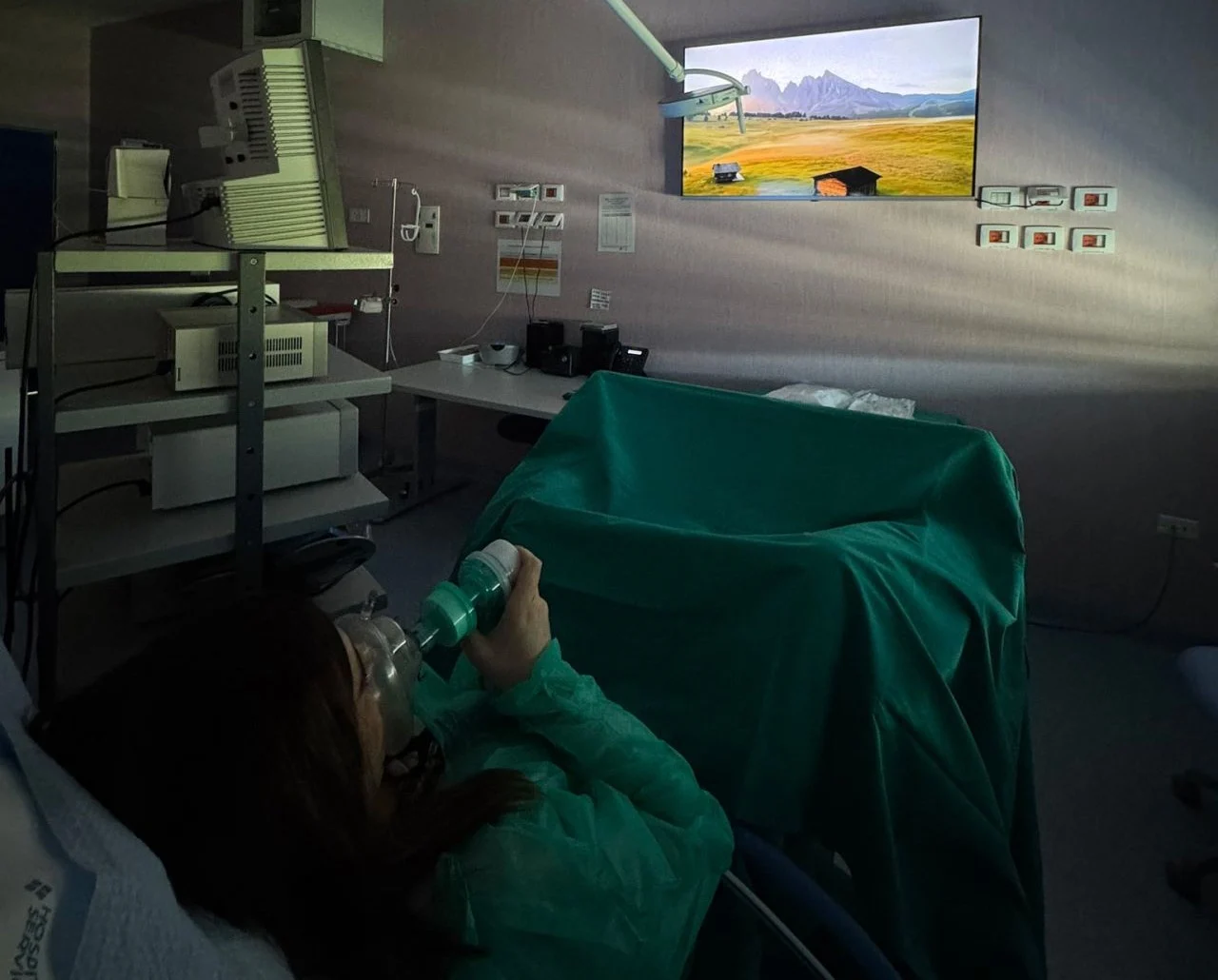 Figure 1. Multisensory outpatient hysteroscopy setting used in the VISION-HYST trial. Source: VISION-HYST randomized controlled pilot trial, 2026.[/caption]
Does Visual Environmental Distraction Reduce Pain During Office Hysteroscopy?
The VISION-HYST trial identified a marked difference in reported pain. Mean NRS pain scores were:
- 3.1 ± 1.5 in the multisensory intervention group.
- 5.8 ± 1.9 in the control group.
The difference was statistically significant (p < 0.001, Welch’s t-test), corresponding to an absolute difference of 2.7 points on a 10-point pain scale. All 50 randomized participants completed the study, with no dropouts or missing primary-outcome data.

Exploratory subgroup analyses examined parity and the hysteroscopic instrument used. Pain reduction remained evident across procedural techniques and was particularly pronounced among multiparous women. These subgroup findings require cautious interpretation because the pilot trial was not powered for definitive subgroup comparisons.
Importantly, the study did not demonstrate a significant improvement in operating-room referral. Referral occurred in 3 of 25 women (12%) in the control group and 5 of 25 (20%) in the intervention group (p = 0.702). The trial was not powered to detect differences in this secondary endpoint. No adverse events related to either N₂O administration or the visual environmental intervention were reported.
The study therefore provides preliminary randomized evidence for a simple concept: the physical environment surrounding office hysteroscopy is part of the patient’s procedural experience and deserves consideration alongside instruments and analgesic strategies.
What Does VISION-HYST Add to Patient-Centered Office Hysteroscopy?
The findings support a multimodal interpretation of pain management. Traditional strategies primarily address nociception through pharmacological analgesia, local anesthesia, smaller instruments, or modifications of surgical technique. Environmental interventions target a different component: attention, anxiety, and sensory processing.
Visual distraction is based on attentional shift. Cognitive resources are redirected from the nociceptive stimulus toward another sensory input. Previous research has largely investigated this principle through immersive virtual reality. VISION-HYST applied the same general concept through a non-immersive intervention integrated directly into the treatment room.
This distinction has practical implications. A wall-mounted visual system preserves communication with the hysteroscopist and clinical staff, does not interfere with the operative field, and integrates into the existing outpatient workflow without requiring the patient to wear a headset.
The findings nevertheless require interpretation within the pilot nature of the study. VISION-HYST included only 50 participants and had no formal sample-size calculation for definitive efficacy testing. Participants and operators could not be blinded to the environmental intervention. Pain was measured using a single subjective NRS immediately after the procedure, and anxiety was not independently quantified with a validated scale. Minor baseline imbalances in parity and hysteroscopic instrumentation were also present.
These limitations define the next research questions. Larger randomized studies are required to determine whether the observed reduction in pain is reproducible across different centers and patient populations and whether specific patient characteristics identify those who benefit most from environmental distraction.
The broader message from VISION-HYST extends beyond a screen displaying natural landscapes. Modern office hysteroscopy increasingly combines technical miniaturization, effective analgesia, communication, and patient-centered environmental design. The procedural room itself represents another variable in this equation.
VISION-HYST places this variable within a randomized clinical framework and provides quantitative preliminary evidence that a simple modification of the patient’s visual environment is associated with substantially lower pain scores during operative office hysteroscopy performed with N₂O analgesia.”
Written by Alessandro Messina, MD
Division of Obstetrics and Gynecology, Degli Infermi Hospital, Biella, Italy
Key Studies Cited
1. Title: Impact of a Multisensory Clinical Environment on Pain and Patient Experience During Office Hysteroscopy: The VISION-HYST Randomized Controlled Pilot Trial
Authors: Alessandro Messina, Alessandro Libretti, Paolo Alessi, Giovanni Lipari, Giulia Parpinel, Camilla Chimenti, Francesca Valloreo, Tiziana Bruno, Sofia Vegro, Raphael Thomasset, Livio Leo, and Bianca Masturzo
You can read the Full Article in Clinical and Experimental Obstetrics and Gynecology.
2. Title: Nitrous oxide versus lidocaine versus no analgesic for in-office hysteroscopy: a randomised clinical trial
Authors: JA Solano Calvo, C del Valle Rubido, A Rodríguez-Miguel, FJ de Abajo, JJ Delgado Espeja, J González Hinojosa, L Fernández Muñoz, Á Zapico Goñi
You can read the Full Article in BJOG: An International Journal of Obstetrics and Gynaecology.
3. Title: Virtual reality for acute pain in outpatient hysteroscopy: a randomised controlled trial
Authors: N Deo, KS Khan, J Mak, J Allotey, FJ Gonzalez Carreras, G Fusari, J Benn
You can read the Full Article in BJOG: An International Journal of Obstetrics and Gynaecology.
4. Title: Patients’ Use of Virtual Reality Technology for Pain Reduction during Outpatient Hysteroscopy: A Meta-analysis of Randomized Controlled Trials
Authors: Amerigo Vitagliano, Miriam Dellino, Alessandro Favilli, Antonio D’Amato, Pierpaolo Nicolì, Antonio Simone Laganà, Marco Noventa, Mario Antonio Bochicchio, Ettore Cicinelli, and Gianluca Raffaello Damiani
You can read the Full Article in the Journal of Minimally Invasive Gynecology.
5. Title: The effect of virtual reality on pain and anxiety management during outpatient hysteroscopy: a systematic review and meta-analysis of randomized controlled trials
Authors: Saeed Baradwan, Majed Saeed Alshahrani, Rayan AlSghan, Mohammad Alyafi, Rasha Ezzat Elsayed, Faiza Ahmed Abdel-Hakam, Abdelmonsef Abdelghaffar Moustafa, Ayman Esmail Hussien, Othman Saadeldien Yahia, Ahmed Abdelaziz Shama, Amr Ahmed Magdy, Ahmed Mohamed Abdelhakim, Haitham Badran
You can read the Full Article in the Archives of Gynecology and Obstetrics.
Other articles featuring Alessandro Messina on Fertility News.
-
Oct 3, 2026, 18:27Non-Invasive Prenatal Testing: Science, Counselling, Global Access and Equity – IJGO
-
Oct 3, 2026, 18:19Erica Marsh: Congratulations to the 4 Doctors Who Were Named 2026 Top Docs by Hour Detroit Magazine
-
Oct 3, 2026, 18:16Shizuko Takahashi: What about the “Biological Clock” in Men?
-
Oct 3, 2026, 18:11Devyanshi Dixit: Call for Speakers for GFWH 2026
-
Oct 3, 2026, 18:06Shaun Greenaway: The More We Understand Male Fertility, the Better Decisions We Can Make
-
Oct 3, 2026, 17:55Reproductive BioMedicine Online’s Latest Issue, 53.4, Is Out
-
Oct 3, 2026, 17:50Ananya Anand Kumar: Excited to Share that My Cryopreservation Abstract Was Accepted for Fertility 2027
-
Oct 3, 2026, 17:48Pregnancy of the Future: Predicting, Preventing, and Treating the Great Obstetric Syndromes – SMFM
-
Oct 3, 2026, 17:46PMOS Was Never Just About the Ovaries… – PCOS Awareness Association