
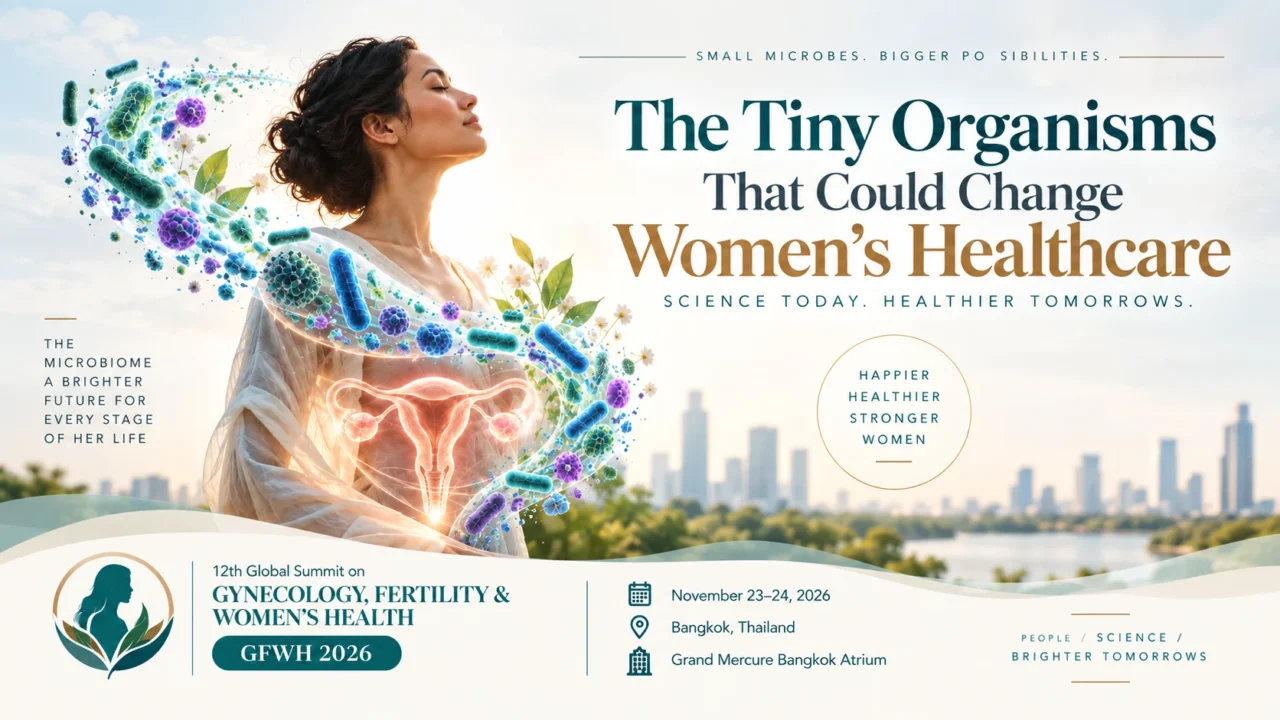
Devyanshi Dixit։ The Tiny Organisms That Could Change Women’s Healthcare
Devyanshi Dixit, Program Manager at CLS Event and Publication and Conference Manager at the 12th Global Summit on Gynecology, Fertility and Women’s Health, shared on LinkedIn:
“The Tiny Organisms That Could Change Women’s Healthcare․
You can’t see them.
You can’t feel them.
But trillions of microorganisms live on and inside the human body-and researchers are discovering that some of them may be deeply connected to women’s health.
Meet the female microbiome.
The vaginal microbiome is an ecosystem of bacteria, fungi, and other microorganisms.
And one group gets particular scientific attention:
Lactobacillus
These bacteria can help maintain an acidic vaginal environment that makes it harder for certain harmful microorganisms to thrive.
But the story goes far beyond infection.
Researchers are asking bigger questions:
Could the microbiome influence…
- Menstrual and vaginal health?
- Pregnancy outcomes?
- Fertility and reproductive health?
- Susceptibility to infections?
- Gynecologic disease?
- Response to treatments?
And here’s where the science becomes fascinating:
The microbiome isn’t the same for every woman.
Age, hormones, sexual activity, pregnancy, antibiotics, medications, lifestyle, and other factors can influence microbial communities.
The vaginal microbiome can also change across different stages of life-including reproductive years, pregnancy, and menopause.
The Next Frontier?
Scientists are investigating whether we can move beyond simply treating infections toward microbiome-informed healthcare.
The Big Idea
The future of women’s healthcare may not only be about hormones, genes, and organs.
It may also involve understanding the microscopic ecosystems living alongside us.
The organisms we cannot see could help researchers understand what we can see-from infection and inflammation to fertility and reproductive health.
Tiny organisms.
Huge questions.
A rapidly evolving field of women’s health.
Explore emerging research in gynecology, reproductive medicine, microbiome science, fertility, and women’s healthcare at GFWH 2026.
- November 23–24, 2026
- Bangkok, Thailand.”
Other articles featuring Devyanshi Dixit on Fertility News.
-
Sep 23, 2026, 18:2112 Myths about PMOS – Fertility Plus
-
Sep 23, 2026, 18:05Position Statement on Venous Thromboembolism in Pregnancy – RCOG
-
Sep 23, 2026, 17:55Devora Lieberman: After Nearly 30 Years in IVF in Australia, I’m Retiring from Clinical Practice
-
Sep 23, 2026, 17:49Stacy Macpherson: 2 Conferences, Countless Conversations, 1 Passionate Fertility Community
-
Sep 23, 2026, 17:36Aiden Dashti: IVF and ART Labware Dishes at a Glance
-
Sep 23, 2026, 17:26The Professional Perspectives Sessions Happening at ASRM 2026 in Baltimore
-
Sep 23, 2026, 17:10Devyanshi Dixit: Early Menarche – Is the Age of Puberty Really Changing?
-
Sep 23, 2026, 17:04Asma Khalil: A Fantastic Experience Delivering a Practical Session at the ISUOG World Congress
-
Sep 23, 2026, 17:01Alison Campbell։ A Great Weekend at the Trust Fertility Clinic Conference