
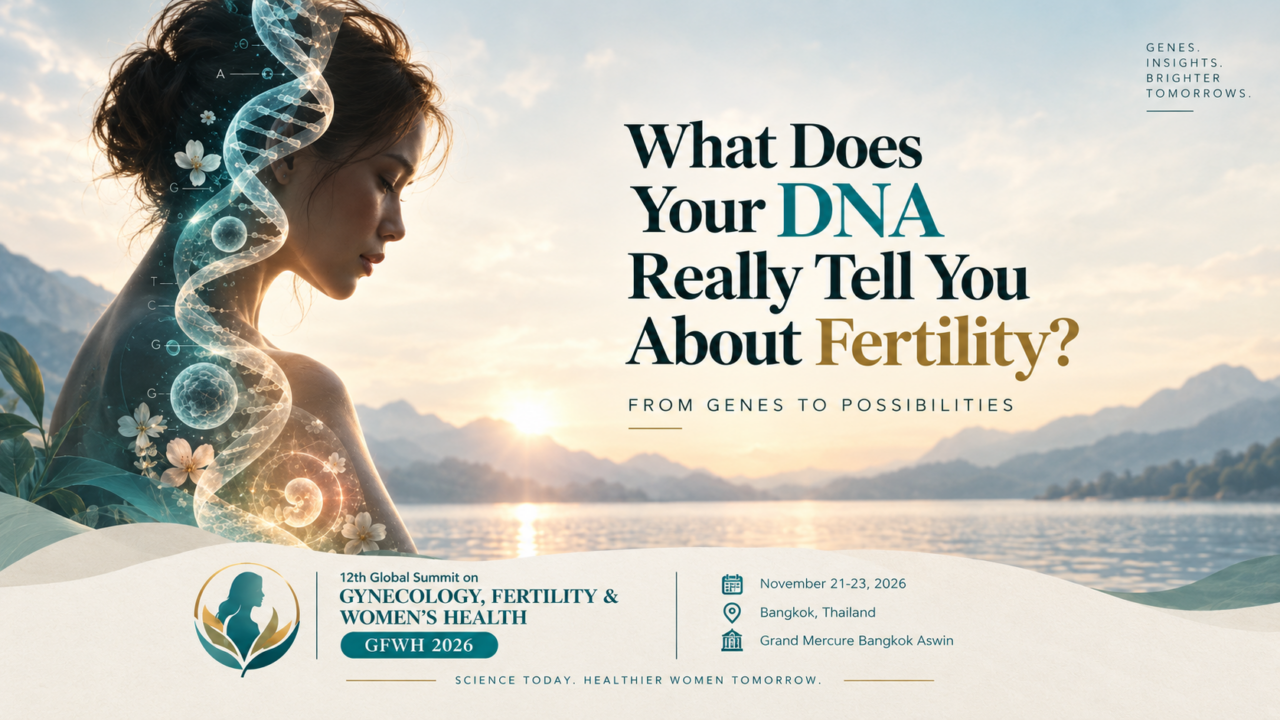
Devyanshi Dixit: What Does Your DNA Really Tell You About Fertility?
Devyanshi Dixit, Program Manager at CLS Event and Publication and Conference Manager at the 12th Global Summit on Gynecology, Fertility and Women’s Health, shared on LinkedIn:
“What does your DNA really tell you about fertility?
Your DNA carries clues about your reproductive health-but it doesn’t come with a fertility expiration date.
Genetics can help explain why fertility may be affected, identify inherited risks, and sometimes guide reproductive decisions. But a DNA test alone cannot tell you exactly when you will conceive-or whether you will.
What can genetics reveal?
- Inherited fertility conditions.
Certain genetic changes can affect ovarian function, sperm production, reproductive development, or pregnancy. - Ovarian and reproductive health.
Some genetic variants are associated with conditions such as premature ovarian insufficiency (POI) and altered reproductive function. - Male fertility factors.
Genetic abnormalities can contribute to severely reduced sperm production or other forms of male-factor infertility. - Embryo and pregnancy risks.
Genetic testing can sometimes identify specific inherited conditions or chromosomal abnormalities relevant to reproductive planning. - Family history matters.
A pattern of infertility, early menopause, recurrent pregnancy loss, or certain inherited conditions in a family may prompt genetic evaluation.
But here’s the important part:
Your genes are not your fertility forecast.
Age, ovarian reserve, egg and sperm quality, reproductive anatomy, hormones, lifestyle, medical conditions, and environmental factors can all influence fertility.
And many fertility problems have no single identifiable genetic cause.
The future of fertility care may be less about asking ‘What genes do I have?’
…and more about understanding how genetics + biology + environment + reproductive history interact.
DNA can provide clues.
It cannot tell the whole story.
The next generation of reproductive medicine may come from combining genetic information with clinical data to create more personalized-and more informed-fertility care.
Explore the future of reproductive medicine at GFWH 2026.
- November 23–24, 2026
- Bangkok, Thailand.”
Other articles featuring Devyanshi Dixit on Fertility News.
-
Sep 24, 2026, 17:02Grateful to Have Walked Alongside So Many Long Island Patients This Year – Spring Fertility
-
Sep 24, 2026, 16:59Robert Heaton: Funded PhD Opportunity – Improving Implantation at the First Embryo Transfer
-
Sep 24, 2026, 16:56Yannick Hurni: What Does a “Normal Uterus” Actually Look Like?
-
Sep 24, 2026, 16:50The New Editors-in-Chief for the Journal of Assisted Reproduction and Genetics
-
Sep 24, 2026, 16:47Khalil Faaed: ICSI Doesn’t Just Deliver the Sperm, It Must Trigger a Molecular Signal
-
Sep 24, 2026, 16:39Valuable Complementary Information on Follicular Sensitivity During Ovarian Stimulation – RBMO
-
Sep 24, 2026, 16:35Aris Kaltsas: What GLP-1 Receptor Agonists and Tirzepatide Do to Male Reproduction
-
Sep 24, 2026, 16:32Aparna Sridhar: New Expanding Contraceptive Options Guideline by WHO
-
Sep 24, 2026, 16:30Failed IVF Should Mean Time to Grieve, Not Simply Going Back to Work – The Fertility Alliance