
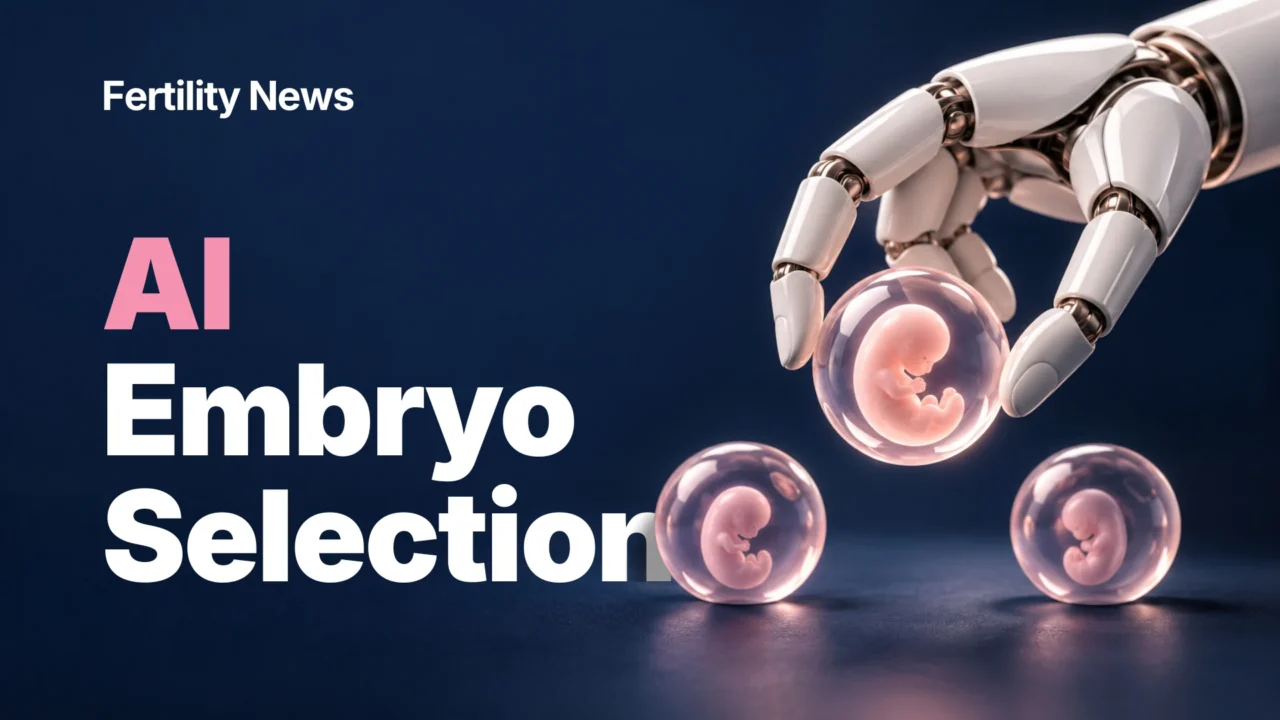
AI-Assisted Embryo Selection: From Prediction to Choice
When several embryos are available for transfer during in vitro fertilization (IVF), a central clinical question is which one should be prioritized.
AI-based tools seek to inform this decision by predicting the likelihood of certain outcomes.
Prediction may tell us what is likely to happen, but not what ought to matter.
From Clinical Prediction to Normative Choice
AI-assisted embryo selection raises a distinctive issue within medical AI: preferring one embryo over another may affect which child will be born. It therefore raises questions specific to the ethics of human reproduction alongside those common to medical AI (Koplin et al., 2025).
These questions are not created by AI: conventional embryo selection can also affect which child may be born. AI may nevertheless reshape how embryos are prioritized for transfer, including which factors influence their ranking and how those rankings inform clinical decisions.
Of particular importance is the prospect of further technological convergence, including the interaction between AI-assisted embryo selection and other reproductive and genetic technologies (Halsband, 2025).
The implications of both current AI-assisted embryo selection and its potential future development can be examined at two distinct levels:
- What exactly can the system establish or predict, and how reliably?
- Which predicted outcomes or characteristics may legitimately guide the choice between embryos, and on what grounds, and who may determine those priorities?
Reliable predictions can help achieve an agreed clinical goal, but they do not, by themselves, determine which selection criteria are legitimate or how competing goals should be prioritized.
Embryo Assessment and Selection: From Conventional Morphology to AI
Traditional Morphological Embryo Assessment
Conventional morphological assessment considers different characteristics depending on the embryo’s developmental stage: cell number, blastomere size and symmetry, and fragmentation at the cleavage stage, and the degree of expansion and the morphology of the inner cell mass and trophectoderm at the blastocyst stage (typically around days 5-6 of development).
Conventional morphological assessment generally relies on observations made at discrete time points.
In addition, assessments of the same embryo may vary from one embryologist to another.
Time-Lapse Imaging and AI-Based Embryo Assessment
Time-lapse imaging offers another way to observe embryo development. Cameras in specialized embryo incubators capture images at regular intervals, allowing embryo development to be tracked and morphokinetic characteristics to be assessed, particularly the timing and sequence of cell divisions.
AI technologies can also be used to evaluate embryos. Machine learning (ML) models, including deep learning systems such as convolutional neural networks, can analyze static images or sequences of images obtained using time-lapse imaging to identify patterns related to embryo development and reproductive outcomes.
Some ML models also take into account clinical information.
Depending on the purpose of the model, embryo images and, where available, clinical data may be used to predict outcomes such as:
- implantation,
- clinical pregnancy,
- ongoing pregnancy,
- miscarriage, and
- live birth.
Distinguishing Embryo Assessment, Outcome Prediction, and Selection
Three functions are worth distinguishing.
- Assessment describes or classifies the characteristics of the embryo.
- Prediction estimates the probability of a certain reproductive outcome.
- Selection uses these assessments or predictions along with other relevant clinical information to determine which embryo should be prioritized for transfer.
An algorithm may assign scores to embryos or rank them without making the final clinical decision about which embryo should be transferred.
AI-Assisted Embryo Selection: Performance, Clinical Evidence, and Reproductive Consequences
Model Performance and Clinical Benefit
AI models are developed and evaluated based on specific goals.
An algorithm that successfully reproduces expert morphological assessments can help standardize embryo assessment without necessarily improving pregnancy rates. Similarly, a model that accurately predicts implantation does not automatically become an equally reliable tool for predicting live birth.
Furthermore, the likelihood of reproductive outcomes, such as implantation and live birth, depends not only on the characteristics of the embryo itself but also on other factors, including patient-related factors, treatment conditions, and laboratory practices.
Accordingly, three distinct aspects of algorithm performance and clinical benefit should be distinguished:
- The algorithm reproduces the expert classifications;
- The algorithm demonstrates predictive accuracy in relation to a specific reproductive outcome;
- The use of the algorithm actually improves treatment outcomes.
The first does not imply the second, and the second does not automatically imply the third.
High reported accuracy may partly reflect a model’s ability to distinguish between embryos with obviously favorable and unfavorable characteristics. However, successful differentiation of such cases does not necessarily indicate the ability of the model to effectively rank embryos, each of which is recognized as potentially suitable for transfer (Afnan et al., 2021).
Moreover, the results of testing a model on one dataset do not guarantee that its predictive performance will be maintained in other clinics and patient populations (Afnan et al., 2022).
Clinical Evidence for AI-Assisted Embryo Selection
In a multicenter randomized trial involving 1,066 patients, the clinical pregnancy rate was 46.5% with embryo selection using the deep learning system iDAScore and 48.2% with conventional morphology-based selection. The study did not demonstrate noninferiority within the predefined margin, although this does not establish that the algorithm was inferior. Live birth rates, assessed as a secondary outcome, were 39.8% and 43.5%, respectively, without a statistically significant difference. The authors also reported a reduction in embryo assessment time in a separate substudy (Illingworth et al., 2024).
In their 2026 committee opinion, the Practice Committees of the American Society for Reproductive Medicine (ASRM) and the Society for Reproductive Biologists and Technologists (SRBT) note that, although numerous retrospective studies suggest potential benefits of AI-assisted embryo selection, further prospective studies, including randomized controlled trials, are needed to evaluate its clinical effectiveness and safety.
Embryo Ranking and Exclusion: Reproductive Consequences
Ranking embryos differs from excluding them from consideration altogether.
In the first case, algorithmic ranking may influence the order of transfer; in the second, a decision to exclude an embryo determines whether it will be considered for transfer at all. However, ranking can also have significant practical consequences, since patients do not always continue treatment until all available embryos are used (Afnan et al., 2021).
Because embryo rankings can influence which embryos are ultimately transferred, the criteria shaping those rankings also warrant scrutiny.
AI, Genetic Technologies, and the Future of Embryo Selection Criteria
Beyond image-based embryo assessment, AI has also been investigated as a tool for analyzing genetic testing data. For example, an AI model has been developed to identify certain ploidy abnormalities using genomic sequencing data obtained through preimplantation genetic testing (Xie et al., 2025).
A separate area of development of reproductive and genetic technologies is preimplantation genetic testing for polygenic disorders (PGT-P), designed to assess the genetic predisposition of embryos to common multifactorial diseases using polygenic risk scores, which combine the effects of many genetic variants into a single estimate. According to the 2026 Ethics Committee opinion of the American Society for Reproductive Medicine, the clinical utility of PGT-P remains unproven, and its use in clinical practice is not recommended because of ongoing clinical uncertainties and ethical issues.
In principle, future AI systems could integrate image-based assessment with clinical and genetic data to consider both reproductive outcomes and predicted disease susceptibility. Extending such selection to physical or cognitive traits remains more speculative and raises further clinical and ethical concerns.
Such convergence could expand not only the information available, but also the range of predicted characteristics deliberately considered when prioritizing embryos.
AI can be considered a catalyst for broader changes in human reproduction through its interaction with other reproductive technologies. Their convergence may reshape not only the options available to prospective parents, but also prevailing understandings of what constitutes a morally legitimate reproductive choice (Halsband, 2025).
Ethical Dimensions and Responsibility in AI-Assisted Embryo Selection
Understanding Embryo Rankings: The Role of Explainability
To understand how algorithmic rankings are generated, it is important to distinguish between the features used by a model, the outcome it is designed to predict, and the way its predictions are used to prioritize embryos for transfer. A predictive feature is not necessarily an intended selection criterion.
Inherently interpretable models are designed so that how their predictions are generated can be understood. In contrast, post hoc explanation methods aim to explain the predictions of opaque models, but such explanations may not faithfully reflect how those predictions were actually generated (Babic and Cohen, 2023).
The limitations of post hoc explanations are particularly relevant when models rely on correlations that may influence embryo rankings without having been deliberately established as selection criteria.
For example, an algorithm may indirectly favor embryos of a certain sex if it identifies sex-related morphokinetic characteristics as predictive of implantation success, even if sex selection is not an intended purpose of its use (Afnan et al., 2021).
Interpretability and empirical evaluation of algorithmic rankings may help identify unintended effects, including systematic preferences for embryos of a particular sex.
The fact that such preferences emerge unintentionally through an AI system, rather than being deliberately established as selection criteria, does not exempt them from ethical scrutiny. Such scrutiny may require consideration of their clinical justification, potential consequences, whether patients are informed of them, and other relevant considerations.
Thus, understanding how an algorithm generates a ranking does not, by itself, establish whether that ranking should be used.
Selection Criteria and the Boundaries of Reproductive Autonomy
Embryo selection to reduce the risk of serious diseases, selection based on disability-related characteristics, and selection based on non-medical characteristics can raise various, sometimes overlapping ethical issues.
The desire of prospective parents to reduce the risk of serious disease may have sound medical and moral grounds.
However, assessing whether such a choice is permissible also requires considering the severity of the disease, the magnitude and uncertainty of the estimated absolute risk, the prognosis of the disease where relevant, and the possible impact of the disease on the well-being of the future child (ASRM, 2026).
The possibility of preferring an embryo with a lower risk of a certain disease does not mean that the life of a person with such a disease is less valuable. At the same time, the disability rights critique of reproductive selection raises concerns that selecting against disability-related traits may express negative or discriminatory attitudes not only toward those traits, but also toward people who have them (Parens and Asch, 2003).
The difficulty of determining acceptable criteria is already evident in modern clinical practice. For example, the ASRM Ethics Committee opinion (2025) considers situations where prospective parents request the transfer of an embryo with a known monogenic condition. The Committee recognizes ethical grounds for both honoring and declining such requests, depending on the clinical circumstances. Physician assistance in such transfers is highly discouraged in cases where a child is highly likely to be born with a life-threatening condition that causes severe impairment from an early age with no possibility of reasonable functioning.
This illustrates that patient preferences, professional responsibilities, and concerns about the welfare of a future child do not always point toward the same decision.
The distinction between medical and non-medical selection purposes is not always clear: the same characteristic may be considered for clinical reasons, parental preferences, or both.
In addition, as different embryo assessment technologies develop and may be combined, situations may arise in which the predicted indicators favor different embryos.
In a hypothetical case, one embryo may have a higher predicted probability of successful implantation, while the other may have a more favorable estimate of a particular future health risk (Afnan et al., 2021).
Even if both estimates were reliable, treating them as separate selection criteria would favor different embryos. Determining their relative priority requires a judgment that predictive accuracy cannot supply.
Who, then, should determine which consideration takes priority, and on what grounds?
The ethical justification of a selection criterion does not, by itself, determine who should have the authority to apply it or assign it priority. This brings into focus a related question: whether, and to what extent, reproductive autonomy encompasses choosing among embryos on the basis of their predicted characteristics.
Clarifying the scope of reproductive autonomy is important for determining whether restrictions on particular selection criteria also constitute limitations on that autonomy, and what might justify such limitations.
Regardless of how broadly reproductive autonomy is understood, informed decision-making in embryo selection requires access to relevant information.
In particular, patients may reasonably want to know whether AI is used in embryo assessment or selection, what its predictions mean, how reliable they are, what criteria can influence recommendations, and whether there are clinically sound alternatives.
However, awareness of the use of AI and understanding of its recommendations should be distinguished from the ability to influence the criteria used for embryo selection.
If an AI system allows users to choose selection criteria or change their relative importance, should prospective parents have this option, and should it extend beyond medical purposes?
Autonomy may also imply the possibility of not basing a reproductive decision on certain characteristics, even if relevant information becomes available.
For example, preimplantation genetic testing for aneuploidy (PGT-A), which screens embryos for an abnormal number of chromosomes, can also provide information about embryo sex, even when patients did not initially intend to make a choice based on this characteristic. ASRM (2022) recommends discussing in advance the possibility of disclosing such information and its impact on embryo selection for transfer.
This example illustrates a broader issue: new information can present patients with choices they had not anticipated.
Not receiving information about a characteristic, receiving it but deciding not to use it, and preventing its indirect influence on a ranking are distinct matters.
The expansion of embryo selection capabilities, including through advances in AI, raises the question of whether the opportunity to choose one embryo over another may gradually come to be seen as creating a moral obligation to make such a choice.
For example, according to one influential ethical view, known as the principle of procreative beneficence, prospective parents have significant moral reasons to choose, among the possible children they could have, the one expected to have the best life based on the available information (Savulescu and Kahane, 2009).
On a broader social level, the development of reproductive technologies can contribute to the expectation that prospective parents should use available embryo selection options to reduce predicted health risks for their future child. In this case, the expansion of reproductive choices may be accompanied by social pressure to make certain reproductive decisions (Halsband, 2025).
These questions of choice also depend on how control over the algorithmic process is distributed among developers, clinics, professionals, and patients.
Human Oversight, Responsibility, and the Problem of Harm
The use of AI in embryo selection raises complex questions about responsibility when embryo selection is followed by an unfavorable outcome.
However, an unfavorable outcome does not necessarily indicate an error or other failure of the algorithm.
If a failure is suspected, one question is whether shortcomings in the system’s design, validation, deployment, or clinical use contributed to the unfavorable outcome.
A separate question is which actors had the ability and responsibility to address the relevant risk.
Responsibility may involve developers who define prediction targets and assess model performance, clinics that select and deploy the system in a particular setting, and medical specialists who interpret its outputs in the clinical context.
Depending on the system, decisions made during its design may shape both the outcomes predicted and the criteria used to prioritize embryos, before clinicians or patients consider the resulting recommendations.
Formally leaving the final decision to a clinician does not necessarily guarantee meaningful human oversight.
Automation bias can lead to excessive reliance on algorithmic recommendations (Koplin et al., 2025).
A failure in the selection process may also have adverse consequences for prospective parents, including additional treatment, delays, and financial burdens.
A separate difficulty, known as the non-identity problem, is whether choosing one embryo rather than another can be said to harm the child who is born, given that any child born following the transfer of the alternative embryo would have been a different person.
Beyond Prediction
Current AI systems may improve the consistency and efficiency of embryo assessment, but the available clinical evidence does not establish a general improvement in reproductive outcomes.
The normative question already arises when predictions guide the order of transfer, but the potential integration of AI with genetic technologies could further complicate it by introducing additional and potentially competing criteria for embryo selection.
AI does not create the normative problem of embryo selection, but it can make parts of the selection process less visible: developers define prediction targets, models may reflect unintended correlations, and clinical workflows determine how scores become transfer priorities.
The central question is therefore not only whether an algorithm can rank embryos reliably, but which outcomes guide its ranking, why they should be given priority, and who may legitimately determine those priorities.
References
Title: Interpretable, not black-box, artificial intelligence should be used for embryo selection
Authors: Michael Anis Mihdi Afnan, Yanhe Liu, Vincent Conitzer, Cynthia Rudin, Abhishek Mishra, Julian Savulescu, Masoud Afnan
You can read the Full Article in Human Reproduction Open.
Title: Data solidarity for machine learning for embryo selection: a call for the creation of an open access repository of embryo data
Authors: Masoud Afnan, Michael Anis Mihdi Afnan, Yanhe Liu, Julian Savulescu, Abhishek Mishra, Vincent Conitzer, Cynthia Rudin
You can read the Full Article in Reproductive BioMedicine Online.
Title: The Algorithmic Explainability “Bait and Switch”
Authors: Boris Babic, I. Glenn Cohen
You can read the Full Article in the Minnesota Law Review.
Title: Embryo selection, AI and reproductive choice
Authors: Aurélie Halsband
You can read the Full Article in AI and Ethics.
Title: Deep learning versus manual morphology-based embryo selection in IVF: a randomized, double-blind noninferiority trial
Authors: Peter J. Illingworth, Christos Venetis, David K. Gardner, Scott M. Nelson, Jørgen Berntsen, Mark G. Larman, Franca Agresta, Saran Ahitan, Aisling Ahlström, Fleur Cattrall, Simon Cooke, Kristy Demmers, Anette Gabrielsen, Johnny Hindkjær, Rebecca L. Kelley, Charlotte Knight, Lisa Lee, Robert Lahoud, Manveen Mangat, Hannah Park, Anthony Price, Geoffrey Trew, Bettina Troest, Anna Vincent, Susanne Wennerström, Lyndsey Zujovic and Thorir Hardarson
You can read the Full Article in Nature Medicine.
Title: Ethics of artificial intelligence in embryo assessment: mapping the terrain
Authors: Julian J. Koplin, Molly Johnston, Amy N. S. Webb, Andrea Whittaker, Catherine Mills
You can read the Full Article in Human Reproduction.
Title: Disability rights critique of prenatal genetic testing: Reflections and recommendations
Authors: Erik Parens, Adrienne Asch
You can read the Full Article in Mental Retardation and Developmental Disabilities Research Reviews.
Title: The moral obligation to create children with the best chance of the best life
Authors: Julian Savulescu, Guy Kahane
You can read the Full Article in Bioethics.

Title: Accurate identification of abnormal ploidy using an artificial intelligence model in preimplantation genetic testing
Authors: Pingyuan Xie, Rijing Pang, Luyao Zeng, Shuoping Zhang, Lei Sun, Kaisen Yang, Xiaoyi Yang, Shuang Zhou, Senlin Zhang, Guangjian Liu, Yueqiu Tan, Liang Hu, Fei Gong, Jia Fei, Ge Lin
You can read the Full Article in Human Reproduction Open.

Written by Armenuhi Sahakyan, LL.M., Editor at Fertility News
Stay informed with the latest updates in fertility and reproductive medicine on Fertility News.
-
Nov 8, 2026, 11:51Severe Sperm Dysmorphism: When Should We Consider Surgical Sperm Retrieval Before ICSI?
-
Nov 7, 2026, 19:28Championing the Vital Conversation Surrounding Fertility Support, Education, and Patient Advocacy – ARCS
-
Nov 7, 2026, 19:25Emilio Gomez Sanchez: Exploring the Presence of Microplastics in Human Semen
-
Nov 7, 2026, 19:15Moving Towards Standardized Sperm Extraction and Processing Practices – ASRM
-
Nov 7, 2026, 19:12Ivy Fertility Welcomes Aimee Seungdamrong as the Leader of San Diego Fertility Center – Bryant Park
-
Nov 7, 2026, 19:09Arora Suhani Gagan: The Healthcare Struggles Women Rarely Talk About
-
Nov 7, 2026, 19:04Makeba Williams: 2 Weeks of My 1-Year Term as President of The Menopause Society
-
Nov 7, 2026, 19:00Fantastic Day at the Annual Breaking Bad News Event – ARCS
-
Nov 7, 2026, 18:57Carole Gilling-Smith: Overnight, an NHS Funding Decision Divided My Fertility Patients into 2 Groups…