
Embryo-Derived Growth Factors in IVF Culture: Does Volume Matter When Embryos Develop Alone in Nature?
“Human embryos ordinarily develop without neighboring embryos in the reproductive tract. Yet IVF laboratories have explored group culture and reduced medium volumes partly to preserve embryo-derived signaling factors. This apparent contradiction raises a deceptively simple question: does an embryo need signals from other embryos, or primarily its own local microenvironment?
The distinction matters because laboratory practices are sometimes justified by presumed growth-factor concentration without direct evidence of the concentrations experienced at the embryonic surface. The answer requires separating biological plausibility, experimental findings and clinically validated outcomes.
Do embryos need signals from neighboring embryos?
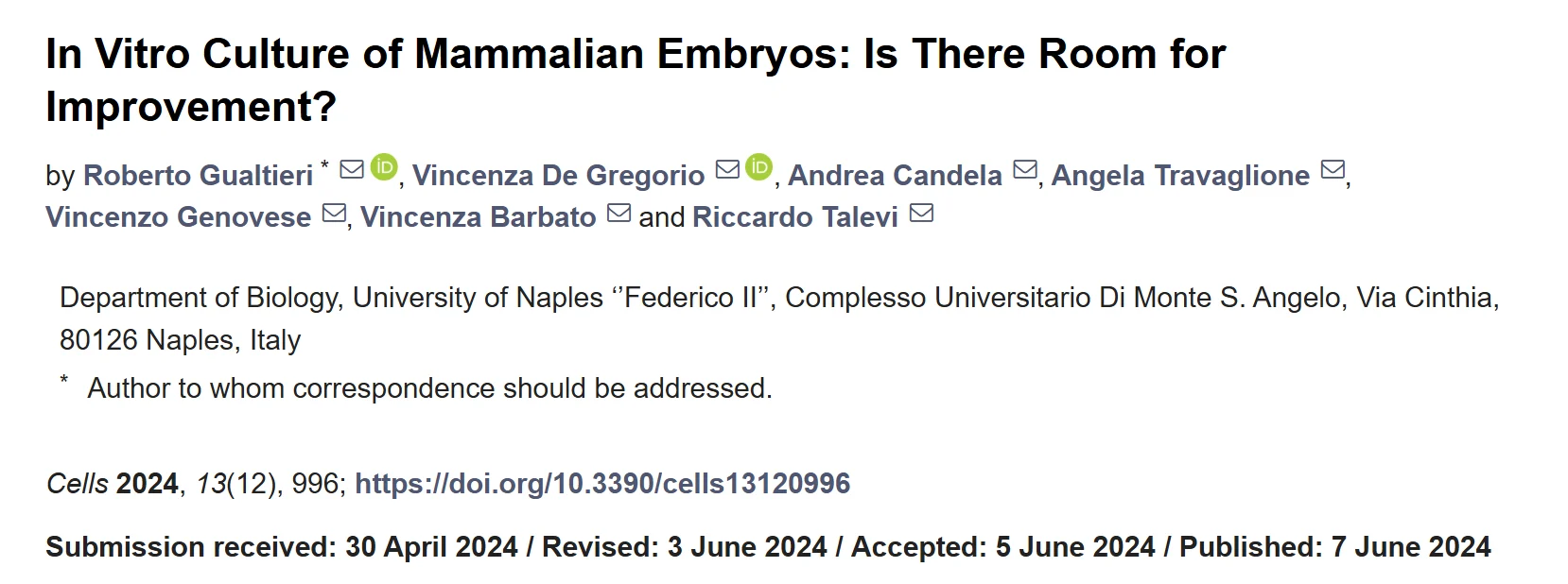
Autocrine signals act on the cells that release them, whereas paracrine signals act on nearby cells. Preimplantation embryos and the maternal reproductive tract participate in molecular communication, although much mechanistic evidence derives from animal models (Gualtieri et al., 2024). A naturally conceived embryo generally develops without another embryo beside it; this challenges the proposition that embryo-to-embryo signaling is essential.
It does not establish that sharing factors in vitro has no effect. In vivo, the embryo encounters epithelial secretions, extracellular vesicles, changing fluid composition and mechanical conditions absent from standard laboratory media. Thus, natural solitary development is an important biological counterargument, not a controlled comparison of culture systems.
Does a larger volume necessarily eliminate autocrine signaling?
A fixed amount of secreted substance dispersed uniformly into a larger volume yields a lower average concentration. But the uniform-mixing assumption does not describe every moment of embryo culture. Diffusion generates spatial and temporal gradients; concentration near an embryo depends on secretion, diffusivity, uptake, degradation, binding, geometry and fluid motion.
The local concentration can differ from the well-wide average, particularly before equilibration; whether this difference reaches a biologically effective level in human embryo culture remains unmeasured.
Conversely, diffusion does not stop at an arbitrary distance: over time, molecules redistribute. Neither the assertion that large volumes abolish autocrine signaling nor the assertion that local signaling remains sufficient has been demonstrated as a general rule for human embryos. Receptor affinity, signaling thresholds and molecular identity matter. The central measurement is local biological exposure, not volume alone.
What have human studies actually demonstrated?
Rijnders and Jansen (1999) randomized day-3 embryos among four combinations of individual or group culture and small or large volume. Blastocyst formation was 35%, 45%, 36% and 36%, respectively, without statistically significant differences. Importantly, embryos were initially cultured together until day 3; the study cannot establish that the four systems are equivalent from fertilization onward.
Ebner et al. (2010) studied 936 zygotes from 72 patients and found improved compaction, blastulation and blastocyst quality in group culture, but the reported live-birth advantage was a trend rather than definitive evidence. Fancsovits et al. (2022) randomized 532 IVF cycles to individual culture or a shared-medium microwell system. Clinical pregnancy was 50.8% versus 40.6%, and live birth 41.5% versus 32.9%, favoring microwells.
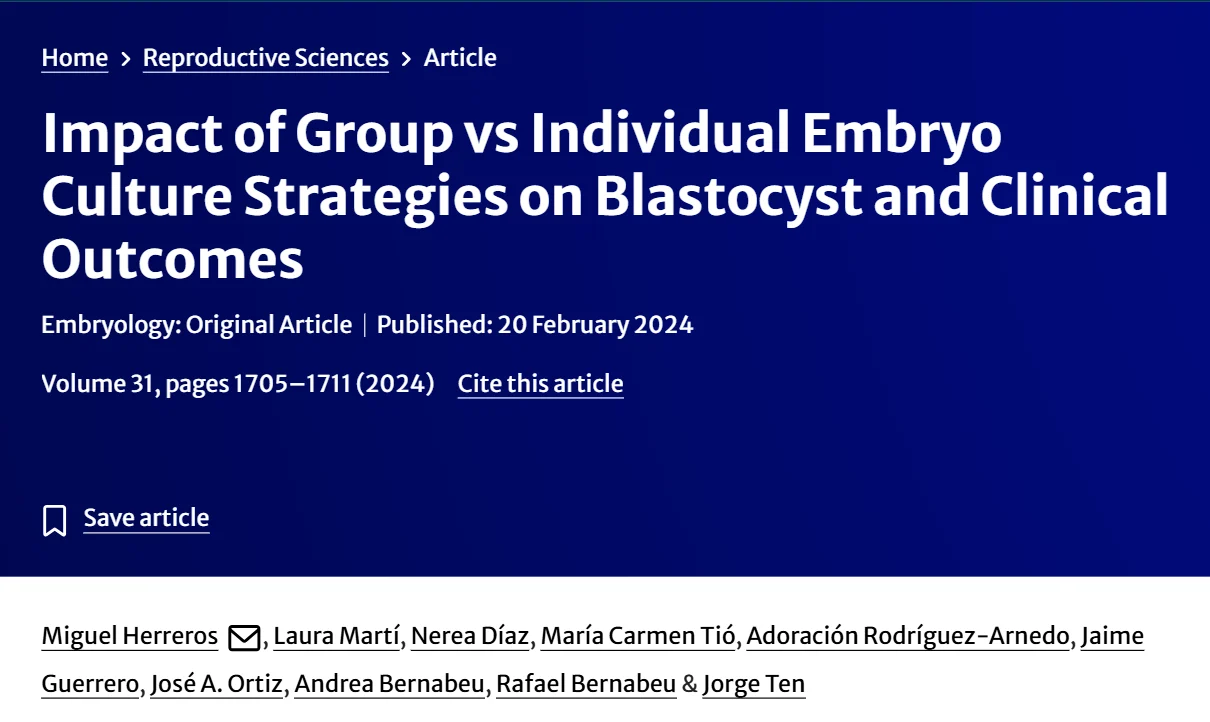
These outcomes support that particular system, but differences in microwell architecture and culture conditions prevent attribution solely to growth factors; the trial was not a direct molecular test of autocrine signaling. In contrast, Herreros et al. (2024), randomizing 830 embryos from 103 egg-donation treatments, observed higher day-5 blastocyst formation and usable embryo rates with individual culture, while implantation and pregnancy outcomes were similar.
These trials address different populations, systems and endpoints; they do not yield a universal winner. Nor does a higher blastocyst rate necessarily imply higher cumulative live birth per retrieval.
Are embryo density and medium volume sufficient descriptors?
Embryo density, conventionally expressed as embryos per medium volume, does not capture distance between embryos, dish geometry, medium depth, fluid movement or surface interactions. Shared culture also changes exposure to metabolic by-products, nutrients and secreted substances.
Consequently, favorable group-culture outcomes cannot be assigned to embryo-derived growth factors without mechanism-specific evidence. Animal research suggests that confinement and spacing can matter, but translation to human clinical outcomes requires caution (Gualtieri et al., 2024).
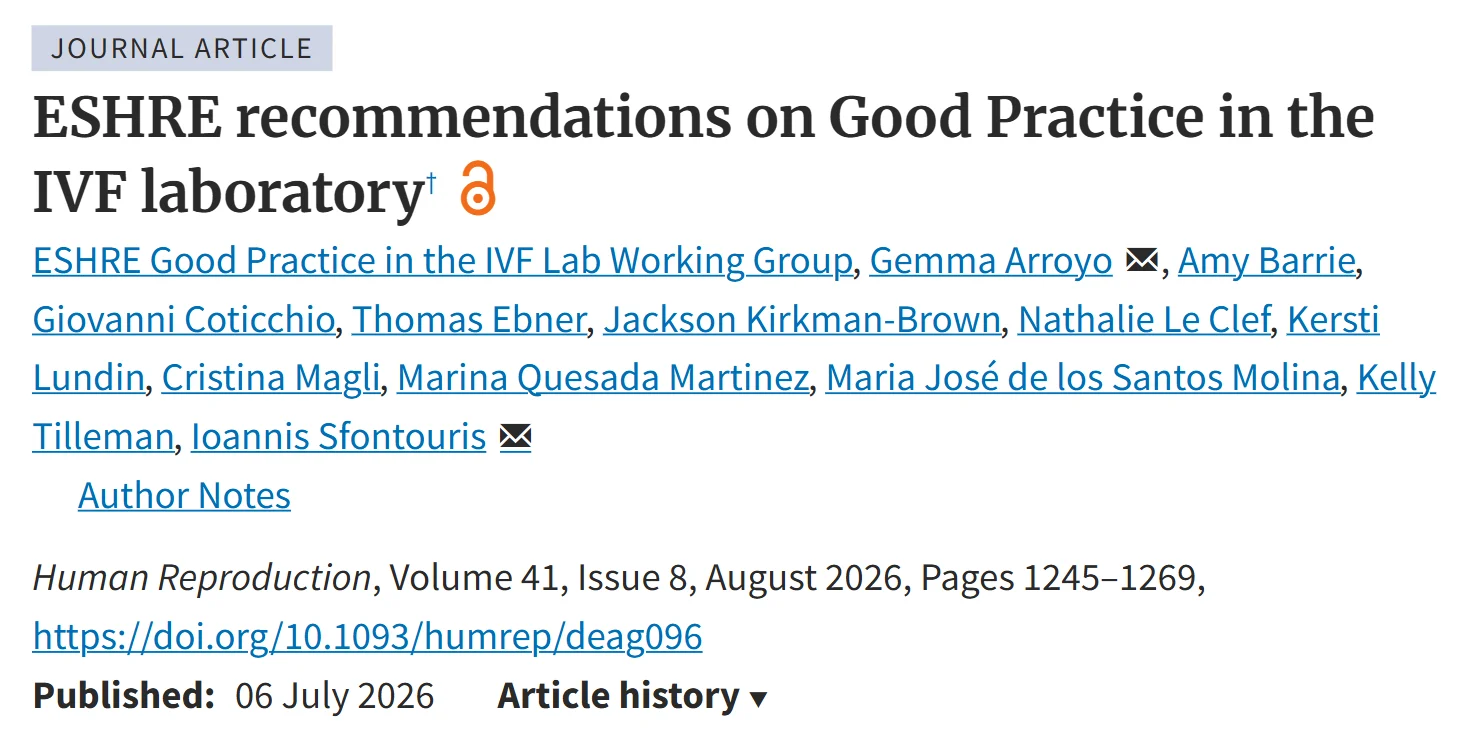
The updated ESHRE Good Practice recommendations (2026) advise individual culture for traceability and call for validation of droplet size and embryo number when group culture is used. This is a quality and traceability recommendation, not proof of superior developmental performance.
Does oil-free culture answer the growth-factor question?
No. Comparing large oil-free wells with small oil-covered drops simultaneously changes medium volume, interface conditions, evaporation risk and possibly pH and osmolality stability. ESHRE (2026), whose recommendations combine literature evidence and expert consensus, identifies oil overlay as a means of reducing, not eliminating, fluctuations in temperature, pH and osmolality, and emphasizes appropriate equilibration and validation.
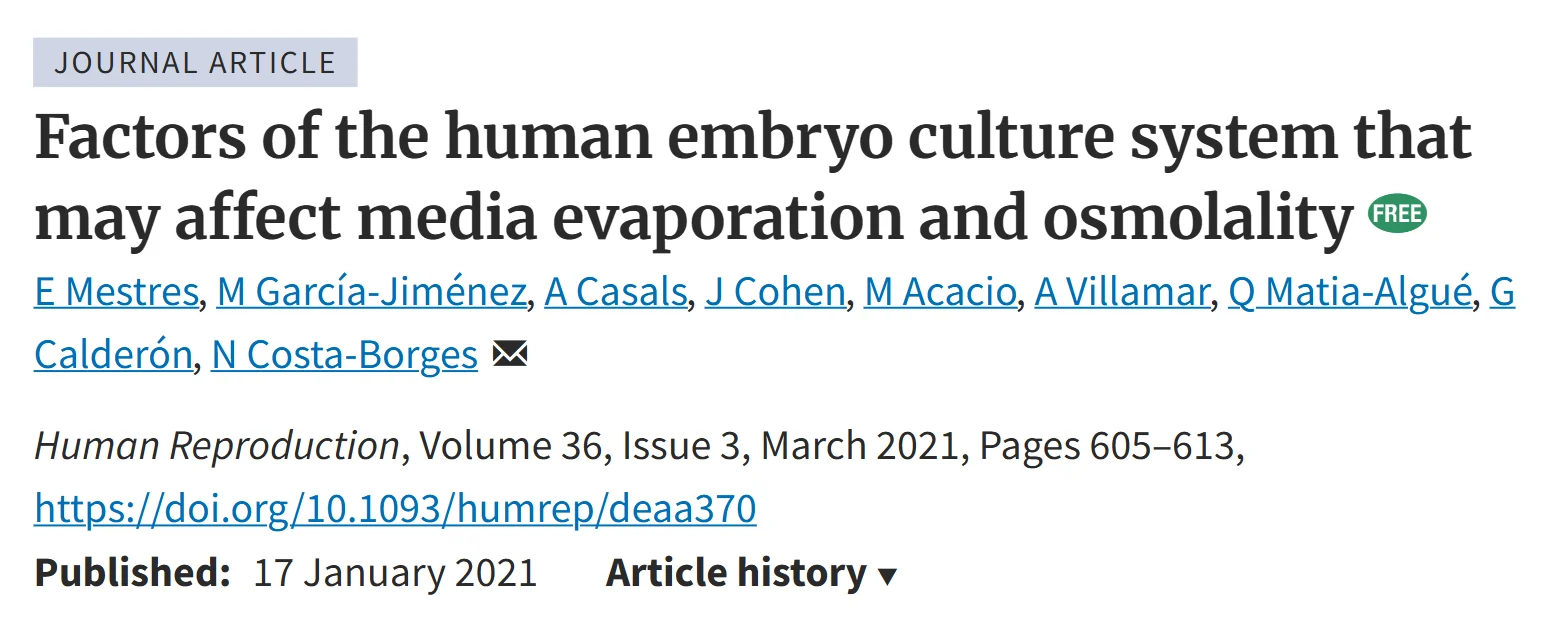
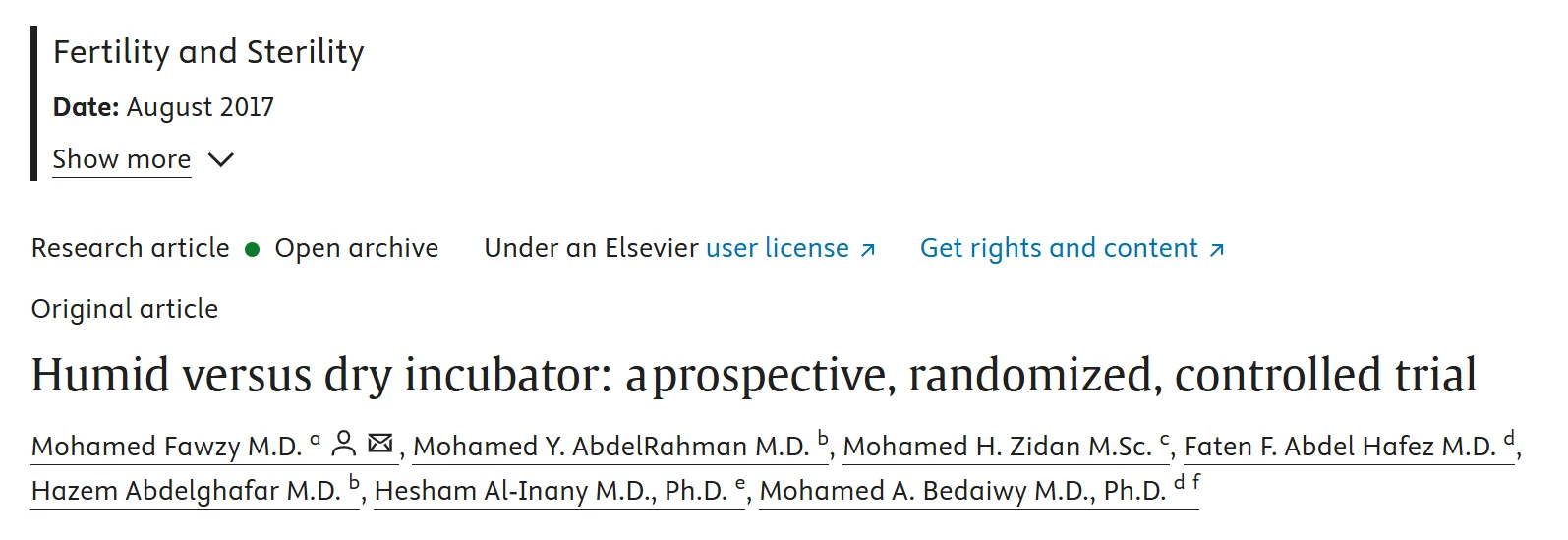
Experimental assessment of human embryo culture systems has identified humidity, oil volume, medium and dish design as factors affecting evaporation and osmolality (Mestres et al., 2021). A randomized trial by Fawzy et al. (2017) reported lower clinical and ongoing pregnancy rates under dry than humidified culture conditions, although its results cannot be generalized to every incubator design.
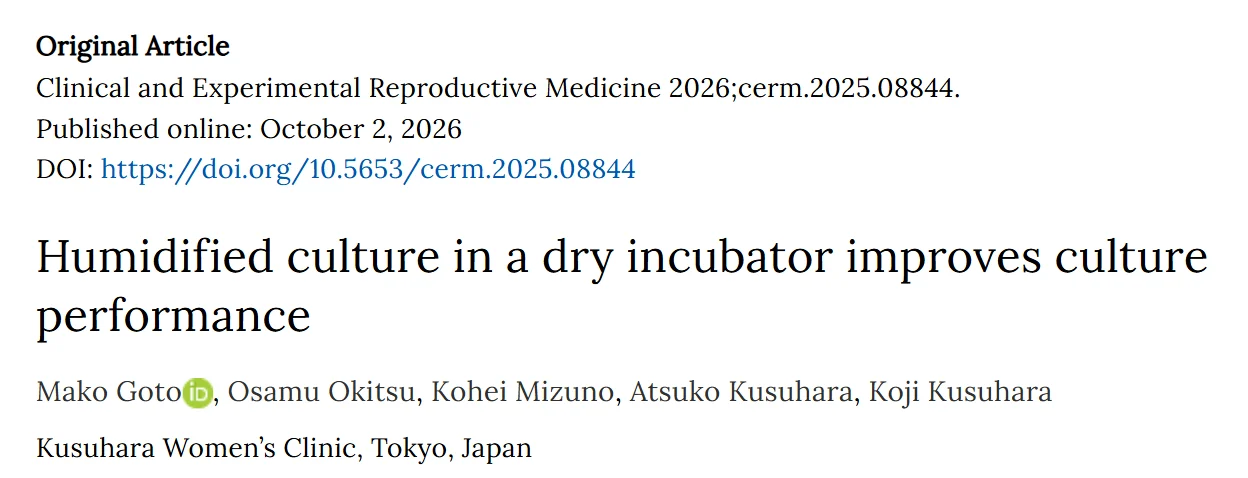
Goto et al. (2026) reported associations between localized humidification in a dry incubator and improved early developmental measures, without significant differences in clinical or ongoing pregnancy. This study does not establish the safety or superiority of oil-free culture. Oil-covered versus oil-free culture must therefore be evaluated as complete physicochemical systems, not merely as tests of growth-factor dilution.
What is the unresolved research question?
A useful, testable hypothesis is that local embryo-associated signaling exposure predicts developmental behavior more accurately than total medium volume or embryo density alone. This is a proposed research direction, not an established novel mechanism; existing microwell and diffusion research already offers related mechanistic concepts.
Future studies could control medium composition, oxygen, pH, osmolality, dish geometry, embryo number and spacing while measuring candidate signaling molecules over time. Molecular detection alone would not establish causal activity; validated receptor or pathway experiments would be needed.
For human studies, patient-level randomization, adequate statistical power, embryo traceability, and outcomes such as cumulative live birth are essential.
The strongest question is not whether embryos belong together or apart, but which biological and physical features of the microenvironment materially influence competence.”
Written by Saadat Hassan
Senior Clinical Embryologist/IVF and Embryology
BSc (Hons) Medical Laboratory Technology
King Edward Medical University, Lahore, Pakistan
References
Title: Influence of group culture and culture volume on the formation of human blastocysts: a prospective randomized study
Authors: P.M. Rijnders, C.A.M. Jansen
You can read the Full Article in Human Reproduction․
Title: Group culture of human zygotes is superior to individual culture in terms of blastulation, implantation and life birth
Authors: T. Ebner, O. Shebl, M. Moser, R.B. Mayer, W. Arzt, G. Tews
You can read the Full Article in Reproductive BioMedicine Online․
Title: Prospective-randomized study comparing clinical outcomes of IVF treatments where embryos were cultured individually or in a microwell group culture dish
Authors: Peter Fancsovits, Csaba Pribenszky, Adam Lehner, Akos Murber, Zita Kaszas, Annamaria Nemes & Janos Urbancsek
You can read the Full Article in Biologia Futura.
Title: Impact of Group vs Individual Embryo Culture Strategies on Blastocyst and Clinical Outcomes
Authors: Miguel Herreros, Laura Martí, Nerea Díaz, María Carmen Tió, Adoración Rodríguez-Arnedo, Jaime Guerrero, José A. Ortiz, Andrea Bernabeu, Rafael Bernabeu, Jorge Ten
You can read the Full Article in Reproductive Sciences.
Title: In Vitro Culture of Mammalian Embryos: Is There Room for Improvement?
Authors: Roberto Gualtieri, Vincenza De Gregorio, Andrea Candela, Angela Travaglione, Vincenzo Genovese, Vincenza Barbato, Riccardo Talevi
You can read the Full Article in Cells.
Title: ESHRE recommendations on Good Practice in the IVF laboratory
Authors: ESHRE Good Practice in the IVF Lab Working Group, Gemma Arroyo, Amy Barrie, Giovanni Coticchio, Thomas Ebner, Jackson Kirkman-Brown, Nathalie Le Clef, Kersti Lundin, Cristina Magli, Marina Quesada Martinez, Maria José de los Santos Molina, Kelly Tilleman, Ioannis Sfontouris
You can read the Full Article in Human Reproduction.
Title: Factors of the human embryo culture system that may affect media evaporation and osmolality
Authors: E Mestres, M García-Jiménez, A Casals, J Cohen, M Acacio, A Villamar, Q Matia-Algué, G Calderón, N Costa-Borges
You can read the Full Article in Human Reproduction.
Title: Humid versus dry incubator: a prospective, randomized, controlled trial
Authors: Mohamed Fawzy, Mohamed Y. AbdelRahman, Mohamed H. Zidan, Faten F. Abdel Hafez, Hazem Abdelghafar, Hesham Al-Inany, Mohamed A. Bedaiwy
You can read the Full Article in Fertility and Sterility.
Title: Humidified culture in a dry incubator improves culture performance
Authors: Mako Goto, Osamu Okitsu, Kohei Mizuno, Atsuko Kusuhara, Koji Kusuhara
You can read the Full Article in Clinical and Experimental Reproductive Medicine.
Other articles featuring Saadat Hassan on Fertility News.
-
Oct 25, 2026, 11:25Resa Nabor: Heartfelt Story of Love, Loss, and the Struggle to Move On
-
Oct 25, 2026, 11:11Mazen Al-Obaidi: The Hidden Ecosystem That May Shape Your Fertility
-
Oct 25, 2026, 10:43Sanketh Dhumal Satya: When a Junior Becomes Senior Embryologist
-
Oct 24, 2026, 18:15Laura Marqueta: Pleased to Participate in the 9th ART Fertility Conference as a Speaker
-
Oct 24, 2026, 18:09Lucy Froese: Your Life Matters Now, Not Just When You Finally See Those Two Lines
-
Oct 24, 2026, 18:07Alejandro González: PGT-A May Improve Embryo Selection, but Does It Increase Live Births?
-
Oct 24, 2026, 18:02PGT-A and EMMI: 2 Complementary Views of the Same Embryo – Noor Sciences
-
Oct 24, 2026, 17:59Mark Amols: Took the Next Step and Built TacoBoutFertility.com
-
Oct 24, 2026, 17:43Michael Rimmer: Extracellular Vesicles in Reproductive Physiology and Pathology