
Severe Sperm Dysmorphism: When Should We Consider Surgical Sperm Retrieval Before ICSI?
“For embryologists, andrologists, and fertility specialists, severe sperm abnormalities raise an important clinical question: should testicular sperm retrieval be considered instead of using ejaculated sperm for ICSI?
The answer is not straightforward. Although surgical sperm retrieval has established applications in specific clinical situations, severe sperm morphology abnormalities alone do not currently provide sufficient evidence to recommend surgery routinely.
Not All Abnormal Sperm Are the Same
In some men, sperm morphology abnormalities are heterogeneous, involving different defects in the head, midpiece, neck or tail. In others, the abnormalities are relatively uniform, potentially indicating a specific disorder affecting sperm development.
This distinction matters because some monomorphic sperm defects are associated with recognised genetic conditions.
For example, globozoospermia is characterised by round-headed sperm with an absent or defective acrosome. Macrozoospermia involves abnormally large sperm heads and may be associated with genetic abnormalities, including variants in the AURKC gene. Meanwhile, acephalic spermatozoa syndrome affects the connection between the sperm head and tail.
These conditions should not automatically be grouped together under the broad label of teratozoospermia. Their underlying biology, diagnostic implications and potential effects on reproductive outcomes may differ considerably.
For fertility specialists, the first step is therefore to understand the specific morphological pattern rather than focusing exclusively on the percentage of normal forms.
Does the Source of Sperm Matter?
Surgical sperm retrieval is commonly used when sperm are absent from the ejaculate, particularly in selected cases of azoospermia. Techniques include testicular sperm aspiration (TESA), testicular sperm extraction (TESE) and microsurgical approaches when clinically appropriate.
However, a different question arises when sperm are present in the ejaculate but show severe morphological abnormalities.
Could retrieving sperm directly from the testicle help overcome the problem?
At present, there is insufficient direct evidence to support the routine use of testicular sperm retrieval when severe sperm morphology abnormalities are the primary concern. An abnormal appearance alone does not establish that ejaculated sperm are unsuitable for ICSI, nor does it demonstrate that testicular sperm would produce better outcomes.
The decision requires a more detailed assessment. Can viable sperm suitable for injection be identified in the ejaculate? Does the morphological pattern suggest a specific disorder? Are there additional clinical findings that could influence treatment selection?
Without clear answers to these questions, surgery may introduce additional risks and costs without a clearly established reproductive benefit.
What Can Globozoospermia Teach Us?
Globozoospermia illustrates why identifying the underlying sperm defect is more informative than treating all morphological abnormalities in the same way.
In a 2023 systematic review, Crafa and colleagues examined the genetic basis of globozoospermia and reviewed outcomes associated with assisted reproductive technologies. The review also discussed the potential role of assisted oocyte activation (AOA) alongside ICSI in selected patients.
These findings highlight an important point: some sperm defects may require tailored treatment strategies. However, evidence concerning ICSI and assisted oocyte activation should not be interpreted as evidence that surgically retrieved testicular sperm are superior to ejaculated sperm in these cases.
The same principle applies to other monomorphic sperm abnormalities. Depending on the morphological pattern and clinical history, genetic testing and genetic counselling may form important parts of the assessment.
In other words, identifying the precise problem may be more important than changing the anatomical source of the sperm.
Sperm DNA Fragmentation: A Related but Different Issue
The discussion becomes more complex when severe sperm morphology abnormalities coexist with elevated sperm DNA fragmentation (SDF).
Studies have investigated whether testicular sperm, which may show lower levels of DNA fragmentation in some men, could improve ICSI outcomes in selected non-azoospermic men with persistently elevated SDF.
In 2023, Esteves and colleagues reviewed the use of surgically retrieved sperm in this clinical setting and discussed the limitations of the available evidence.
An important distinction must be made, however: findings from studies involving selected men with elevated SDF cannot automatically be applied to men whose primary concern is severe sperm morphology abnormalities.
Morphology and DNA integrity are different parameters. A sperm cell that looks abnormal does not necessarily have elevated DNA fragmentation, while a sperm cell that appears morphologically normal may still carry DNA damage.
Severe morphological abnormalities should therefore not be used as a substitute for assessing other clinically relevant factors.
A More Individualized Approach Before ICSI
Before considering surgical sperm retrieval, clinicians should establish whether the morphological findings are reproducible and determine whether they suggest a specific sperm disorder.
Depending on the clinical presentation, assessment may include a specialist review of sperm morphology, targeted genetic testing and evaluation of other factors associated with male infertility. The availability of viable sperm suitable for ICSI in the ejaculate should also be carefully assessed.
Previous assisted reproduction outcomes and the clinical circumstances of both partners may further inform treatment decisions. If surgical retrieval is being considered, its potential benefits must be weighed against procedural risks, costs and the uncertainty surrounding the available evidence.
This is where collaboration between andrologists, embryologists and reproductive urologists becomes particularly important. The decision should be based on a clear clinical rationale rather than the assumption that testicular sperm are inherently better.
What Do We Still Need to Know?
One important gap in the scientific literature is the limited availability of robust comparative studies specifically examining testicular versus ejaculated sperm in men whose primary indication for consideration is severe sperm morphology abnormalities.
Future research should distinguish between heterogeneous morphological abnormalities and defined monomorphic sperm disorders. It should also assess outcomes that matter to patients and clinicians, including fertilisation, embryo development, pregnancy and live birth, alongside surgical complications and potential effects on testicular function.
Until stronger, directly relevant evidence becomes available, severe sperm morphology abnormalities alone should not be considered a routine indication for surgical sperm retrieval before ICSI.
The Take-Home Message
Severe sperm morphology abnormalities should prompt careful assessment, not an automatic change in treatment strategy.
For fertility specialists, the priority is to identify the morphological pattern, investigate an underlying disorder when indicated and assess whether ejaculated sperm are suitable for ICSI.
The key question is not simply whether the sperm look abnormal, but whether there is a clear, evidence-based reason to expect that surgically retrieved sperm will improve reproductive outcomes.
For now, this distinction should guide the discussion before a decision to proceed with surgery is made.”
Written by Mostafa Maghraby
IVF and ICSI Specialist, Embryologist at Al-Amal Fertility Centre, Member of EFRE
References
Title: Processing and selection of surgically-retrieved sperm for ICSI: a review
Authors: Greta Verheyen, Biljana Popovic-Todorovic, Herman Tournaye
You can read the Full Article in Basic and Clinical Andrology.
Title: Globozoospermia: A Case Report and Systematic Review of Literature
Authors: Andrea Crafa, Rosita Angela Condorelli, Sandro La Vignera, Aldo Eugenio Calogero and Rossella Cannarella
You can read the Full Article in the World Journal of Men’s Health.
Title: Surgically retrieved spermatozoa for ICSI cycles in non-azoospermic males with high sperm DNA fragmentation in semen
Authors: Sandro C. Esteves, Igor Coimbra, Jorge Hallak
You can read the Full Article in Andrology.
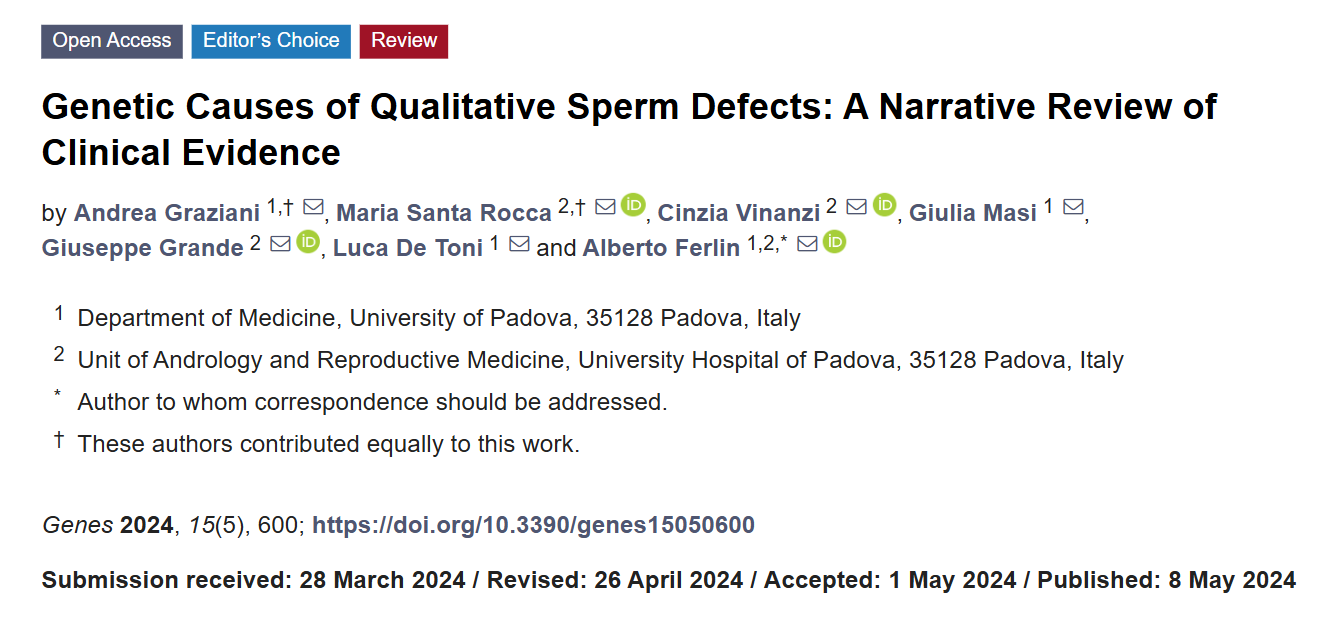
Title: Genetic Causes of Qualitative Sperm Defects: A Narrative Review of Clinical Evidence
Authors: Andrea Graziani, Maria Santa Rocca, Cinzia Vinanzi, Giulia Masi, Giuseppe Grande, Luca De Toni, Alberto Ferlin
You can read the Full Article in Genes.
Other articles featuring Mostafa Maghraby on Fertility News.
-
Nov 8, 2026, 09:24AI-Assisted Embryo Selection: From Prediction to Choice
-
Nov 7, 2026, 19:28Championing the Vital Conversation Surrounding Fertility Support, Education, and Patient Advocacy – ARCS
-
Nov 7, 2026, 19:25Emilio Gomez Sanchez: Exploring the Presence of Microplastics in Human Semen
-
Nov 7, 2026, 19:15Moving Towards Standardized Sperm Extraction and Processing Practices – ASRM
-
Nov 7, 2026, 19:12Ivy Fertility Welcomes Aimee Seungdamrong as the Leader of San Diego Fertility Center – Bryant Park
-
Nov 7, 2026, 19:09Arora Suhani Gagan: The Healthcare Struggles Women Rarely Talk About
-
Nov 7, 2026, 19:04Makeba Williams: 2 Weeks of My 1-Year Term as President of The Menopause Society
-
Nov 7, 2026, 19:00Fantastic Day at the Annual Breaking Bad News Event – ARCS
-
Nov 7, 2026, 18:57Carole Gilling-Smith: Overnight, an NHS Funding Decision Divided My Fertility Patients into 2 Groups…