
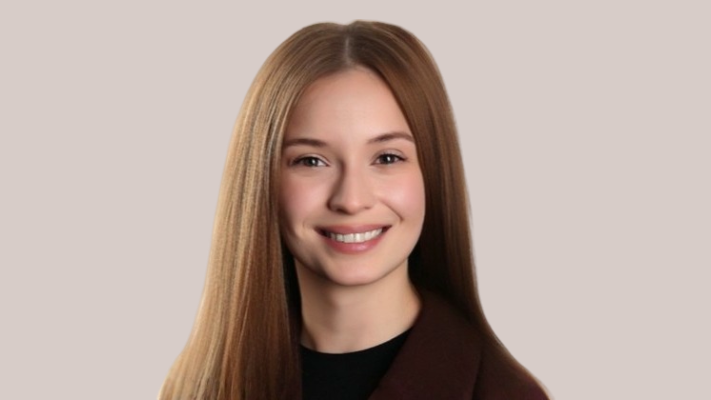
Göksu Dirgin: Mosaic Embryos – IVF’s Unsolved Riddle
Göksu Dirgin, Embryologist, Molecular Biologist, and Geneticist, shared on LinkedIn:
“Mosaic Embryos: IVF’s Unsolved Riddle
My Master’s Thesis is now officially in UPF’s Institutional Repository and RECERCAT!
Here is the riddle.
A mosaic embryo is neither clearly normal nor clearly abnormal. It is both: one embryo whose cells carry different chromosome numbers. Every piece of the puzzle is still contested.
- How common is it? Reported rates range from about 2% to over 20%, depending on the platform and thresholds. The same embryo can be classified differently depending on how it is tested.
- Where does it come from? Mostly from mitotic errors after fertilization, but proving the origin in a human embryo is extremely difficult.
- What happens next? Some mosaic embryos may self-correct, and others may not. Whether and how this happens is still debated.
- What does the result really tell us? A biopsy of a few trophectoderm cells stands in for the entire embryo, and it cannot always show what is happening in the rest of it.
My thesis asked: To what extent do specific chromosomal abnormalities and varying levels of mosaicism define a distinct morphokinetic signature during human embryo development, and can that signature predict implantation success?
To address it, I analyzed 3,862 embryos from 719 patients from Eugin and CIRH. I integrated time-lapse morphokinetics, PGT-A results and clinical outcomes and used linear mixed-effects models in R.
The riddle remains open.
Retrospective data can describe what mosaic embryos look like. It cannot tell us why they arise. That is the question I want to pursue next, at the level of the cellular mechanisms that produce them.
If you work with embryos, PGT-A, or mosaic results, I’d love to hear your perspective!
I am sincerely grateful to my supervisor and mentor, Dr. Montserrat Barragan Monasterio, for her scientific guidance, rigorous feedback, and continued support throughout this project. Her mentorship shaped both this thesis and my approach to research. I also thank Eugin, CIRH Barcelona, UPF Barcelona School of Management and my cohort for their support!”
Other articles featuring Göksu Dirgin on Fertility News.
-
Nov 9, 2026, 18:08Strong Workplaces Start with Supported Employees – ESHRE
-
Nov 9, 2026, 18:00Nicole Haliday: Balancing Work and Fertility Treatment
-
Nov 9, 2026, 17:50How Employers Can Support Employees Facing Fertility Challenges – Ferring Pharmaceuticals
-
Nov 9, 2026, 17:41Esther Eleboh: IUI or IVF?
-
Nov 9, 2026, 17:36Asima Ahmad: Can Targeted Light Help More Embryos Develop During IVF?
-
Nov 9, 2026, 17:31Shweta Rajani Goswami: If Your IVF Has Failed, I May Still Tell You That Your First Doctor Did the Right Thing
-
Nov 9, 2026, 17:17Rajeev Agarwal: TSH 3.1 Before Pregnancy
-
Nov 9, 2026, 17:11Diana Kayal: Fertility Is a Conversation for 2
-
Nov 9, 2026, 17:01Lodovico Parmegiani: The Future of ART Laboratories May Already Be Moving Toward 100% ICSI