
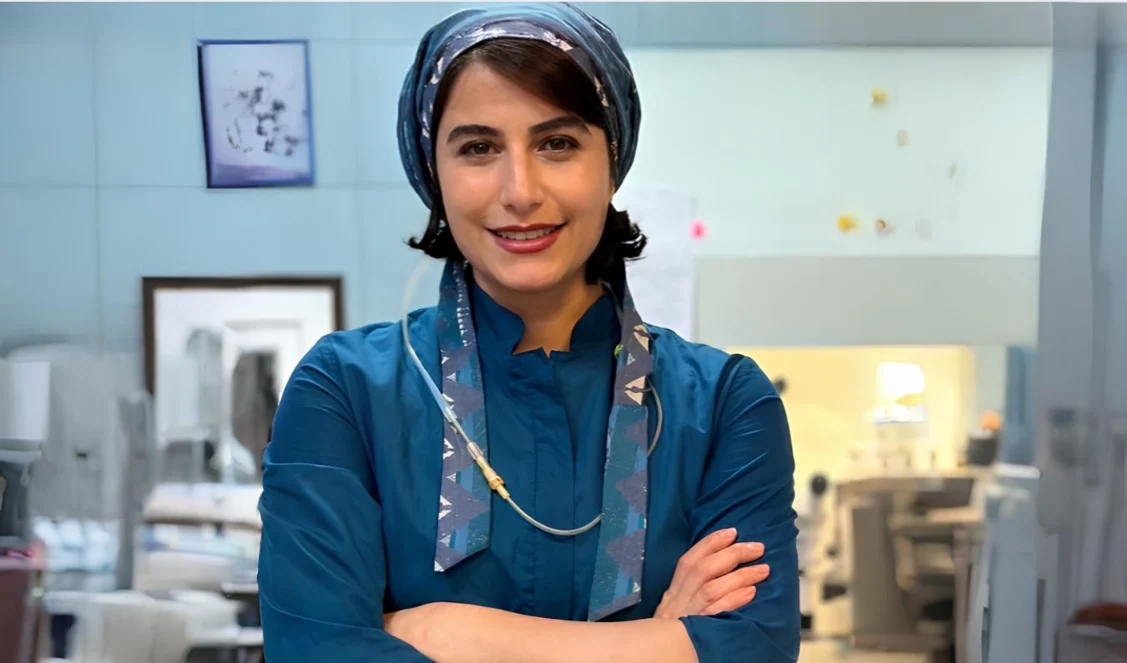
Caspian Ostadian: How Long Should an Embryo Rest After Warming Before Transfer?
Caspian Ostadian, Embryologist at Mehr Assistant Reproductive Center, shared on LinkedIn:
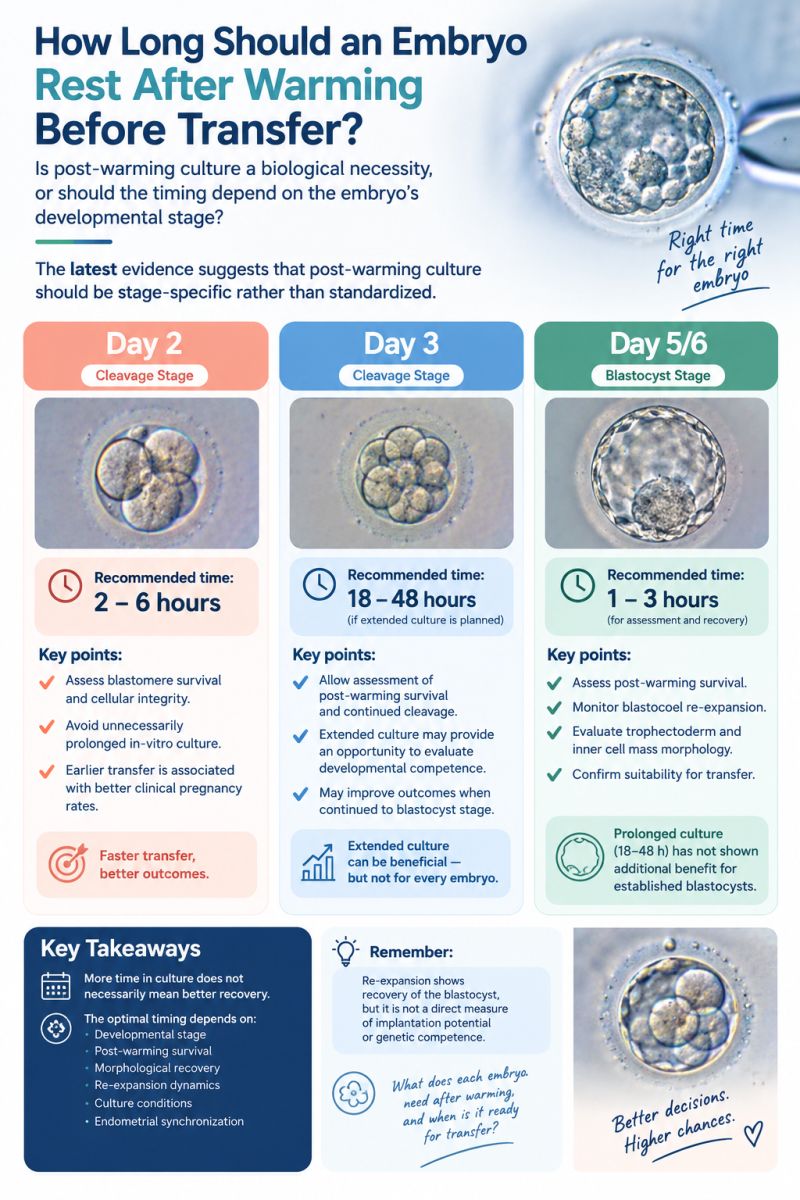
“How Long Should an Embryo Rest After Warming Before Transfer?
Is post-warming culture a biological necessity, or should the timing depend on the embryo’s developmental stage?
After vitrification and warming, embryos may experience osmotic stress, changes in cell volume and temporary alterations in cellular function.
But does every embryo need the same recovery period before transfer?
The latest evidence suggests that post-warming culture should be stage-specific rather than standardized.
1. Day 2 embryos (Cleavage stage)
Suggested approach: Approximately 2–6 hours
- Assess blastomere survival and cellular integrity.
- Avoid unnecessarily prolonged in-vitro culture.
- A 2026 systematic review and meta-analysis found lower clinical pregnancy rates with extended culture compared with earlier transfer in Day-2 embryos.
2. Day 3 embryos (Cleavage stage)
Suggested approach: 18–48 hours when extended culture is planned
- Allow assessment of post-warming survival and continued cleavage.
- Extended culture may provide an opportunity to evaluate developmental competence.
- Some studies suggest improved outcomes when Day-3 embryos are cultured further, particularly when extended to the blastocyst stage.
However, extended culture is not automatically beneficial for every embryo.
3. Day 5/6 embryos (Blastocyst stage)
Suggested approach: Approximately 1–3 hours for assessment and recovery, according to laboratory protocol.
- Assess post-warming survival.
- Monitor blastocoel re-expansion.
- Evaluate trophectoderm and inner cell mass morphology.
- Confirm suitability for transfer.
Importantly, prolonged culture (18–48 hours) has not demonstrated a significant improvement in live birth rates for established blastocysts.
What does the 2026 evidence tell us?
A systematic review and meta-analysis by Cahen-Peretz et al. (2026), including 14 studies and 17,415 FET cycles, reported:
- Day 2: Earlier transfer (2–6 h) was associated with better clinical pregnancy outcomes.
- Day 3: Extended culture was associated with improved live birth rates (RR 1.076).
- Day 3 to blastocyst: Extended culture showed the largest improvement in live birth rates (RR 1.229).
- Day 5/6 blastocysts: No significant live birth benefit was found with extended culture.
A more recent retrospective study by Jiang et al. (2026) also highlighted that post-warming culture time may interact with developmental stage and transfer strategy.
Why does blastocyst re-expansion matter?
Following warming, blastocysts may initially appear collapsed due to fluid loss during vitrification.
Re-expansion reflects the recovery of trophectoderm function, epithelial integrity and fluid transport mechanisms.
However, re-expansion should not be interpreted as a direct measure of implantation potential or genetic competence.”
Other articles featuring Caspian Ostadian on Fertility News.
-
Nov 12, 2026, 18:26Jakub Dejewski: IVF Turns 49, We’re Making It with 49 More Families
-
Nov 12, 2026, 18:16Svitlana Popkova: What IVF Should Feel Like
-
Nov 12, 2026, 18:03Fereshteh Safian: Pleased to Participate in the 24th International Congress of the Iranian Society for Reproductive Medicine
-
Nov 12, 2026, 17:54Zuzana Holubcova: Assisted Reproduction Community Comes Together at 36th Congress
-
Nov 12, 2026, 17:47Mark Amols: 3 Trials, 3 Different Patients – IUI or IVF First?
-
Nov 12, 2026, 17:44Nearly 1 in 5 Women Surveyed Have Experienced Infertility – IVI Institute
-
Nov 12, 2026, 17:40Kate Ryder: Maven Care Is Now In-Network with More Than 475 Health Plans
-
Nov 12, 2026, 17:37Diana Kayal: Speaking About Trauma and Fertility at the 3rd International Conference on Gynecology and Women’s Health
-
Nov 12, 2026, 17:35Rajeev Agarwal: No Baby Seen at 6 Weeks? Often, It Is Too Early to Tell