

Samer R. Hammoudeh: Surrogacy in Abu Dhabi – A New Chapter in Reproductive Medicine
Samer R. Hammoudeh, IVF Lab Director at Fakih IVF Fertility Center, shared on LinkedIn:
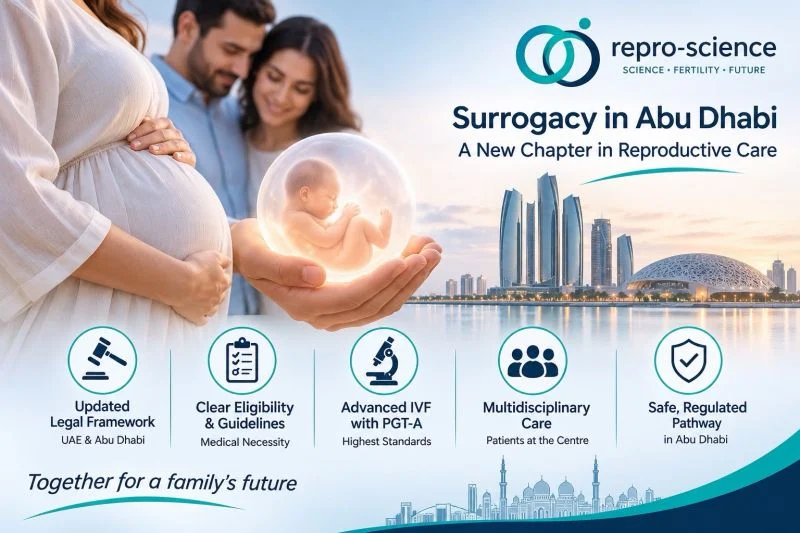
”Surrogacy in Abu Dhabi: A New Chapter in Reproductive Medicine
The evolving regulatory landscape for surrogacy in Abu Dhabi marks an important milestone for reproductive medicine and assisted reproductive technology (ART).
Following amendments to UAE federal law in 2023, Abu Dhabi established a dedicated regulatory framework for gestational surrogacy, with revised requirements taking effect in April 2026.
This development creates new possibilities for eligible couples who cannot safely carry a pregnancy, while placing patient safety, ethical practice and clinical governance at the centre of care.
What does this mean for the IVF community?
- Regulatory compliance: Treatment must follow the Department of Health – Abu Dhabi requirements, including eligibility assessment and the prescribed approval process.
- Embryology laboratory standards: Robust witnessing, gamete and embryo traceability, and documented quality-management procedures are essential.
- Genetic testing and embryo transfer: Laboratories must adhere to the applicable requirements for preimplantation genetic testing and embryo transfer.
- Multidisciplinary care: Successful programmes require collaboration among fertility specialists, embryologists, obstetricians, mental health professionals and legal advisers.
- Ethical responsibility: The welfare, informed consent, dignity and psychological support of both intended parents and the surrogate must remain fundamental priorities.
Beyond the legislation, implementation will be the real test.
For IVF centres, this is an opportunity to strengthen clinical governance, invest in laboratory quality systems and establish transparent, patient-centred pathways.
For the wider reproductive medicine community, Abu Dhabi’s approach raises important questions about how innovation, regulation and ethical responsibility can evolve together.
At Repro-Science, we believe the future of fertility care depends on advancing science while maintaining the highest standards of safety, quality and compassion.
What do you consider the greatest challenge in implementing a regulated surrogacy programme: clinical governance, embryology laboratory quality, ethical oversight, or patient access?”
Other articles featuring Samer R. Hammoudeh on Fertility News.
-
Nov 18, 2026, 18:26Ritu Anand: We’ve Been Talking about Her Fertility – It’s Time to Talk about His
-
Nov 18, 2026, 18:20Sean Lauber: Is It Safe to Thaw and Rebiopsy an Embryo?
-
Nov 18, 2026, 18:14Arsiak Vartenian: 8 Years of Answering “Do You Have Kids?” Is a Long Time
-
Nov 18, 2026, 18:09Esther Eleboh: When the Same Protocol Produces Completely Different Embryo Outcomes
-
Nov 18, 2026, 18:05Resa Nabor: Having PCOS Doesn’t Make You Less of a Woman or Less Deserving of Love
-
Nov 18, 2026, 17:47Diana Kayal: Co-Chairing the 3rd International Conference on Gynecology and Women’s Health
-
Nov 18, 2026, 17:44Karthik Raj: Oocyte Quality Is Not Determined at Retrieval Alone
-
Nov 18, 2026, 17:41Tazeen Farhan: 10 Small Lifestyle Changes to Support Reproductive Health
-
Nov 18, 2026, 17:35Chanju Jung: Nature Paper Explores Base Editing in Human Embryos