
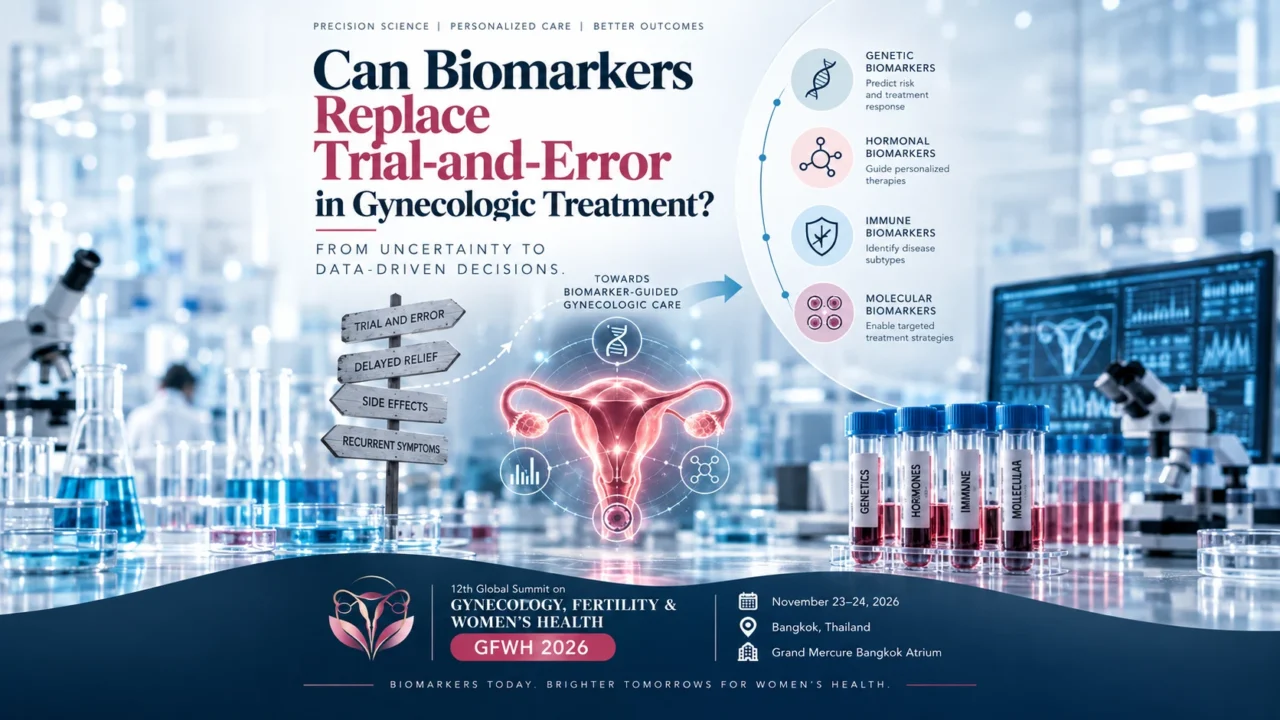
Devyanshi Dixit։ Can Biomarkers Replace Trial-and-Error in Gynecologic Treatment?
Devyanshi Dixit, Program Manager at CLS Event and Publication and Conference Manager at the 12th Global Summit on Gynecology, Fertility and Women’s Health, shared on LinkedIn:
“Can biomarkers replace trial-and-error in gynecologic treatment?
What if doctors could know which treatment is more likely to work before a patient spends months trying different options?
That is one of the promises of biomarker-driven medicine.
A biomarker can be a measurable feature – such as a gene, protein, hormone, molecular signature, or imaging characteristic – that provides information about a biological process or disease.
Why does this matter in women’s health?
Two patients can have the same diagnosis but respond very differently to the same treatment.
- One may improve quickly.
- Another may experience side effects.
- A third may see little benefit.
Biomarkers could eventually help identify who is more likely to respond, who may be at greater risk of complications, or which disease pathway is active.
Where could this change care?
Endometriosis
Researchers are investigating molecular and inflammatory markers that could improve diagnosis and help classify disease.
Gynecologic cancers
Tumor biomarkers already play an important role in identifying molecular characteristics that can guide certain treatment decisions.
Infertility and reproductive medicine
Researchers are studying biomarkers related to ovarian reserve, embryo development, implantation, and reproductive outcomes.
Menopause and reproductive aging
Hormonal and molecular markers may help researchers better understand biological transitions and individual differences.
But there’s a big catch.
Many proposed biomarkers are still in the research stage.
So the future may not be:
Biomarker – perfect treatment
It may be:
Biomarker + clinical history + imaging + patient preferences – more informed decisions
The goal isn’t to remove the human judgment from medicine.
It’s to give clinicians better information before making a decision.
And that could gradually move gynecologic care from ‘What usually works?’ toward:
‘What is most appropriate for this patient?’
GFWH 2026 brings together researchers and clinicians exploring the future of precision medicine, diagnostics, reproductive health, and gynecologic innovation.
- November 23–24, 2026
- Bangkok, Thailand․”
Other articles featuring Devyanshi Dixit on Fertility News.
-
Sep 25, 2026, 17:27Akash Verma: Sperm Cryopreservation with FertiPro SpermFreeze
-
Sep 25, 2026, 17:21Rafael Trinchant: Thrilled to Share Our Article on Semen, Stigma, and Spectacle
-
Sep 25, 2026, 17:14Eric Lameignere: Are We Measuring the Right Sperm DNA Fragmentation?
-
Sep 25, 2026, 17:09Mehtab Nizamani: A Historic Milestone for Genova IVF and Fertility Centre, Lahore, Pakistan
-
Sep 25, 2026, 17:07Khalil Faaed: We Can Activate the Oocyte, But Are We Recreating the Right Calcium Signal?
-
Sep 25, 2026, 17:04Devyanshi Dixit: Menarche and Mental Health – More Than a Reproductive Milestone
-
Sep 25, 2026, 17:01Sonia Muliyil: Perinatal Mental Health Care Must Reach Women Before Crisis
-
Sep 25, 2026, 16:55Natalie Getreu: Launching Hertility’s New Podcast, Standing Ovulation
-
Sep 25, 2026, 16:53Robert Borowczyk: An International IVF Inquiry Should Never Arrive as Just “IVF”