
Murat Basar: Connection Between Embryologist Burnout and Declining Precision in Procedures
Murat Basar, Associate Research Scientist at Yale School of Medicine, shared a post on LinkedIn:
“The Hidden Risk to IVF Success: Initial Data Suggests a Connection Between Embryologist Burnout and Declining Precision in Procedures.
The well-being of embryologists is not just an HR issue—it is a critical quality and safety concern that directly impacts IVF outcomes.
Embryologists operate in highly demanding, high-stakes environments. A recent evaluation found that embryologists report the highest emotional burnout score among all ART professionals. This systemic occupational stress negatively affects vital cognitive functions—including attention, precision, and decision-making—crucial for handling delicate embryos.
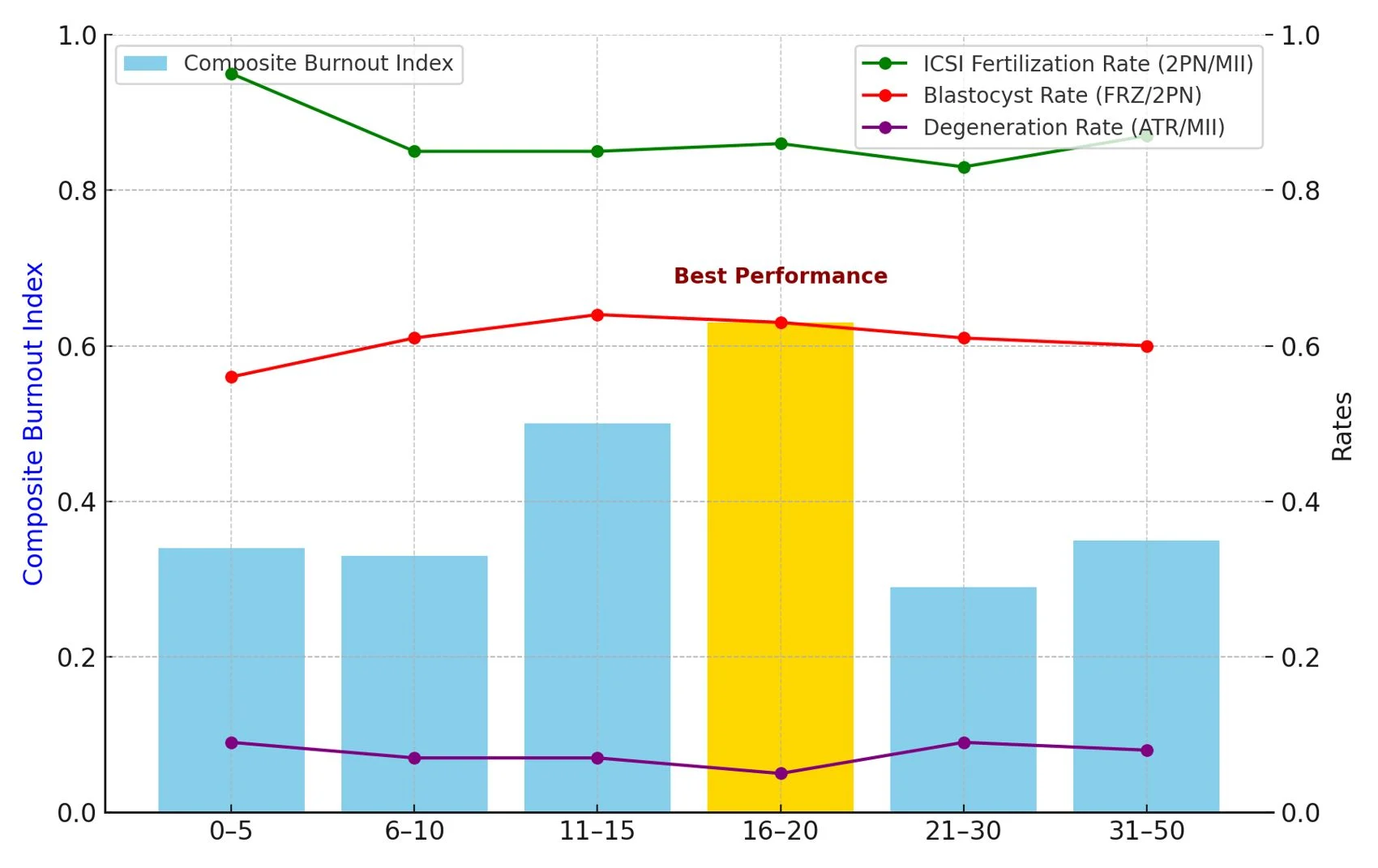
Our preliminary research analyzed over 35,000 retrospective cycles across centers in five countries to determine the critical point where an embryologist’s precision and success begin to decline due to workload.
Using EEG, we observed significant differences in Attention-to-Detail Duration:
- Novice Embryologists: Mental fatigue (theta intrusions) creeps quickly, often within 15–20 minutes of repetitive precision work. They exhibit high-beta bursts, indicative of stress-driven hyperfocus.
- Experienced Embryologists: Maintain detailed focus longer, typically 20–40 minutes, utilizing a more controlled, efficient focus (stable alpha–beta balance).
This brainwave disruption is consistent with established literature showing that chronic stress and burnout lead to critical changes in EEG frequencies, including alpha, beta, and theta waves, resulting in cognitive deficits.
Our ongoing work investigates how AI can predict burnout in embryologists through wearable EEG devices. This technology aims to continuously monitor neurological signals indicative of fatigue and attention lapse, thereby maintaining optimal precision and improving IVF outcomes.”
-
Sep 18, 2026, 20:27Hrishikesh Pai: Rethinking Male Infertility
-
Sep 18, 2026, 20:25Eric Verdin: Wrapping Up the Reproductive Aging Summit at the Center for Healthy Aging in Women
-
Sep 18, 2026, 20:21Investigating Pregnancy Outcomes in Women with Idiopathic POI – RBMO
-
Sep 18, 2026, 20:18Sue Ritchie: Why Aren’t We Talking About Male Fertility More?
-
Sep 18, 2026, 20:13Salma Yasin: Every Day of BFS Study Week 2026 Has Been an Exceptional Learning Experience
-
Sep 18, 2026, 20:01Qingcai Wang: Over 35 and Torn Between Trying Longer and Starting IVF?
-
Sep 18, 2026, 19:58Bhumika: Can a Woman Become Pregnant Again While Already Pregnant?
-
Sep 18, 2026, 19:5215 More Experts Join the International Fertility Forum Mumbai 2026
-
Sep 18, 2026, 19:50Curious About What Happens Behind the Scenes in the Labs? – Sims IVF