

Qamre Alam: Identifying the Genetic Causes of Miscarriage Through QF-PCR Testing
Qamre Alam, Adjunct Assistant Professor at University of Bahrain, College of Science, Department of Biology, shared post on LinkedIn:
“QF-PCR testing coupled with Genetic Analyzer technology for Products of Conception (POC) samples at the Genomic Department, Expressmed Diagnostics and Research, Bahrain.
This advanced test plays a vital role in identifying the genetic causes of miscarriage or termination of pregnancy, helping couples and clinicians make informed decisions for future family planning.
Case of the Week:
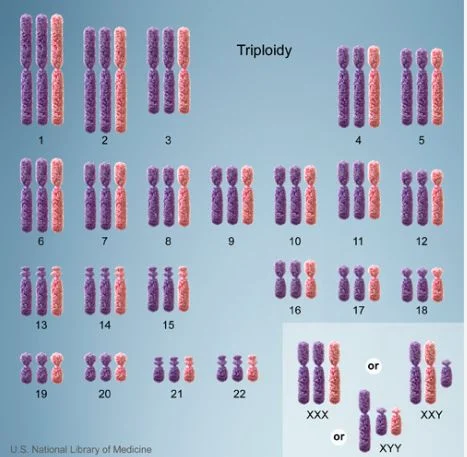
Recently, we analyzed a POC sample from a patient with a history of six recurrent miscarriages at 2 weeks of pregnancy. Through QF-PCR, we identified triploidy (69 chromosomes) as the underlying genetic cause.
What is Triploidy?
Triploidy is a severe chromosomal abnormality where the fetus has three complete sets of chromosomes (69 instead of the normal 46). This condition is not compatible with life and is one of the common genetic causes of early miscarriage.
With this knowledge, the patient can now consider IVF with Preimplantation Genetic Testing for Aneuploidy (PGT-A), increasing the chances of achieving a successful pregnancy and having a healthy baby.
Genetic and Chromosomal Causes of Miscarriage:
- Nearly 50–60 percent of first-trimester miscarriages are due to chromosomal abnormalities.
- Aneuploidy (extra or missing chromosomes) is the most common cause (for example, trisomy, monosomy, triploidy).
- These errors usually occur during egg or sperm formation (meiosis) or early embryo division.
- Identifying the cause provides closure for families and guides the next steps in reproductive planning.
Why QF-PCR for POC Testing?
- Rapid and reliable detection of common chromosomal abnormalities.
- Provides critical insights into recurrent pregnancy loss.
- Supports tailored reproductive options, including IVF with PGT-A.
At Expressmed Diagnostics and Research, we are committed to providing state-of-the-art genetic testing that empowers patients and supports clinicians in delivering personalized care.”
-
Sep 18, 2026, 20:27Hrishikesh Pai: Rethinking Male Infertility
-
Sep 18, 2026, 20:25Eric Verdin: Wrapping Up the Reproductive Aging Summit at the Center for Healthy Aging in Women
-
Sep 18, 2026, 20:21Investigating Pregnancy Outcomes in Women with Idiopathic POI – RBMO
-
Sep 18, 2026, 20:18Sue Ritchie: Why Aren’t We Talking About Male Fertility More?
-
Sep 18, 2026, 20:13Salma Yasin: Every Day of BFS Study Week 2026 Has Been an Exceptional Learning Experience
-
Sep 18, 2026, 20:01Qingcai Wang: Over 35 and Torn Between Trying Longer and Starting IVF?
-
Sep 18, 2026, 19:58Bhumika: Can a Woman Become Pregnant Again While Already Pregnant?
-
Sep 18, 2026, 19:5215 More Experts Join the International Fertility Forum Mumbai 2026
-
Sep 18, 2026, 19:50Curious About What Happens Behind the Scenes in the Labs? – Sims IVF