
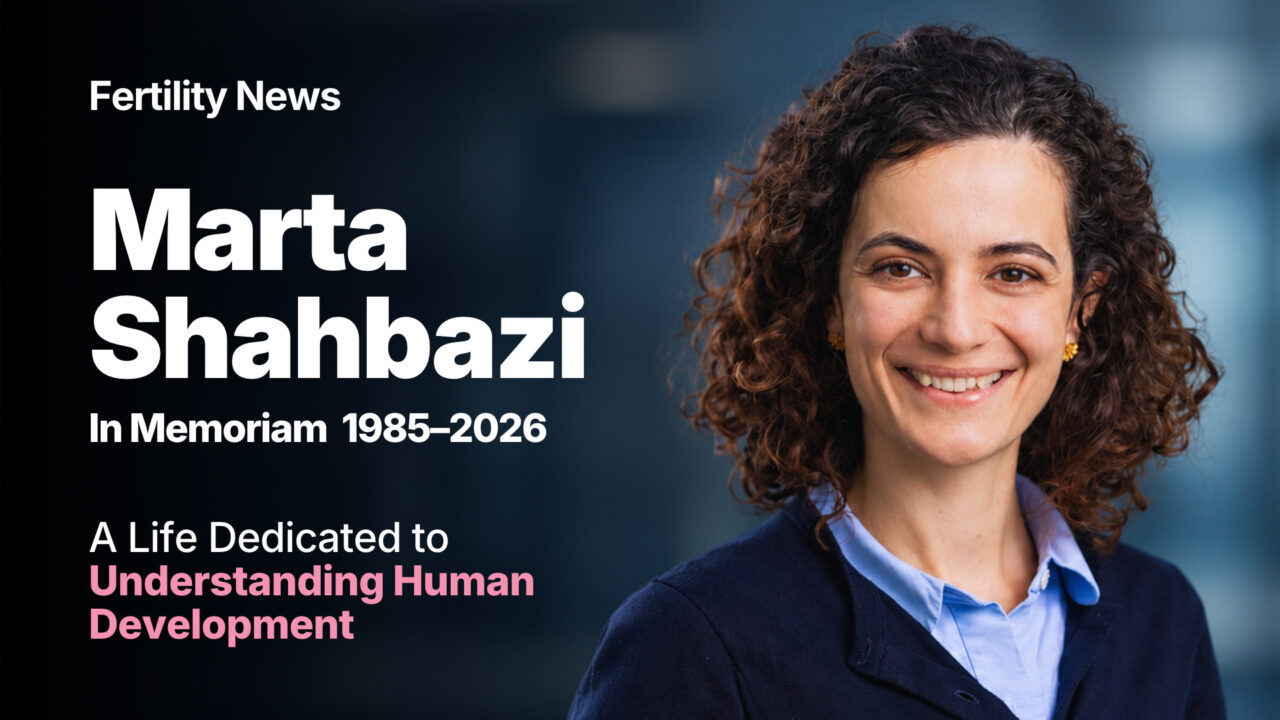
Remembering Marta Shahbazi: The Scientist Who Helped Us Understand How Life Begins
Some scientists devote their lives to questions that have challenged humanity for centuries. How does life begin? How does a single cell become a human being? And why do some pregnancies end before they have truly begun?
Marta Shahbazi Alonso spent her career trying to answer those questions.
She was a pioneering developmental biologist, a stem cell researcher, a mentor and a mother of two. Her discoveries opened new possibilities for understanding human embryos, infertility and early pregnancy loss. Her scientific journey also began in cancer research, where she investigated how cells maintain their identity and connections with one another.
But the tributes shared following her death reveal someone whose influence extended far beyond the laboratory: a scientist remembered for her generosity, intellectual curiosity, openness and willingness to support others.
On October 28, 2026, Shahbazi died at the age of 41 in a train collision near Urda, Spain, which claimed 69 lives.
She had been travelling to the 19th meeting of the Spanish Society for Developmental Biology in Andalucía, where she was due to receive the José Luis Gómez-Skarmeta Award in recognition of her contributions to understanding early embryonic development.
A journey intended to celebrate a remarkable scientific career ended in tragedy.
For her colleagues at the MRC Laboratory of Molecular Biology (LMB) in Cambridge, where she led her own research group, the loss was both scientific and profoundly personal.
LMB Director Jan Löwe remembered Shahbazi as an exceptional scientist whose passion for discovery was matched by her warmth, generosity and dedication to others.
“She was a vibrant, deeply valued member of our institute’s family and part of the future of the LMB.”
The Scientist Who Opened a Window Into Early Human Life
For decades, scientists faced a major obstacle in understanding the earliest stages of pregnancy.
Human embryos could be studied in the laboratory for only a limited period, leaving crucial events around implantation largely inaccessible. Yet it is during these first days that cells begin organizing into the structures that will eventually form the developing fetus and supporting tissues.
Shahbazi helped change that.
After completing her doctoral research in Spain, she joined the laboratory of Magdalena Żernicka-Goetz at the University of Cambridge in 2014.
In 2016, Shahbazi and colleagues published a landmark study in Nature Cell Biology, “Self-organization of the human embryo in the absence of maternal tissues.”
The research established a laboratory culture system that allowed human embryos to develop beyond implantation, extending experimental observation toward 14 days after fertilization. Previously, scientists had largely been limited to studying embryos until approximately day seven.
This advance allowed researchers to observe how early embryonic cells reorganize, establish different identities and begin forming the structures required for further development.
It also opened new opportunities to investigate why pregnancies fail at such early stages.
The work was recognized internationally and helped establish experimental approaches subsequently adopted by other laboratories.
Reflecting on Shahbazi’s contributions, Max Ezzati, Medical Director at Sutter Health – Palo Alto Medical Foundation Fertility Services, shared a tribute on LinkedIn:
“Marta was an incredible scientist and, more importantly, an amazing human being – this is a tremendous, heartbreaking loss to our field.”
Ezzati described her early embryonic development research as pioneering and deeply inspiring, emphasizing that she had been travelling to receive recognition for the scientific excellence she had demonstrated throughout her career.
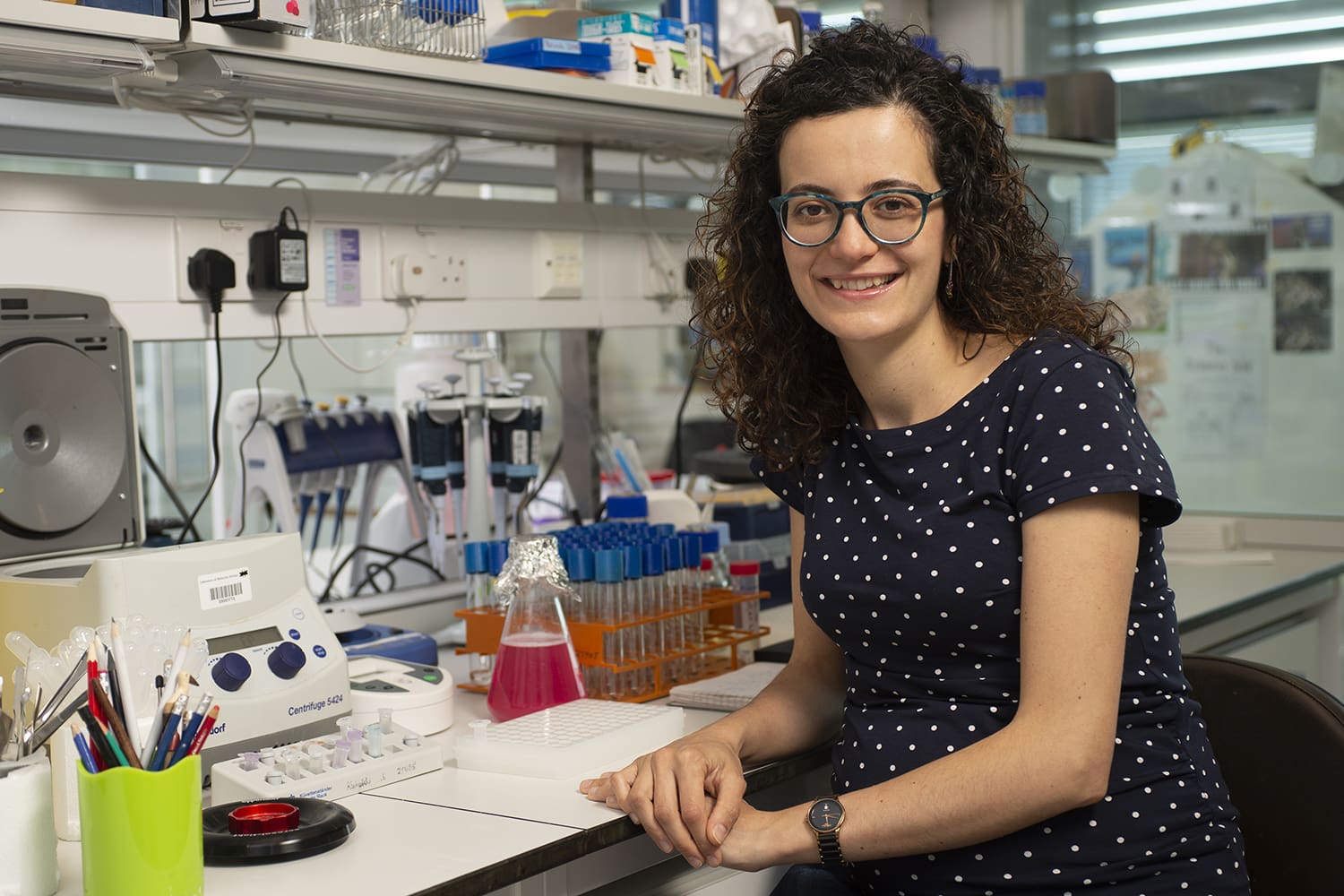
Marta photographed in 2019, shortly before launching her group at the LMB. Source: MRC Laboratory of Molecular Biology
Understanding Why Pregnancies Fail
One of the central questions driving Shahbazi’s research was why some embryos develop successfully while others stop developing.
A particular focus was aneuploidy, a condition in which cells contain an abnormal number of chromosomes. Chromosomal abnormalities are among the major causes of early pregnancy loss, but the developmental consequences of different abnormalities are complex.
In a 2020 study published in Nature Communications, Shahbazi and colleagues investigated how human embryos with different chromosomal abnormalities developed after implantation.
They found that the consequences varied considerably. Some embryos with trisomies continued developing during the period studied, while others showed developmental arrest or abnormalities in the cells involved in placental formation.
The researchers also identified mosaicism in embryos previously classified as fully aneuploid through preimplantation genetic testing, highlighting the biological complexity of early development.
Although the findings did not immediately translate into new infertility treatments, they provided important insights for understanding embryo development, implantation failure and pregnancy loss.
At Cambridge, Shahbazi continued exploring these questions through human embryo research and three-dimensional stem cell models.
Her laboratory also investigated how primordial germ cells, the precursors of sperm and eggs, are formed. In research published in Science Advances in 2024, her team identified mechanisms influencing which cells become part of the developing germline.
The work helped illuminate another fundamental aspect of reproductive biology: how the cells responsible for passing genetic information to future generations are established.
For researchers working in reproductive medicine, these discoveries offered something essential: a deeper understanding of biological processes that remain difficult to observe and explain.
Raneen Hoballah, a bioinformatician at the University of Birmingham, reflected on Shahbazi’s influence in a LinkedIn tribute:
“Her lab’s work on embryo culture and stem cell models pushed the boundaries of developmental biology, yielding critical insights for experimental and computational researchers alike.”
Hoballah also highlighted Shahbazi’s example of female leadership and excellence in science.
From Cancer Research to the Origins of Life
Although Shahbazi became internationally recognized for her work in embryology, her scientific career had important roots in cancer biology.
She completed her doctoral research at the Spanish National Cancer Research Centre (CNIO), working in the laboratory of Mirna Pérez-Moreno.
There, she studied epidermal stem cells and the molecular mechanisms that maintain the integrity of epithelial tissues.
In a 2013 study published in the Journal of Cell Biology, Shahbazi and colleagues identified interactions between proteins involved in microtubule organization and cell adhesion.
These processes are essential for maintaining tissue architecture and are also relevant to cancer biology, where changes in cellular adhesion and organization can contribute to tumor progression.
Later, as an independent investigator at Cambridge, Shahbazi explored similar biological principles from a developmental perspective. Her laboratory developed three-dimensional stem cell models to study gastrulation, the stage during which embryonic cells begin establishing the major tissue lineages of the body.
Using these models, her team identified how cell crowding can trigger delamination, causing cells to separate from an epithelial layer and initiate differentiation. The discovery also has implications for understanding cell movement and tissue remodeling in other biological contexts, including cancer metastasis.
Her work connected two areas of biomedical science that may initially appear distant: the organization of cells during the earliest stages of life and the cellular changes associated with disease.
The Scientist Who Opened Her Laboratory to the Public
Shahbazi’s commitment to science extended beyond the experiments taking place inside her laboratory.
Human embryo research raises difficult ethical and societal questions, particularly concerning how long embryos should be cultured for research and how scientific advances should inform regulation.
Shahbazi believed that researchers had a responsibility to engage openly with the public about these questions.
She participated in discussions concerning the 14-day rule, contributed to policy conversations about embryo research and supported initiatives designed to explain the science to people outside academic institutions.
Among those remembering her was Michelle Mackie (Gray), Head of the Qualitative Research and Engagement Centre at Ipsos, whose team delivered a UK public dialogue on the 14-day rule for human embryo research.
Writing on LinkedIn, Mackie recalled Shahbazi’s willingness to help the project:
“Marta was incredibly kind and helpful to us, inviting us to her research lab in Cambridge to film herself and colleagues talking about their research on human embryos.”
Mackie also remembered Shahbazi’s contribution to the project’s Oversight Group, where she provided scientific scrutiny and constructive feedback.
It was an illustration of a quality repeatedly mentioned in tributes following her death: Shahbazi did not consider scientific knowledge something to be protected within the laboratory. She believed it should be shared, discussed and understood.
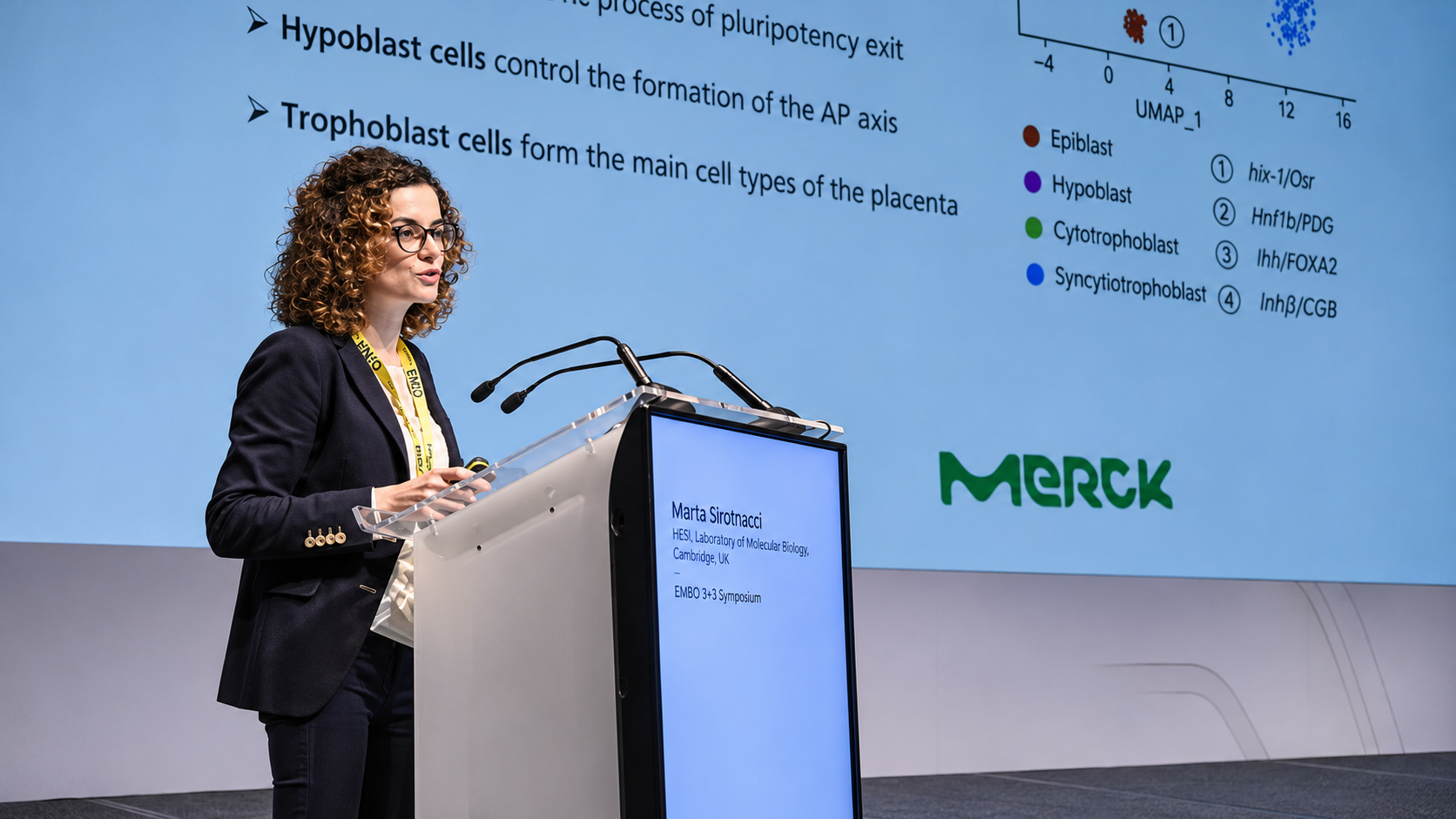
“Defining Myself as a Mother Scientist”
Perhaps one of the most personal aspects of Shahbazi’s legacy lies in the way she spoke about combining motherhood with scientific ambition.
In February 2020, she established her independent research group at the MRC Laboratory of Molecular Biology, shortly after becoming a mother. Only weeks later, the COVID-19 pandemic disrupted laboratory operations and changed the working lives of scientists around the world.
For Shahbazi, it meant navigating the responsibilities of leading a new research group while caring for her young daughter.
In 2021, she published a deeply personal essay in Cell Stem Cell, titled “Defining myself as a mother scientist.”
She described attending virtual meetings while feeding her daughter, working on scientific manuscripts during nap times and experiencing the guilt of feeling unable to dedicate enough attention to either motherhood or research.
But she also challenged the idea that scientists should be defined exclusively by their professional achievements.
Reflecting on the identity she had developed, Shahbazi wrote:
“I have a new definition of myself: a mother scientist.”
The essay was a personal reflection, but it also carried a broader message about how scientific institutions recognize achievement and support researchers with responsibilities outside the laboratory. She argued that scientists should be valued as individuals whose contributions cannot always be measured through conventional academic metrics.
Her own life increasingly reflected that philosophy.
According to the MRC Laboratory of Molecular Biology, Shahbazi brought her newborn son to meet colleagues just three days after his birth in 2023. Months later, she hosted a journal club with him strapped to her front. She wanted younger women entering science to see that motherhood and scientific leadership did not have to be mutually exclusive.
The Cambridge Association for Women in Science and Engineering (CamAWiSE) reflected on this aspect of her life in a tribute shared on LinkedIn:
“We are deeply saddened by the tragic loss of Dr Marta Shahbazi, a passionate scientist, mother, mentor and role model who inspired and supported so many throughout her career.”
The association emphasized her dedication to empowering others and her example of balancing scientific ambition with family life.
For Shahbazi, being a scientist and being a mother were not two separate identities. They were part of the same life.
A Mentor Who Believed Science Was a Shared Endeavour
For the researchers who worked alongside her, Shahbazi’s influence was not limited to her publications.
She considered mentorship one of her most important responsibilities as a research group leader, investing time in the professional and personal development of students, postdoctoral researchers and colleagues.
She celebrated the achievements of others, encouraged scientific collaboration and helped establish a network of junior research group leaders studying early mammalian development.
In the MRC’s official remembrance, Manu Hegde, Joint Head of the Cell Biology Division, recalled Shahbazi’s curiosity, creativity and generosity in sharing ideas.
He described how conversations with her often brought new perspectives that expanded the scientific horizons of those around her.
That spirit of mentorship was also emphasized by colleagues outside Cambridge.
Kathy Niakan, a developmental biologist at the University of Cambridge, remembered Shahbazi in a tribute published by the Progress Educational Trust, highlighting her pioneering contributions to embryo research and her commitment to responsible scientific governance.
Niakan described a researcher whose career was still advancing and who was deeply committed to supporting early-career scientists.
In the tributes shared after her death, a consistent portrait has emerged: an intellectually ambitious researcher who saw scientific progress not as an individual competition, but as a collaborative effort.
The Questions She Leaves Behind
Throughout her career, Shahbazi received numerous honors, including the Suffrage Science Award in Life Sciences, recognition through the European Molecular Biology Organization’s Young Investigator Programme and the 2019 NC3Rs 3Rs Prize.
In October 2026, she was named a recipient of both the José Luis Gómez-Skarmeta Award and the XI Emerging Talent Award from the Society of Spanish Researchers in the United Kingdom.
She was just 41.
Her laboratory was continuing to investigate fundamental questions about early development, and colleagues have indicated that additional research involving her contributions will be published in the coming months.
Yet the legacy described in the tributes following her death is not measured only in scientific milestones.
It is also found in the students she encouraged, the colleagues whose ideas she helped develop, the researchers inspired by her example and the public conversations about embryo research that she believed were essential.
From cancer cell biology to the earliest stages of human development, Shahbazi spent her career investigating how cells make decisions, how tissues form and why development sometimes goes wrong.
Her discoveries helped scientists observe biological events that had previously remained largely hidden.
But perhaps just as importantly, she showed that scientific excellence could coexist with kindness, openness, collaboration and a deeply personal commitment to family.
She is survived by her husband and two children.
In her 2021 essay, Shahbazi wrote about the ordinary moments she had learned to cherish: Saturday mornings in the park, family walks and reading bedtime stories to her daughter.
Those reflections now carry particular poignancy.
For a scientist who devoted her life to understanding how life begins, her own life ended far too soon.
The questions she pursued will remain. So will the methods she developed, the discoveries she made and the people she inspired.
Marta Shahbazi Alonso (1985–2026) helped the world see the earliest moments of life. Her scientific legacy will continue through those who follow the paths she opened.
-
Nov 3, 2026, 17:37Michael Chapman: Having Played a Part in the Evolution of IVF Has Been an Extraordinary Chapter of My Career
-
Nov 3, 2026, 17:36Sara Shikhman: Infertility Doesn’t Care How Hard You Work
-
Nov 3, 2026, 17:32Kathiuska Kriedt: What the National Fertility Awareness Week Means to Me
-
Nov 3, 2026, 17:31Saff Mitten: Grieving the Person You Were Before Infertility and IVF
-
Nov 3, 2026, 17:29Rajeev Agarwal: All Reports Normal, Still Not Pregnant?
-
Nov 3, 2026, 17:27When It Comes to RPL, More Treatment Does Not Always Mean Better Care – ESHRE SIG Reproductive Genetics
-
Nov 3, 2026, 17:24Eva van Rooijen: As A Mother Thanks to IVF, I Used to Think I Understood the Struggle…
-
Nov 3, 2026, 17:22What Would Work Look Like If People Didn’t Have to Choose Between Their Fertility Journey and Their Job? – ESHRE
-
Nov 3, 2026, 17:19Expert Fertility Care, Closer to Home in Salisbury – Complete Fertility